Portable combustion gas analyzers help technicians quickly assess fuel combustion, detect leaks, and optimize efficiency. This guide targets professionals and advanced hobbyists who need accurate, mobile diagnostics. The top picks below cover HVAC service, vehicle emissions, and on-site safety checks. For each product, you’ll learn who it’s best for, why it stands out, and any notable limitations to consider before buying. A concise comparison table is included to speed your decision process.
| Product | Best For | Why It Stands Out | Limitations |
|---|---|---|---|
| GOYOJO Portable Combustion Gas Analyzer | Field technicians needing long-range sampling | Remote sampling up to 10 m; large HD display; detects over 500 gases | May require battery management for lengthy fieldwork |
| Testo 310 II Combustion Analyzer (HVAC) | Complex flue gas and HVAC systems | Smart app integration; broad parameter set including CO, O2, pressure, and efficiency | Higher price tier; app features depend on device compatibility |
| INFICON Flue-Mate Combustion Analyzer | inspectors needing on-site reporting | Backlit LCD display; built-in printer-ready reporting via FLUE-Mate app | May require compatible fuels and app setup |
| Testo 300 Combustion Analyzer HVAC Kit | Remote monitoring and CO/O2 tracking | Touch display; robust CO and O2 sensors; differential pressure measurements | Kit contents may vary by package |
| Fieldpiece SOX3 Combustion Check | Technicians prioritizing automation and efficiency | Automatic pump with pause; measures flue temp, oxygen, CO2, and EA | Less emphasis on graphic data visualization |
| Bridge Analyzers 5-Gas Exhaust Analyzer | Vehicle emissions and tailpipe diagnostics | Five-gas measurement (CO, CO2, HC, O2, NOx); portable design | Form factor may be bulkier than handheld-only models |
GOYOJO Portable Combustion Gas Analyzer

The GOYOJO analyzer is designed for field technicians who need broad gas detection capabilities and remote sampling. It supports more than 500 combustible gases with high accuracy and includes a built-in pump for sampling up to 10 meters away. The interface features a large 2.31-inch HD color screen displaying real-time readings and graphs, making it easy to interpret data on the move.
Best for: professionals who require flexible sampling distances and a wide gas detection range. Why selected: its remote pumping and expansive gas library support complex field tasks. Caution: battery life management is essential for long jobs, as continuous sampling can drain power quickly.
Testo 310 II Combustion Analyzer HVAC Set

The Testo 310 II HVAC set focuses on complex flue and exhaust gas analyses. It combines a robust gas detector with a smart app and probe for convenient remote measurements. It measures temperature, flue gas O2, draft, loss, efficiency, and ambient CO, offering precise readings across a wide range of parameters.
Best for: HVAC professionals performing comprehensive furnace and boiler diagnostics. Why selected: its smart app enables simultaneous parameter monitoring and straightforward data sharing. Caution: the device’s feature set can be overwhelming for casual users; navigation may require familiarization.
INFICON Flue-Mate Combustion Analyzer

The INFICON Flue-Mate is built for quick field checks with a backlit LCD and easy report sharing via a dedicated app. It supports multiple fuels including natural gas, propane, fuel oil, coal, wood, and other biofuels. This versatility makes it suitable for service technicians who encounter varied fuel sources on-site.
Best for: inspectors and service techs needing clear reports. Why selected: the Flue-Mate app simplifies documentation and communication of results. Caution: ensure compatibility with your primary fuel type before relying on it for specialized tasks.
Testo 300 Combustion Analyzer HVAC Kit

The Testo 300 HVAC kit delivers reliable measurements of carbon monoxide, O2, temperature, draft, and differential pressure. Its CO and O2 sensors are designed for long sensor life and stable performance, with a touch display that facilitates quick data capture in dynamic work environments.
Best for: technicians who need durable, hands-on CO and O2 monitoring in furnace and boiler applications. Why selected: strong sensor design and convenient touch interface support precise, repeatable measurements. Caution: some users may prefer more compact handheld models for tight installation spaces.
Fieldpiece SOX3 Combustion Check
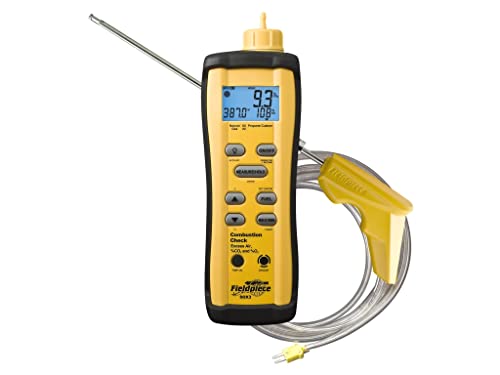
The Fieldpiece SOX3 focuses on automatic sampling with a pump and on-demand pause to conserve battery life. It measures flue temperature and oxygen percentage, then calculates carbon dioxide and EA percentage. It emphasizes efficiency and ease of use in service scenarios.
Best for: techs who value automated sampling and straightforward measurements. Why selected: its automatic pump reduces manual effort, ideal for frequent field checks. Caution: graphics and data visualization may be more basic than other high-end models.
Bridge Analyzers 5-Gas Exhaust Analyzer
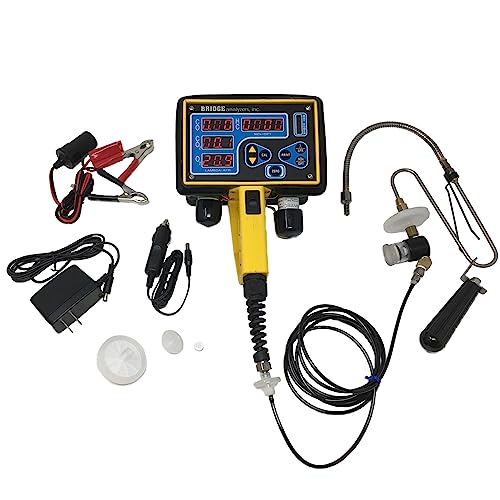
This analyzer provides five-gas exhaust measurements: CO, CO2, HC, O2, and NOx, using a combination of NDIR and electrochemical sensors. Its portable design supports on-the-spot tailpipe diagnostics and engine analysis, offering a broad view of exhaust chemistry for vehicles and engines.
Best for: vehicle service professionals and emissions technicians. Why selected: multi-gas capability supports comprehensive tailpipe diagnostics. Caution: larger form factor may be less portable than single-gas handheld units, depending on model configuration.
Buying Guide
What should you prioritize when choosing a portable combustion gas analyzer?
- Gas detection range: If you encounter many fuel types, choose a unit with broad gas coverage and reliable cross-sensitivity handling.
- Sampling method: Built-in pumps extend reach for hard-to-access sources. Check battery life and pump durability for field use.
- Display and data visualization: Large color screens and intuitive graphs speed interpretation in the field. Consider whether reports can be easily exported or shared.
- Connectivity and app integration: Smart apps enable real-time monitoring, storage, and remote operation. Ensure compatibility with your devices.
- Durability and environmental rating: IP ratings, shock resistance, and waterproofing matter for rugged environments.
- Fuel compatibility: If your work involves multiple fuels, confirm which fuels are supported and whether the device supports oil, gas, or biofuels.
How should you compare models?
- Compare gas libraries: A wider gas library improves versatility in diverse tasks.
- Evaluate measurement range and accuracy: Look for ± readings and sensor life expectancy to estimate maintenance needs.
- Assess data handling: Check whether measurements are logged, timestamped, and shareable via an app or printer.
- Consider portability vs. capability: Some units prioritize compactness; others emphasize multi-gas performance and reporting features.
What scenarios are typical for these tools?
- HVAC service: Diagnosing furnaces, heat exchangers, and flue gas composition to optimize efficiency and safety.
- On-site inspections: Quick checks for leaks or unusual emissions during maintenance visits.
- Vehicle and exhaust work: Tailpipe diagnostics to assess combustion quality and emission compliance.
Representative features to look for in the field
- Real-time graphs and trend data for quick interpretation.
- Remote sampling capabilities to reach restricted or risky areas.
- Automatic pumps with battery-saving options to extend field life.
- Printer or app-based reporting for immediate documentation.
Frequently Asked Questions
- What is a portable combustion gas analyzer used for? It measures combustion gases and exhaust components to evaluate burner performance, safety, and efficiency in HVAC, automotive, and industrial settings.
- Do these devices require calibration? Regular calibration is typically recommended to maintain accuracy, following the manufacturer’s guidelines.
- Can I use one device for multiple fuels? Many models support several fuels, but always verify fuel compatibility before relying on it for a given task.
- Is a built-in printer valuable? A printer simplifies on-site reporting, which can be useful for audits and client communication, though it may add weight and cost.
- Which feature matters most for field service? A balance of broad gas detection, reliable sampling, and clear data presentation usually yields the most practical value in diverse field conditions.
- Are these devices safe to use in hazardous environments? Look for IP ratings and rugged construction; some models are explosion-proof or shockproof to suit challenging sites.
Add a Comment