Answer: A polyethylene pipe fusion machine is essential for clean, reliable joints in PE, PP, and related plastics. This guide highlights five top options suited for different users—home DIYers, maintenance techs, and professional installers. Each pick focuses on reliable temperature control, durable construction, and compatibility with common pipe sizes. Use this overview to compare suitability, potential limitations, and best-use scenarios before purchasing.
| Product | Best For | Pipe Range |
|---|---|---|
| LeapMars Fusion Welder | Home maintenance and light jobs | IPS Sizes |
| Gdrasuya10 Butt Fusion Welder | Pro-level, faster welding | 2.5”–8” |
| SERABETTO Plastic Water Pipe Welder | Versatile sizing and digital control | 20–63 mm die heads |
| ANLONGLI Digital Fusion Welder | Digital precision for various plastics | 20–63 mm die heads |
| Hayes Digital Socket Fusion Kit | Socket fusion up to 2 in. (IPS) | ½ in.–2 in. |
Notes: All products listed support common pipe materials used in residential and commercial piping projects, including PE, PP, PPR, and PVC variants. Each entry includes a clickable link to Amazon for more details and purchasing, plus an image to help with visual identification.
LeapMars IPS Pipe Fusion Welder

The LeapMars fusion welder is designed for US pipe standards (IPS size) and supports a maximum temperature of 660°F with a digital display to set the precise temperature. Best for quick repairs or small to mid-scale projects around a home or maintenance workshop. It suits buyers who need a compact, versatile tool capable of welding PPR, PB, PE, PVDF, and other plastics.
Who it’s best for: homeowners, facility maintenance teams, and hobbyists who require a straightforward, temperature-controllable welder for common IPS-sized pipes.
Why selected: Its 660°F maximum temperature and digital temperature adjustment offer reliable fusion results across compatible materials, plus a compact design for easy transport. Caution: Check that pipe sizes are IPS and within scope; not designed for imperial sizes.
Gdrasuya10 Butt Fusion Welder 2.5”-8”

This pro-grade butt fusion welder uses a sturdy aluminum and iron frame with a long 16″ layout for stability. It includes a dual heating system and copper motors for fast heating and cutting. Best for technicians performing larger diameter PE, PP, PB, and PVDF piping projects, with improved efficiency and smoother welding flow.
Who it’s best for: professional installers and workshops handling mid-to-large diameter fusion tasks. Why selected: It emphasizes high efficiency and robust construction, enabling faster welds with stable alignment. Caution: Heavier tool; plan for transport and workspace requirements.
SERABETTO Plastic Water Pipe Welder

The SERABETTO fusion machine covers multiple pipe sizes with 20mm, 25mm, 32mm, 40mm, 50mm, and 63mm die heads. It provides a dual heating system for quick, even heat distribution and dual cooling to prevent overheating. Best for versatile field projects requiring precise temperature control via a digital display (0–381°C).
Who it’s best for: field technicians who need a flexible tool for many common pipe sizes and materials. Why selected: The wide die-head assortment supports a variety of tasks, reducing the need for multiple machines. Caution: Digital display shows a wide range; verify compatibility with your pipe materials before use.
ANLONGLI Digital Fusion Welder
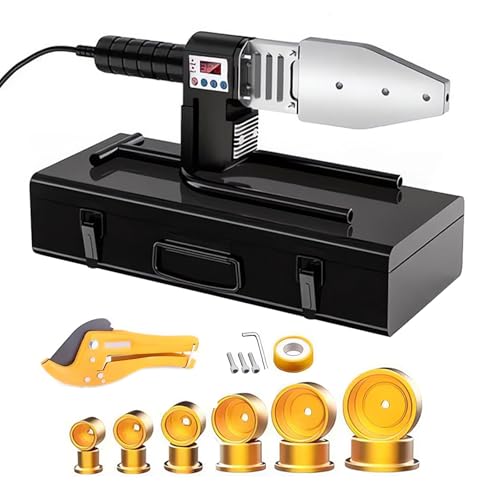
The ANLONGLI machine focuses on intelligent temperature control and a broad die-head set (20mm–63mm). It provides a fast heating experience and a digital display showing 0–381°C, enabling precise fusion for PP, PPR, PE, and PPC materials. Best for professionals who require consistent fusion quality and digital temperature feedback.
Who it’s best for: technicians who need precise, repeatable welds across multiple pipe sizes. Why selected: The combination of digital display and wide temperature range supports diverse material fusion. Caution: The unit relies on accurate setup; improper nozzle or die head selection could affect results.
Hayes Digital Socket Fusion Kit PRO

The Hayes kit covers socket fusion up to 2 inches IPS with six heating faces and an 800W power rating. It is designed for precise socket joints on IPS piping systems and is ideal for electrical conduit, plumbing, or irrigation applications. Best for installers who need a complete socket fusion solution with multiple face options.
Who it’s best for: pros performing socket fusion tasks up to 2 inches. Why selected: A dedicated socket fusion toolset reduces setup time and offers a stable, repeatable fusion approach. Caution: Socket fusion is material-specific; verify material compatibility before use.
Dlinanta Manual Butt Fusion Welder
Designed for 63–200 mm pipes, the Dlinanta unit offers a 1.5 kW heater and milling cutter with dual cooling. It combines robust construction with adjustable temperature control for multiple materials. Best for contractors handling mid-to-large diameter fusion work in irrigation and plumbing projects.
Who it’s best for: contractors needing a capable all-around butt fusion machine. Why selected: Strong heating and cutting capability with precision alignment. Caution: Larger footprint may require a dedicated workspace.
Buying Guide
What size range do you need? Choose a fusion welder with die heads that cover your typical pipe diameters. If you work primarily with small to mid-sized PE/PP pipes, models with 20–50 mm heads may suffice; for larger projects, prioritize 63 mm and above.
How important is digital temperature control? Digital displays aid precision and repeatability, reducing mistakes. If you frequently switch materials (PE, PP, PPR, PVC), a wide temperature range with clear readouts is advantageous.
What about heating power and cooling? Higher wattage speeds up preheating and fusion, but may increase energy use and weight. Dual cooling prevents overheating, extending component life during long sessions.
Does the machine support multiple materials? Look for machines advertised as compatible with PE, PP, PB, PVDF, and PVC. A broad die-head selection expands versatility for different projects and pipe standards.
Portability and duty cycle matter. For home use, a lighter, compact unit is easier to store and transport. For professional sites, prioritize stability, a longer service life, and robust clamps or fixtures for repeated use.
FAQ
- What pipe sizes can a typical polyethylene pipe fusion machine weld?
- Do fusion machines require calibration, and how often?
- Is socket fusion different from butt fusion, and when should I use each?
- Can fusion welders handle PVC and PVDF alongside PE and PP?
- What safety features should I expect in a fusion welder?
- How do I choose between manual and electric (digital) temperature control?
Add a Comment