Answering the need for safe, motorless performance in demanding environments, these pneumatic industrial vacuum cleaners run on compressed air, not electricity. They excel in metalworking shops, chemical plants, and areas with flammable or humid conditions. This guide highlights five top options, detailing who each is best for, and why they stand out. Use the quick comparison table below to compare core specs at a glance.
| Product | Capacity | Best For | Notable Note |
|---|---|---|---|
| INTBUYING Industrial Pneumatic Vacuum Extractor | 5 gal | Small workshops needing wet/dry capability | Overflow protection via float |
| INTBUYING Pneumatic Vacuum Cleaner (30L) | 30 L | Heavy-duty metal chips and 3000CP liquids | Requires external air compressor |
| SAKAI Pneumatic Vacuum Cleaner Kit | Various | Versatile blow/vacuum with bags | Requires air compressor |
| EQCOTWEA 30L Pneumatic Vacuum Cleaner | 30 L | Industrial liquid recovery up to 3000CP | Air compressor not included |
| Haofy Industrial Pneumatic Vacuum Cleaner | 20 L | Hazardous areas without electricity | Auto float shutoff |
INTBUYING Industrial Pneumatic Vacuum Extractor
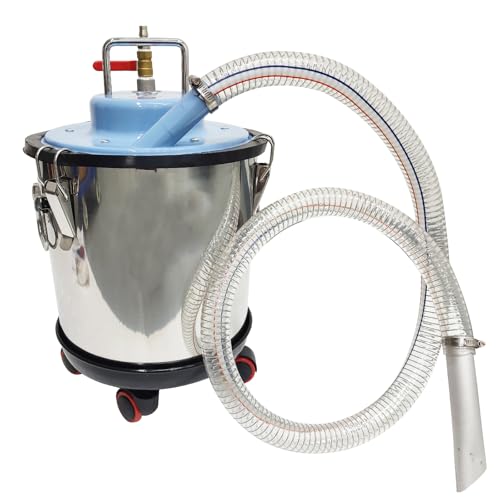
The INTBUYING 5-gallon metal bucket vacuum handles wet and dry debris, including liquids and oil with viscosity up to 3000CP. It operates via compressed air and features a float mechanism to prevent overflow when the bucket fills. The 201 stainless steel bucket ensures durability, and the unit is designed for low noise operation, minimizing disruption in busy workshops.
- Best for small-to-medium shops needing wet/dry capability without electrical power
- Limited by the need for a compatible air compressor and proper air supply
Caution: Ensure the air supply does not exceed safe pressure levels and check the float mechanism for proper operation to avoid overflow spills.
INTBUYING Pneumatic Vacuum Cleaner (30L)

This 30L stainless steel unit is powered by compressed air and designed for safe operation in environments where electricity is a risk. It features a high-efficiency filtration system, capable of handling very fine particles up to 0.3-0.5 microns, with a filtration efficiency exceeding 99.99%. It is best for metalworking shops or chemical facilities requiring robust liquid and chip cleanup, though it requires an air compressor to operate.
- Better for larger cleanup tasks in spaces safe for compressed air
- Requires an external air compressor (not included)
Caution: Ensure the air supply is compatible with the unit’s pressure range (0.6-0.8 MPa) for optimal performance.
SAKAI Pneumatic Vacuum Cleaner Kit

SAKAI’s kit offers a dual-function tool that can switch between air blowing and suctioning, supported by a durable dust bag, flexible tube, and hard-to-reach-nozzle. It’s ideal for facilities needing a versatile tool for fine powder pickup, liquid pumping, and debris cleanup. Note that it requires an air compressor to operate.
- Best for shops needing both blow-off and vacuum capabilities in one tool
- Not a standalone unit; requires compatible air compressor
Caution: The system relies on a compatible power source and proper seal integrity to maintain suction efficiency.
EQCOTWEA 30L Pneumatic Industrial Vacuum Cleaner

EQCOTWEA combines a robust 30L bucket with a high-capacity pump designed for wet and dry recovery of liquids up to 3000CP. It uses external air power and offers a displacement of 14 CFM, with a negative pressure of at least -0.27 MPa. The 3700W rating indicates strong suction, though the air compressor is not included and must be supplied by the user.
- Best for controlled industrial cleanup where a larger bucket aids extended work cycles
- Air compressor not included—plan for an appropriate external supply
Caution: Ensure compatible air supply pressure and flow to avoid reduced suction performance.
Haofy Industrial Pneumatic Vacuum Cleaner

Haofy’s 20L stainless steel model provides strong suction for oils, coolants, and metal chips up to 3000CP, with an automatic float shutoff to prevent overflow. It is designed for hazardous areas since it runs on compressed air with no electrical components, reducing ignition risk in flammable environments. It’s suitable for CNC shops and automotive bays needing continuous use without electrical hazards.
- Best for hazardous or flammable environments
- Smaller 20L capacity may require more frequent emptying
Caution: Monitor for buildup and ensure the float shutoff operates reliably to prevent spills.
Buying Guide
What to consider when choosing a pneumatic industrial vacuum
- Capacity and workflow: Choose capacity that matches your daily cleanup volume. Larger capacities reduce downtime but increase unit size.
- Liquid viscosity handling: Confirm the maximum CP viscosity the vacuum can recover to ensure compatibility with your liquids and coolants.
- Air supply requirements: Most units require a compatible air compressor. Check required pressure (MPa) and displacement (CFM) to avoid under- or over-pressurization.
- Material and durability: Stainless steel buckets and robust housings extend service life in tough environments.
- Filtration and containment: Look for high-efficiency filtration and secure dust bags or containment bags for safe debris handling.
- Safety and environment: Pneumatic units reduce ignition risk in flammable spaces; ensure proper ventilation and leak prevention.
- Maintenance needs: Easy cleaning, simple internal structure, and accessible seals help minimize downtime.
How to compare products quickly
- Best for liquids up to 3000CP: EQCOTWEA and INTBUYING 30L models
- Best for small spaces: INTBUYING 5-gallon with compact footprint
- Best with dual functions: SAKAI offers blow and vacuum in one tool
- Best for hazardous areas: Haofy 20L emphasizes no electricity
Installation and setup tips
- Ensure the air compressor is correctly rated and connected with proper hoses and fittings.
- Verify bucket floats and seals before first use to prevent leaks or overflow.
- Regularly inspect hoses for wear or clogs and replace filters as needed to maintain suction efficiency.
FAQ
- Q: Do pneumatic vacuum cleaners require electricity? A: No, they operate using compressed air, which makes them suitable for hazardous or flame-prone environments.
- Q: Can these vacuums handle metal chips and coolant? A: Yes, several models are designed for metal chips and cutting fluids up to 3000CP viscosity.
- Q: Do I need to buy an air compressor separately? A: Most models require a dedicated air compressor, as written in the product details.
- Q: Are these units suitable for wet and dry cleanup? A: Yes, many listed models support both wet and dry cleanup, depending on bucket design and filtration.
- Q: Is there a risk of overflow with wet cleanup? A: Some units include a float shutoff to prevent overflow when the bucket fills.
- Q: Are there safety concerns with exposure to used oils and coolants? A: Use appropriate PPE and ensure proper ventilation and bag containment to minimize exposure.
Add a Comment