Choosing a plate compactor with a water tank helps control dust and improves soil compaction on site. This guide highlights select models designed for reliability, maneuverability, and ease of maintenance. The following five options balance power, portability, and water-tank functionality to suit different job sizes and spaces.
| Product | Brand | Water Tank | Weight Class | Key Benefit |
|---|---|---|---|---|
| Multiquip MVC88VTHW Honda GX160 Plate Compactor | Multiquip | Yes | Mid-Heavy | High productivity with water-assisted dust control |
| CORMAC C95TH Plate Compactor | CORMAC | Yes | Mid-Heavy | Compact footprint with rugged construction |
| Evolution Hulk Electric Plate Compactor | EVOLUTION | Yes | Light to Mid | Electric power, low fumes, suitable for enclosed spaces |
| Multiquip MVC82VHW Honda GX160 Plate Compactor | Multiquip | Yes | Mid-Heavy | Anti-vibration handle and strong base for asphalt work |
| CORMAC C95T Plate Compactor | CORMAC | Yes | Mid-Heavy | Powerful options with reliable GX160 engine |
Multiquip MVC88VTHW: Water-Tank Plate Compactor

The MVC88VTHW pairs a reliable Honda GX160 engine with a water tank to help manage dust during compaction. Its single cast baseplate and eccentric housing lower the center of gravity and increase travel speed by about 12%, boosting productivity on larger projects. An hour meter/tachometer keeps track of runtime and engine RPM for maintenance scheduling and performance monitoring. This model is well-suited for medium to large paving projects where dust control and consistent compaction are priorities.
CORMAC C95TH: Water Tank, 5.5HP GX160

The C95TH forward-plate features a 5.5HP GX160 engine and a water tank, delivering solid performance in tight spaces thanks to a compact 23.5″ x 18″ plate. A reinforced steel exciter box provides durability without sacrificing maneuverability. It’s designed for ground, gravel, and asphalt tasks, enabling efficient compaction in areas where space is limited, such as around foundations or edging where a larger machine isn’t feasible.
Multiquip MVC82VHW: Water Tank, 18″ Wide

The MVC82VHW features a Honda GX160 engine and a water tank, with an anti-vibration handle that reduces operator fatigue by up to 50%. The 18″ base plate with curved edges supports smooth turns on hot asphalt and improves overall base stability, making it a strong choice for residential driveways, walkways, and small commercial pads. The model blends portability with robust base construction for dependable performance in mid-sized projects.
CORMAC C95T: 6.5HP, Water Tank
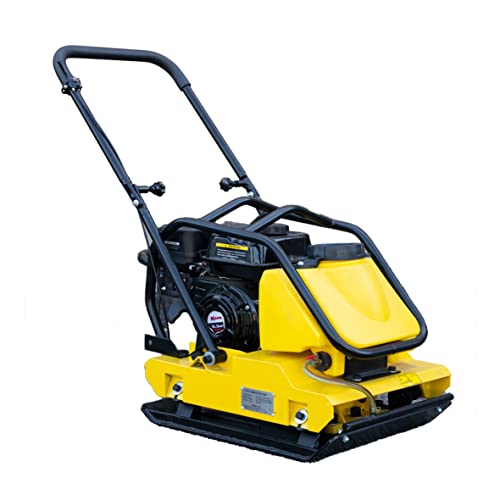
The C95T adds a 6.5HP gasoline engine coupled with a water tank for enhanced dust suppression and compaction efficiency. Its forward-plate design supports effective substrate preparation for various surfaces including gravel and asphalt. The combination of power and water-assisted operation makes it suitable for contractors requiring reliable performance in tougher ground conditions and longer sessions on larger sites.
Buying Guide: Key Purchase Considerations
When selecting a plate compactor with a water tank, consider the following perspectives to match your job needs:
- Terrain and surface type: For asphalt, concrete edges, and compacting gravel, choose models with a robust base plate and good maneuverability. Larger plates cover more area per pass, but smaller machines excel in tight spaces.
- Engine power and reliability: GX160-class engines are common for mid-range compactors, offering trusted performance and easy service. If your site runs long hours, verify oil shutdown features and fuel efficiency.
- Water tank capacity and dust control: A built-in water tank helps minimize dust on dusty soils and during windy days. Check tank size and refill accessibility to minimize downtime.
- Vibration and operator comfort: Anti-vibration handles reduce fatigue on long jobs. Look for ergonomic designs and solid base plates to ensure stable operation on uneven ground.
- Maintenance and durability: Compare base plate construction, exciter box protection, and frame reinforcement. Heavy-duty steel components extend the lifespan in harsh job-site conditions.
- Portability: Consider overall weight, handle design, and wheel kits. Units with wheels or lighter frames offer easier transport between job sites or around tight corners.
- Electrical vs. gas options: Electric compactors produce no fumes and are ideal for enclosed spaces, but gas-powered units generally offer higher raw power for tough substrates.
- Warranty and service network: A broad service network and clear warranty terms can reduce downtime when parts or service are needed.
Overall, the best choice blends power, dust control via the water tank, and practical maneuverability for the specific site conditions you encounter. For dust-sensitive environments or confined spaces, electric options like the Evolution Hulk Electric Plate provide a cleaner alternative, while gas-powered multipliers with water tanks are versatile for outdoor, mixed-material projects.
Add a Comment