When choosing a plastic bottle capping machine, look for models that match your cap size, power source, and production pace. This guide highlights five reliable handheld or compact electric capping machines suited for 10–50 mm caps and similar small to mid-size bottles. Ideal buyers include small-batch bottlers, home brewers, DIY beverage makers, and hobbyists seeking portable, easy-to-use sealing solutions. Below is a quick comparison table of the selected products.
| Product | |||
|---|---|---|---|
| Electric capping machine 80w (Longxuanyin) | 10–50 mm | 80W, up to ~30–90 bottles/min | Users needing adjustable torque and ergonomic grip |
| Saladulce Electric Bottle Capping Machine | 0.39–1.97 inches caps (~10–50 mm) | 70 kgf.cm torque, adjustable speed 500–1000 rpm | Those requiring strong power and precise torque control |
| ZONEPACK Manual Electric Bottle Capping Machine | 10–50 mm | 80W, 1000 rpm, adjustable clutch | Compact, portable capping with easy forward/reverse |
| LEYSRIS Electric Handheld Bottle Capping Machine | 10–50 mm | 2–30 kgf·m torque, 20–50 caps/min | Low-noise, labor-saving operation |
| FUNSEALER Induction Heat Sealer | 20–100 mm (captioned for plastic/glass) | 110V/220V dual voltage; fast sealing | Induction seal for plastic or glass bottles |
Electric capping machine 80w, Longxuanyin

This handheld electric capping machine operates on AC 110V and 60Hz, delivering 80W of power with a 10–50 mm cap diameter range. It can process about 30–90 bottles per minute depending on user proficiency, and features an adjustable clutch to prevent cap damage and reduce wear on bottle stoppers. Best for: small-scale bottlers who need a versatile, ergonomic tool capable of tightening or loosening caps with a comfortable grip. Limitation: no explicit safety gasket support for 10–50 mm caps, rely on proper cap type to avoid leaks.
Saladulce Electric Bottle Capping Machine

Saladulce’s model features a robust built-in copper motor and adjustable torque up to 70 kgf·m, allowing precise control for various cap sizes. It offers a stepless speed adapter (500–1000 rpm) and a direction switch for forward or reverse operation. Best for: users needing strong power, adjustable torque, and the ability to switch directions to open or tighten caps. Caution: larger torques require careful handling to avoid cap or seal damage during initial setups.
ZONEPACK Manual Electric Bottle Capping Machine

ZONEPACK’s model offers handheld electric capping with 10–50 mm cap compatibility, 80W power, and 1000 rpm no-load speed. The clutch is adjustable, and rubber inserts cover multiple cap ranges (10–50 mm). Best for: those who want a carry-ready device that tightens or loosens caps with reliable clamping. Limitation: relies on an external U.S. plug and may require practice to optimize torque for different cap brands.
DEIGEHJRE Handheld Electric Bottle Capping Machine

DEIGEHJRE presents a handheld electric capper built with durable plastics, stainless steel, and alloy components. It highlights a torque range of 2–30 kgf and 4–66 lbs, promising labor savings and effortless one-handed operation. Best for: users seeking a lightweight, affordable option for quick cap tightening. Caution: ensure cap compatibility with 0.39–1.18 inch (10–30 mm) diameters to avoid cap slippage.
Saladulce Pneumatic Bottle Capping Machine

Powered by an air compressor (over 40L, 5–6 KG/ cm³), this pneumatic capper uses a metal jaw-type claw for secure grip and acceleration up to 2500 rpm. Best for: users who already have a compressor and want maximum clamping strength. Limitation: requires external air support and a compressor setup, which adds upfront equipment considerations.
LEYSRIS Electric Handheld Bottle Capping Machine
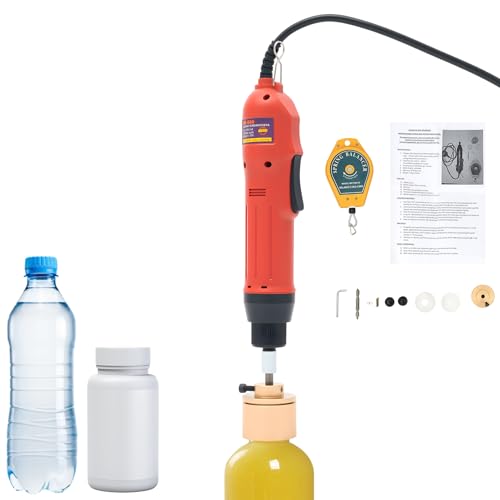
LEYSRIS emphasizes a quiet, low-noise operation with a 2–30 kgf torque range and 20–50 caps per minute, designed to reduce operator fatigue. Best for: environments requiring a balance of speed, ergonomics, and minimal noise. Limitation: performance can vary with cap material and seal type; test on your cap brand for consistent results.
Buying Guide: Key Considerations For Plastic Bottle Capping Machines
- Cap size compatibility: Ensure the device supports your cap diameter range (commonly 10–50 mm for small bottles).
- Power source and portability: Decide between battery-powered, corded, or pneumatic options based on your workspace and mobility needs.
- Torque and speed control: Adjustable torque helps prevent cap damage; variable speed helps match cap and bottle materials.
- Ease of use: Ergonomic design and clear controls reduce fatigue during longer capping sessions.
- Clamping mechanism: Rubber inserts, jaw-type claws, and clutch adjustments affect grip, cap integrity, and wear on bottles.
- Maintenance: Look for metal gears and sturdy housings for longer service life; check availability of replacement parts.
- Setup requirements: Pneumatic models require an air compressor; consider space, noise, and energy needs.
- Application type: For induction-sealed caps, separate devices like induction sealers may be needed in addition to a capper.
Practical comparisons for decision making
- Best for general versatility: Longxuanyin, ZonePACK—both offer 10–50 mm cap ranges and ergonomic handling.
- Best for high torque control: Saladulce model with adjustable torque up to 70 kgf.cm suits tougher caps.
- Best for low-noise operation: LEYSRIS focuses on quiet performance during daily use.
- Best with existing compressor setup: Pneumatic Saladulce capper delivers high clamping force when air is available.
- Best combined sealing approach: FUNSEALER Induction Sealer excels when you also need reliable seal integrity beyond cap tightening.
Frequently asked questions
- What cap sizes do these machines support? Most models cover 10–50 mm caps; some handle 0.39–1.97 inch ranges depending on unit.
- Do I need an air compressor for pneumatic models? Yes; pneumatic cappers require a compatible compressor (typically 40L+ and 5–6 KG/cm³).
- Can these machines damage bottle caps? Equipment with adjustable clutches and torque controls helps prevent cap damage when used correctly.
- Are these suitable for continuous, commercial use? These are compact or handheld units; for high-volume production, consider a more industrial can sealer or semi-automatic system.
- Is induction sealing necessary with capping? Induction sealing is a separate process that can be used in conjunction with caps to preserve freshness and prevent leaks.
- How do I choose the best one for my needs? Match cap size range, torque control, and whether you need portability, speed, or pneumatic power to your bottling workflow.
Add a Comment