Finding the right plasma cutting setup often means evaluating both the cutter and the supporting table. A solid plasma table can improve accuracy, reduce slag, and streamline workflows in DIY shops and professional garages. This article reviews five relevant options that pair plasma cutting power with practical work surfaces, including dedicated plasma cutting tables and capable cutters that can be used with a stable worktop. Each selection highlights core features, performance notes, and practical considerations to help you choose the best fit for your projects.
| Product | Brand | Max Cut / Table Size | Type |
|---|---|---|---|
| Quaintfab Plasma Cutting Table | Quaintfab | 250 lb capacity; 32″H x 21″W x 30″L | Table |
| PrimeWeld Plasma Cutting Table | PRIMEWELD | 32″H x 21″W x 30″L | Table |
| bestarc Plasma Cutter 50A | bestarc | 1/2″ clean cuts; up to 18mm @ 50A | Cutter |
| ARCCAPTAIN iControl CUT55 Pro | ARCCAPTAIN | Up to 3/4″ (20mm) cuts; | |
| Cutter | |||
| YESWELDER 65DS Plus | YESWELDER | 5/16″ @110V; 9/16″ @220V | Cutter |
Bestarc 50A Dual-Voltage Plasma Cutter

The bestarc 50A plasma cutter operates on dual voltage, 110/220V, suitable for home workshops and hardware stores. It delivers clean cuts up to 1/2 inch on iron, steel, aluminum, and copper using inverter IGBT technology. For thicker material, it can handle up to about 18 mm at 50A on 220V with appropriate air pressure (65 PSI recommended, 250 L/min). Features include pilot arc, which starts without touching the metal, and an air sensor that reports compressor pressure on the front panel. The unit supports post-flow and 2T/4T modes for ease of use, especially for beginners and DIY projects.
Considerations: Ensure you have a compatible air compressor, and verify electrical circuits match the tool’s dual-voltage requirements. The pilot-arc function improves cutting on rusted or painted surfaces, while the post-flow and adjustable PA help prolong consumable life. Ideal for DIY enthusiasts who need strong, reliable cuts without frequent tool swaps.
YESWELDER CUT-65DS Plus Plasma Cutter
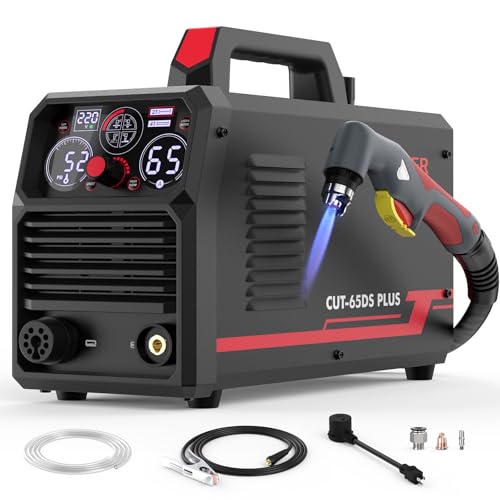
The CUT-65DS PLUS is a 65A plasma cutter with 110V/220V dual voltage and non-high-frequency (non-touch pilot arc). It offers 4-in-1 functionality: plate cutting, grid cutting, gouging, and marking, expanding its versatility for metal fabrication projects. The non-high-frequency start reduces electrical interference, making it safer around other equipment. With a cutting capacity of up to 5/8″ (16 mm) at 110V and 1″ (25 mm) at 220V, it suits a variety of materials and thicknesses. A digital display and MCU-based control help monitor parameters during operation.
Practical notes: The 4-in-1 approach is convenient for shops that require multiple cutting tasks without switching tools. Ensure you pair this with properly rated air supply and keep replacement consumables on hand to maximize uptime and minimize downtime during projects.
Quaintfab Plasma Cutting Table

The Quaintfab plasma cutting table features sturdy carbon steel construction with a 250-pound capacity, enabling cutting and welding of heavy plate steel. A slag catch tray provides safety by keeping debris off the floor, and the design includes 23 replaceable slats to improve arc penetration and airflow. The table dimensions of 32 inches in height, 21 inches wide, and 30 inches long place the cutting area at a comfortable working height, reducing operator fatigue. It’s a practical base for heavy-duty plasma cutting tasks, especially when paired with compatible torches and air systems.
PrimeWeld Plasma Cutting Table

The PrimeWeld plasma cutting table provides a robust solution with a replaceable slat system, supporting heavy plate cutting and welding tasks. With a 32″ by 21″ cutting area and a 250-pound capacity, the table helps stabilize workpieces and catches slag during cutting. Its slat design minimizes surface damage and focuses heat away from workpieces, contributing to cleaner cuts. The table height is tuned to offer an ergonomic cutting posture for extended sessions, which is beneficial for professionals and serious hobbyists who perform frequent plasma cuts.
ARCCAPTAIN iControl CUT55 Pro Plasma Cutter

The CUT55 Pro from ARCCAPTAIN features a 55A plasma cutter with 110/240V dual voltage and app control for remote parameter adjustments and status monitoring. It incorporates a non-touch pilot arc for easier initiation, particularly on dirty or painted surfaces, reducing wear on consumables. An LED display provides clear real-time data, and the machine supports 2T/4T operation for different cutting styles. The maximum cut is listed as 3/4 inch (20 mm) in optimized conditions, making it a strong choice for mid-thickness metal work, especially in settings where app connectivity adds workflow efficiency.
YESWELDER 55 Amp Plasma Cutter

The YESWELDER 55 Amp Plasma Cutter uses non-high-frequency operation with a large LED display and non-touch pilot arc. It supports 110/220V dual voltage powered by a digital MCU control system to deliver precise cutting performance. The cutter’s extended capability includes deeper cuts with a maximum cut around 5/8″ at 110V and approximately 4/5″ at 220V. This model is designed for versatility in metalworking tasks including automotive repair and DIY art projects, with stable arc starting and minimal interference with surrounding electronics.
Buying Guide: Key Considerations When Choosing a Plasma Cutter Table System
- Table vs. standalone cutter: Decide whether you need a dedicated plasma cutting table (stable work surface, slag management) or a cutter that can be paired with your existing table. Tables offer ergonomic cutting height and integrated slag management, while standalone cutters provide cutting versatility for various roles.
- Voltage and power: Look for dual-voltage options (110V/220V) if you operate in spaces with different electrical capacities. This enhances compatibility with home garages and professional shops.
- Cutting thickness and material compatibility: Check the maximum clean cut thickness and the materials supported (steel, aluminum, copper). For thicker or harder materials, ensure the unit delivers adequate amperage and cooling features (post-flow, pilot arc, etc.).
- Arc starting technology: Pilot arc enables starting on rusty or painted surfaces without touching the metal, reducing torch wear. Non-touch starts minimize interference with nearby equipment.
- Air supply and regulation: Most plasma cutters require a compressed air supply. Confirm required pressure (PSI) and flow rate (L/min) and verify you have a compatible air compressor or adapter available.
- Safety features: Look for automatic or manual shutdown protections, LED/error displays, and protective enclosures around the cutting area. A slag catcher reduces cleanup and slip hazards on shop floors.
- Portability and setup: Consider weight, portability, and how easily the table and cutter can be moved within your workspace. Larger tables may benefit from wheels or handles for repositioning.
- Maintenance and consumables: Determine the availability and cost of consumables such as nozzles, electrodes, and torches. A model with longer consumables life reduces downtime.
- Connectivity and monitoring: Some cutters offer app control or digital displays for real-time parameter monitoring. This can improve precision and repeatability across jobs.
This selection provides a balance of cutting capability and practical work surfaces, suitable for DIY projects, hobbyist shops, and professional workshops. When evaluating options, prioritize how the table integrates into your workflow, the required air supply, and the expected material thickness you intend to cut most often.
Add a Comment