When selecting a petroleum tank truck hose, the right option depends on your application—whether you need suction, discharge, or in-tank fuel delivery. This guide highlights five dependable hoses that suit different needs, from heavy-duty suction to in-tank fuel lines. The best choices are suited for contractors, fleet operators, and workshop professionals who require durable construction, compatible fittings, and reliable performance under common fuel types.
The quick reference below shows core specs and intended use to help you compare at a glance.
| Product | Best For | Key Benefit |
|---|---|---|
| Gloxco 3″ ID Tank Truck Smooth Hose | Heavy-duty suction or discharge | Dual wire helix for strength |
| Boltigen 3/4″ Fuel Transfer Hose (12 ft) | Fuel transfer with secure 3/4 NPT | High psi rating and multi-layer construction |
| Treloxia 3/8″ Submersible In-Tank Fuel Line | In-tank fuel delivery | Ethanol-resistant inner layer |
| JROTTEMO 2″ ID Gasoline Filler Neck Hose | Fuel filler neck extension | Includes clamps and long length |
| Boltigen 3/4″ NPT Fuel Transfer Hose (10 ft) | Fuel transfer with wide compatibility | Durable Nitrile and stainless braid |
Gloxco 3″ ID Tank Truck Smooth Hose

Brand: Gloxco. This 3″ ID suction hose is 20 feet long with a black nitrile tube and dual wire helix reinforcement. It is designed for suction or discharge of petroleum-based products, making it a robust option for tank trucks and bulk transfer. The large bore supports high flow, reducing transfer times in industrial settings.
Best for: Operators needing a heavy-duty, high-flow suction or discharge hose for petroleum products. The reinforced construction offers durability in demanding environments.
Why selected: The 3″ ID size and reinforced structure are well-suited for tank-truck operations requiring reliable bulk transfer with resistance to crushing and deformation during handling.
Caution: This hose is large and heavy; ensure compatible fittings and secure strain relief to prevent kinking or flexing near connectors.
Boltigen 3/4″ Fuel Transfer Hose (12 ft)

Brand: Boltigen. This 12-foot hose uses a 3/4″ NPT connector and is designed for efficient fuel transfer with a working pressure up to 232 PSI and a bursting pressure of 696 PSI. It features a multi-layer construction (nitrile inner, stainless braid, outer nitrile blend) to resist various fuels and abrasion.
Best for: Users needing reliable, high-pressure transfer of gasoline, biodiesel, diesel, kerosene, and similar fuels with secure, leak-free connections.
Why selected: The robust layering enhances durability under harsh conditions and broad compatibility with pumps, nozzles, and tanks through standard 3/4″ NPT fittings.
Caution: Verify clearance and hose length in tight installations to avoid bending near fittings, which could affect seal integrity.
Treloxia 3/8″ Submersible In-Tank Fuel Line

Brand: Treloxia. This 3/8″ ID in-tank fuel line is 1 foot long and SAE 30R10 compliant. It supports E85, E10, gasoline, and diesel, using an ethanol-resistant fluorine rubber inner layer to resist fuel-induced degradation.
Best for: In-tank fuel delivery where ethanol blends are common, or where a compact, ethanol-resistant line is necessary.
Why selected: In-tank design minimizes external routing, reducing the risk of kinks and leaks in the fill system.
Caution: Short length means you may need additional hose segments for longer routing in larger tanks.
JROTTEMO 2″ ID Gasoline Filler Neck Hose
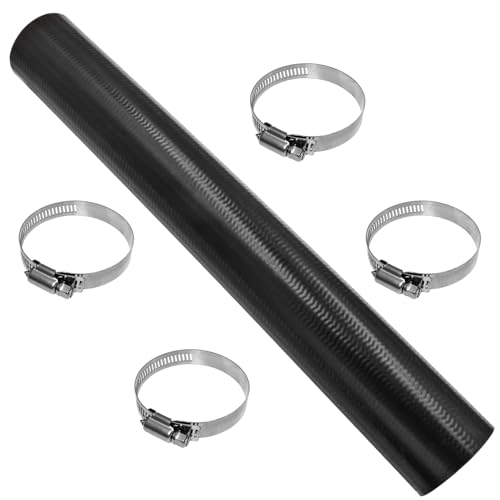
Brand: JROTTEMO. This 15 7/8″ long hose with a 2″ ID is designed to extend the fuel filler neck. It includes four clamps to secure the connection and is rated for a wide temperature range suitable for typical fueling environments.
Best for: Applications requiring a longer filler neck extension with reliable clamps for leak-free operation.
Why selected: Practical length and included clamps simplify installation for fleet fueling bays or service stations.
Caution: Ensure the hose length aligns with your filler neck clearance to avoid bending or obstruction at the fill point.
Boltigen 3/4″ NPT Fuel Transfer Hose (10 ft)

Brand: Boltigen. A 10-foot fuel transfer hose with 3/4″ NPT ends, rated for 232 PSI working pressure and 696 PSI bursting pressure. It combines nitrile inner, stainless steel braid, and outer nitrile blend to resist fuels and abrasion.
Best for: Medium-length fuel transfers where secure, leak-free connections are critical
Why selected: Similar construction to the longer Boltigen option, offering flexibility for shorter transfer runs in fleets or shop applications.
Caution: Check compatibility with your pump fittings and ensure the NPT threads are clean to prevent leaks at connections.
SUPERFASTRACING 3/4” x 20′ Fuel Transfer Hose

Brand: SUPERFASTRACING. This 20-foot, 3/4″ pump hose features 3/4″ NPT inlet and outlet connections. It is designed for use with electric pumps and provides a long, consistent transfer line with a static wire included.
Best for: Long transfer runs or installations requiring a longer hose length for flexibility in unloading tanks.
Why selected: The extended length supports versatile setups, reducing the need for multiple hoses.
Caution: Ensure compatibility with your pump and nozzle hardware to maintain a secure seal across the entire run.
TIROL 12FT Semi Truck Air Lines Kit

Brand: TIROL. This air lines kit includes 12 feet of tube, glow hands, and brass connectors. It provides red/blue color coding for easy identification and is designed to withstand harsh road conditions and temperature variations.
Best for: Fleet operators needing reliable air line connections for braking systems and trailer operations.
Why selected: While not a liquid hose, these lines are essential in heavy-duty trucking for safe and compliant braking and trailer control.
Caution: Ensure color-coded lines and glad hands are properly seated to prevent air leaks during operation.
Buying Guide
Key considerations for choosing a petroleum tank truck hose
- Material and compatibility: Select hoses with nitrile or fluorinated inner layers that resist petroleum fuels and ethanol blends typical in US fleets.
- Pressure rating: Match working and burst pressures to your transfer equipment; higher PSI suits bulk-transfer scenarios, while standard pressures may suffice for filler neck or light-duty draws.
- Connections and fittings: Confirm NPT size and connector types (1/2, 3/4, 2, or 3/4 inch) align with pumps, nozzles, and tanks used in your operation.
- Length and routing: Longer hoses enable flexible layouts but add weight and potential handling challenges. Plan routing to minimize bends and kinks.
- In-tank viability: For in-tank lines, ensure ethanol resistance and compatibility with common fuel blends to prevent swelling or degradation.
- Durability features: Look for multi-layer reinforcements (braid, wire helix) and robust outer jackets to withstand abrasion and environmental exposure.
- Safety and compliance: Verify the hose meets relevant industry standards and is suitable for the fuels you handle to reduce spill risks.
FAQ
- What is the best hose size for bulk petroleum transfer?
– Larger bore hoses (like 3/4″ or 3″) provide higher flow rates and are common for bulk transfers, but ensure fittings and pumps support the size. - Should I use an in-tank fuel line for primary fuel delivery?
– In-tank lines are ideal for internal fuel delivery within tanks and minimizing external routing, provided they are ethanol-resistant and SAE-compliant. - Are multi-layer hoses more durable for truck applications?
– Yes, multi-layer hoses with braided or wire reinforcement offer better resistance to pressure, abrasion, and flexing in mobile environments. - How do I know if a hose is compatible with ethanol blends?
– Check the inner material (often fluorinated or nitrile-based) and any listed compatibility with E85 or E10 fuels. - What maintenance is needed for petroleum hoses?
– Inspect for cracks, stiffness, or leaks regularly; replace hoses showing wear, and secure connections with appropriate clamps and fittings. - Can I mix hoses of different materials in a single transfer line?
– Mixing different hose types is not recommended due to potential chemical incompatibilities and differing pressure tolerances; use matched assemblies where possible.
Add a Comment