Answering the need for affordable, at-home plastic recycling and filament production, these PET bottle printing machines convert discarded bottles into usable 1.75mm or similar filaments for consumer 3D printers. They’re best for hobbyists, classrooms, and small studios seeking cost-effective, eco-friendly material supply with straightforward operation. The list highlights five options that balance ease of use, adjustable temperature and speed, and LCD feedback for beginners and experienced users alike. Below, compare each device, what it’s best for, and practical limitations to help you choose.
| Product | Best For |
|---|---|
| ZEEKYFOR PET Bottle Recycler | Beginners and home makers needing quick setup |
| WHIPIN Filament Maker Green | Educational use and family projects |
| Oztwel Filament Making Machine Red | DIY enthusiasts and classrooms |
| Oztwel Filament Making Machine Green | Environmentally conscious beginners |
| GFXYQPDNV 3D Printed Bottle Recycler | Compact desk setup with quiet operation |
ZEEKYFOR PET Bottle Recycler 1.75mm Filament Extruder

Best for beginners and home makers who want to convert PET bottles into 1.75mm filament. This model supports up to 300°C with adjustable temperature and speed, enabling various plastics. It features a fast-heating brass nozzle and a heat sink for stable operation. An LCD screen shows real-time temperature and speed, simplifying use for first-time operators. Caution: performance depends on bottle cleanliness and consistent feeding, which can affect filament quality.
WHIPIN Filament Maker Green
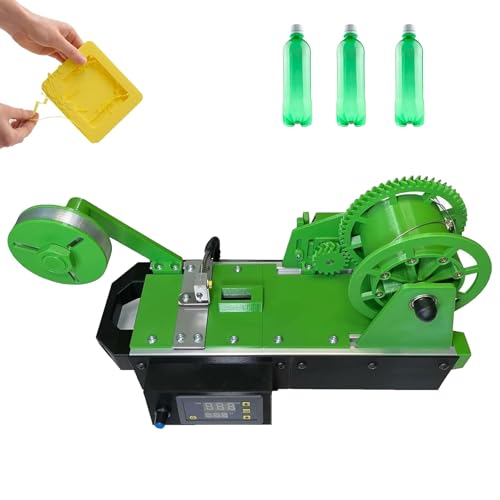
Best for families and educational settings, this PET-to-filament machine emphasizes demonstration value alongside practical output. It automatically converts plastic waste into 3D printing material, with a standard bottle yielding about 10 meters of filament. Built-in heating, temperature control, wire drawing, and winding simplify operation. Suitable for quick classroom or home demonstrations; may require supervision for younger users to ensure proper handling and safe startup.
Oztwel 3D Filament Making Machine Red

Best for DIY enthusiasts and small studios seeking a compact desktop solution. It combines heating, temperature control, traction, and winding, with a digital display showing temperature and speed. The design supports converting recycled PET bottles into 3D printing filament. Limitation: filament consistency can vary with bottle type and input quality; adjust settings to achieve stable output and avoid frequent recalibration for new plastics.
Oztwel PET Filament Maker Green

Best for environmentally minded beginners who want an integrated filament making workflow. It uses heating, temperature control, traction, and winding with an LCD display. The machine converts standard PET bottles into consumables for 3D printing, with a focus on energy efficiency and ease of use. Limitation: noise levels and power draw may be noticeable in quiet home offices; consider placement away from workspaces requiring silence.
GFXYQPDNV 3D Printed Bottle Recycler
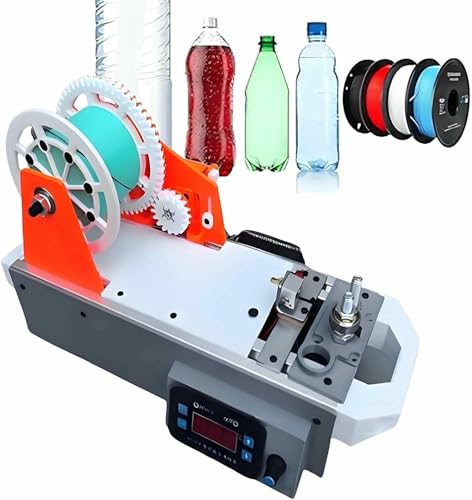
Best for compact desk setups requiring quiet operation and a sensible workflow for producing 10 meters of filament per bottle. It integrates heating, temperature control, pulling, and winding, with an LCD display showing real-time temperature and speed (±0.05mm accuracy). It’s suitable for beginners and professionals looking for minimal post-processing. Caution: output consistency depends on bottle quality and moisture; store bottles dry to maintain filament quality.
Buying Guide
What should I consider when buying a PET bottle filament maker?
- Filament diameter compatibility: Most units produce 1.75mm; verify if different diameters are supported.
- Temperature range: Ensure the device handles PET and other plastics you plan to recycle; higher-end models cope with a wider material set.
- Ease of use: LCD displays, simple one-click operation, and clear indicators help beginners start quickly.
- Output consistency: Look for automated feeding, traction, and winding to minimize post-processing or calibration.
- Noise and power: Consider the device’s noise level and power consumption for home or classroom use.
- Safety features: Short-circuit protection, stable heat management, and proper enclosure design are important for family or school use.
How does PET bottle recycling affect filament cost?
By converting common PET bottles into filament, the material cost per meter can dramatically drop, often reducing consumable costs by over 90% when bottles are readily available. Filament quality depends on bottle cleanliness, preprocessing, and consistent extrusion conditions.
Which setup is best for a classroom?
For classrooms, prioritize educational value and safety. Machines with built-in demonstrations, clear LCD feedback, and simple start-up processes are ideal. Look for a unit that supports automatic winding and one-click operation to minimize teacher supervision needs while maintaining safe use.
What limitations should I expect?
Expect variability in filament diameter and surface finish based on bottle type and moisture content. Some machines may require minor post-processing of filament, such as trimming or drawing adjustments, to ensure print reliability.
Is it necessary to pre-clean bottles?
Yes. Thoroughly rinse and dry bottles to reduce contaminants that can affect extrusion and print quality. Residues can cause clogs or inconsistent filament formation.
What is a smart starting approach for beginners?
Begin with familiar, clean PET bottles and run the machine at a moderate temperature and speed. Observe real-time readings on the LCD, adjust gradually, and document the resulting filament characteristics to refine settings over multiple runs.
FAQ
- Q: Can I recycle other plastics with these machines? A: Most models are designed primarily for PET; some support higher-temperature plastics but verify compatibility before use.
- Q: How much filament can a single bottle produce? A: Approximately 10 meters per standard PET bottle, depending on extrusion settings.
- Q: Do I need special tools to operate these machines? A: Basic assembly and safe handling are typically required; most units are designed for straightforward operation with digital displays.
- Q: Are these machines suitable for professional manufacturing? A: They are intended for DIY, educational, and small-studio use rather than large-scale production.
- Q: Do these devices require maintenance? A: Yes, periodic cleaning of the nozzle, feeding mechanism, and winding components helps maintain consistent output.
- Q: Is preprocessing needed for each bottle? A: Minimal preprocessing is often enough, but thorough cleaning yields more reliable filament quality.
Add a Comment