Answering the question most buyers ask: which pallet roller conveyor system fits my space and load needs? This article compares five robust options, focusing on gravity-fed and lightweight portable rollers ideal for pallets, cartons, and general material handling. Each pick targets common buyer profiles: warehouse managers seeking durable, low-maintenance systems; small business operators needing portable setups; and shop floor organizers needing modular, scalable layouts. Below is a quick at-a-glance table, followed by in-depth product sections and practical buying guidance.
| Product | Best For | Key Benefit |
|---|---|---|
| Ultimation Flow Rail – Heavy Duty | Large areas, heavy loads | Durable galvanized steel frame, seamless modular expansion |
| XILYZMO Flow Rack Conveyor | Versatile pallet handling | Aluminum frame, modular connections, solid load-bearing |
| Threlaco Foldable Conveyor Roller | Mobile, space-saving operations | Foldable, gravity-powered, portable |
| Ultimation Light-Duty Gravity Conveyor | DIY projects, light assemblies | 5 ft length, versatile use and moderate capacity |
| Ultimation 5′-T2 Style Gravity Rail | Heavy flow, continuous pallets | Heavy-duty 5-foot rails, 3″ wheel centers |
Ultimation Flow Rail Heavy Duty

This gravity conveyor system uses a galvanized steel frame and sturdy skate wheels for heavy-duty tasks. It supports smooth transport of boxes and pallets, making it suitable for warehouses or basements. The unpowered design relies on gravity, allowing simple slope-based movement. For buyers needing scalable, modular flow across larger areas, this system is a strong match. Caution: ensure adequate incline and stable mounting to maximize gravity-assisted movement.
XILYZMO Flow Rack Conveyor
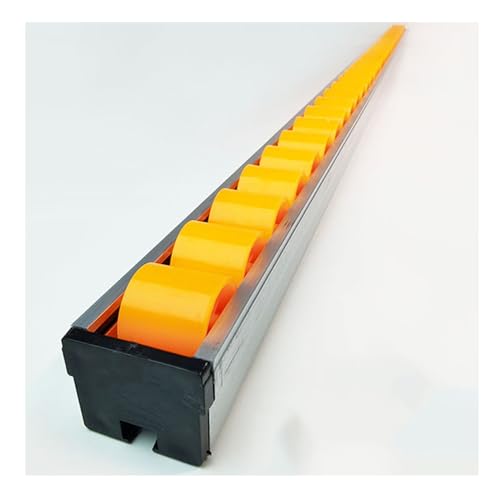
Best for modular pallet handling, this aluminum-alloy frame system connects to form extended roller lines. It features non-powered operation with PP rollers, providing a solid 100 kg per wheel load capacity when assembled. Its lightweight yet sturdy construction supports easy disassembly and reconfiguration. Choose this if you need a flexible layout that can grow with your warehouse or workshop. Limitation: aluminum components may require careful handling to prevent dents in high-impact areas.
Threlaco Foldable Conveyor Roller
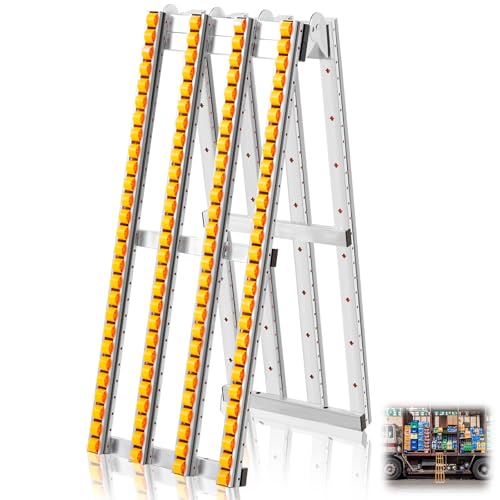
This foldable, gravity-powered system is designed for mobile operations. It expands to 15.75 x 78.74 inches and folds to fit into compact spaces, ideal for temporary loading/unloading on trucks or in tight facilities. Built with heavy-duty galvanized steel, it provides a stable path with fixed pulley positions to prevent cargo loss during transit. Best for: users who prioritize portability and quick setup. Caution: folded length may still be sizable for ultra-compact spaces.
Ultimation Light-Duty Gravity Conveyor
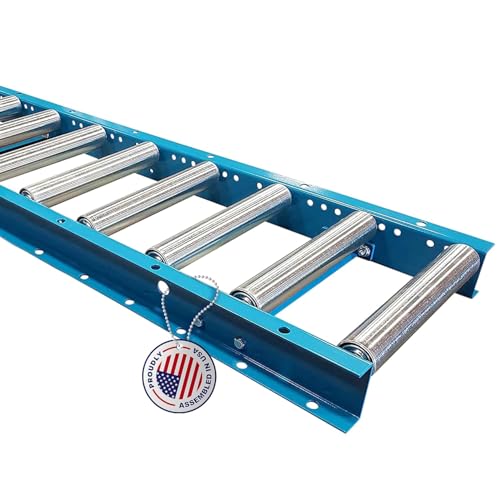
Designed for light to moderate loads, this 5-foot gravity conveyor has 1.5″ galvanized rollers and a powder-coated frame. Its 12″ overall width and 6″ center spacing suit inventory transport, woodworking feeds, or as a simple material flow table. It can support up to 900 pounds maximum load when fully supported and distributed. Choose this for DIY projects or small operations needing a compact, economical solution. Limitation: not ideal for high-volume or heavy-duty pallet moves.
Ultimation 5′-T2 Style Gravity Rails

These heavy-duty rails offer five-foot flow with four wheels per foot and 3″ wheel centers. The powder-coated steel construction supports a 220 pounds-per-foot load rating when fully supported, making them suitable for continuous pallet and carton movement along fixed pathways. Best for: warehouses needing robust, fixed-flow rails. Caution: ensure proper support every foot to reach the stated load rating.
Buying Guide: Pallet Roller Conveyor System Essentials
- What load capacity do you need? Look at per-foot load ratings and total system length to estimate total capacity.
- Is portability important? Foldable and lightweight models suit mobile workstations and temporary unloading jobs.
- Do you require modularity? Aluminum-frame and scorable rail designs enable easy expansion and reconfiguration.
- Power vs. gravity: Gravity-fed systems are simple, low-maintenance options; powered conveyors offer controlled movement for higher throughput.
- Space and incline: Gravity conveyors rely on gravity; ensure adequate incline and clearance for smooth operation.
- Material compatibility: Check wheel and roller materials to avoid damaging pallets, cartons, or fragile goods.
- Durability and environment: Steel frames are robust for industrial settings; aluminum frames reduce weight but may be less rigid in extreme loads.
- Installation considerations: Ensure proper anchoring, alignment, and adequate room for loading/unloading zones.
Frequently Asked Questions
- What is a pallet roller conveyor system?
– A set of gravity-fed or powered rollers designed to move pallets or heavy items along a fixed or modular path. - Are gravity conveyors safer for high-traffic warehouses?
– They are simple and low-maintenance, but require careful slope control and edge protection to avoid runaway loads. - Can I expand a modular system later?
– Yes, many models support seamless extensions with additional sections or compatible rails. - Which material is best for durability?
– Steel frames offer maximum durability; aluminum frames reduce weight and may suffice for lighter loads. - How do I choose between fixed rails and portable conveyors?
– Fixed rails suit constant layouts and high-volume flow; portable options excel in flexible, temporary setups. - What maintenance is needed for these conveyors?
– Regular inspection of rollers, wheels, and supports; lubricate as specified and verify alignment after moves.
Add a Comment