Answering the needs of professional welders and hobbyists, these oxygen acetylene hoses deliver reliable gas transfer, durable construction, and safe connections for torch and regulator setups. Best for: contractors and shop welders who require long, flexible runs; hobbyists who want dependable parallel hoses for both oxygen and acetylene. Below is a concise table of five top picks to compare features at a glance.
| Product | Length | Fittings | Core Material | Max Pressure | Best For |
|---|---|---|---|---|---|
| RX WELD 1/4″ x 215 Ft Twin Hose | 215 Feet | 9/16″-18 LH/RH | Grade R Rubber | 300 PSI | Industrial-scale layouts |
| RX WELD 50 Ft 1/4″ Twin Hose | 50 Feet | 9/16″-18 LH/RH | Grade R Rubber | 300 PSI | Standard shop tasks |
| RX WELD 25 Ft 1/4″ Twin Hose | 25 Feet | 9/16″-18 LH/RH | Grade R Rubber | 300 PSI | Compact setups |
| Hromee 25 Ft Twin Hose | 25 Feet | 9/16″-18 LH/RH | Grade R Rubber | 300 PSI | Flexible, durable daily use |
| RainBello 25 Ft Twin Hose | 25 Feet | 9/16″-18 LH/RH | Grade R Rubber | 300 PSI | Color-coded safety for acetylene/oxygen |
RX WELD Oxygen Acetylene Hose — 1/4-Inch × 215 Feet Twin Hose

Length: 215 feet. Fittings: 9/16”-18 LH/RH. Material: Rubber, Grade R. Inner Diameter: 1/4”. Max Working Pressure: 300 PSI. Bursting Pressure: 900 PSI. Best for long runs and large shop layouts where a single continuous line is required. Choose this for substantial throughput and fewer connections, but manage the extra length to avoid kinks in tight spaces.
RX WELD 50 Ft 1/4″ Oxy Acetylene Hose

Length: 50 feet. Fittings: 9/16″-18 LH/RH B-style. Material: Grade R Rubber. Inner Diameter: 1/4”. Max Working Pressure: 300 PSI; Bursting Pressure: 900 PSI. Best for mid-length runs with compatibility across most regulators and torches. Better for workshops with multiple workstations but may be less practical in cramped spaces compared to shorter hoses.
RX WELD 25 Feet 1/4″ Oxy Acetylene Hose
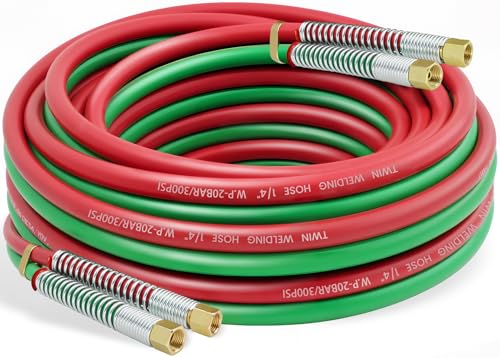
Length: 25 feet. Fittings: 9/16″-18 LH/RH. Material: Grade R Rubber. Inner Diameter: 1/4”. Max Working Pressure: 300 PSI; Bursting Pressure: 900 PSI. Best for compact benches or portable setups where a shorter hose reduces clutter. Choose this if you need easy maneuverability and quick setup, but be aware of shorter reach for larger projects.
Hromee Oxygen Acetylene Hose — 25 Feet Twin Hose

Length: 25 feet. Fittings: 9/16”-18 LH/RH. Material: Rubber, Grade R. Inner Diameter: 1/4”. Max Working Pressure: 300 PSI; Bursting Pressure: 900 PSI. Best for consistent daily use with good flexibility and kink resistance. Strong choice for regular shop tasks, but ensure the green/red color coding aligns with your safety protocol.
RainBello Oxygen Acetylene Hose — 25 Feet Twin Set

Length: 25 feet. Includes red (acetylene) and green (oxygen) lines for clear identification. Fittings: 9/16″-18 B. Grade R rubber. Inner Diameter: 1/4”. Max Working Pressure: 300 PSI; Bursting Pressure: 900 PSI. Best for safe, color-coded operation to minimize cross-connection errors. May be preferable for beginners who prioritize easy color separation, yet verify compatibility with your regulators.
Buying Guide: Key Considerations For Oxygen Acetylene Twin Hoses
- Length versus maneuverability: Longer hoses reduce the need for frequent regulator replacements but increase weight and potential for kinks. Choose length based on workspace size and typical task distance.
- Fittings compatibility: All selected hoses use 9/16″-18 LH/RH B-style fittings. Confirm your torch and regulator models are compatible to prevent leaks or cross-threading.
- Material and durability: Grade R rubber hoses provide good flexibility and durability, with an industry-standard 300 PSI working pressure and 900 PSI bursting pressure. Consider environment — heat, solvents, and weather can affect longevity.
- Color coding and safety: Color-coded red (acetylene) and green (oxygen) lines help prevent incorrect gas connections. This is especially helpful in busy shops or teaching environments.
- Flexibility and kink resistance: Some hoses are designed with coil or braid reinforcements to resist kinking. If your workflow involves tight corners or overhead work, prioritize kink resistance.
- Application fit: For large welding floors or frequent repositioning, longer hoses (like 215 ft) optimize workflow. For portable or benchtop tasks, 25–50 ft hoses are typically more practical.
Frequently Asked Questions
- What does Grade R mean for oxy-acetylene hoses?
Grade R denotes a standard of flexibility and durability for gas hoses used in welding and cutting. It implies reliability for regular shop tasks but not specialized industrial-grade use. - What is the significance of 9/16″-18 fittings?
These fittings are common in oxy-acetylene setups, ensuring compatibility with many regulators and torches. Verify both LH and RH versions to avoid mismatches. - Why choose a longer hose versus a shorter one?
Longer hoses reduce the need for extra connectors and movement constraints, but can add weight and more exposure to kinks. Shorter hoses are easier to manage in tight spaces. - Is it important to have color-coded hoses?
Yes. Color coding helps prevent cross-connection between oxygen and acetylene, reducing safety risks during setup and operation. - Should I buy a twin-line hose or separate lines for oxygen and acetylene?
A twin-line hose simplifies setup and transport by combining both gases in one unit, which is convenient for single-operator applications. Separate lines offer modular flexibility for larger crews. - What should I inspect before use?
Check for cracks, kinks, and worn fittings. Ensure connections are clean and screw-tight. Do not use damaged hoses as they can cause leaks and fire hazards.
Add a Comment