Answering the common buyer question: which outdoor wood boiler PEX pipe provides reliable heat transfer, freezing protection, and easy installation? This guide highlights five solid options suited for open-loop or closed-loop boiler setups, with notes on suitability, insulation, and potential limitations. Whether you’re warming a cabin, workshop, or small farmstead, choose a pipe that fits your system’s barrier needs and installation plan.
| Product | Best For | Key Benefit | Limitation |
|---|---|---|---|
| 1″ 120′ 5 wrap Insulated Pex Tubing Outdoor Wood Stove — Badgerpipe | Open-loop or open-air installations | Five-wrap insulation minimizes heat loss | Non barrier version; use where oxygen barrier isn’t required |
| Heat Mizer Insulated PEX Pipe — 1″ & 1.25″ O2 & Non-O2 Barrier, 3-Wrap | Either pressurized or open-loop systems | Choice of Oxygen Barrier and robust insulation | Multiple versions; select correct type for your system |
| 1″ 100′ 5 wrap Insulated Pex Tubing Outdoor Wood Stove — Badgerpipe | Compact outdoor boiler runs | Three-zone insulation and five-wrap design | Limited length; may need longer runs for larger setups |
| Heat Mizer Insulated PEX Pipe — 1″ O2 Barrier & Non-O2 Barrier, Underground Use | Underground or buried lines | Underground-ready with end caps included | Minimum length 50 ft |
| 1″ 150′ Insulated Outdoor Furnace Non Barrier 5 Wrap | Non-barrier, mid-length runs | High-heat retention in five-wrap design | Non-barrier; confirm system compatibility |
1″ 120′ 5 wrap Insulated Pex Tubing Outdoor Wood Stove

Brand: Badgerpipe. Features: non barrier insulation. Best for open-loop setups where oxygen permeability isn’t a concern and space is limited. This option is well-suited for shorter runs with strong insulation to minimize heat loss. Choose this if your system doesn’t require oxygen barrier protection and you need a compact, insulated line.
Who it’s best for: small to mid-size outdoor boiler projects where barrier requirements are minimal and accessible routing exists. Limitation: non-barrier design may not be ideal for all closed-loop, pressurized systems.
Heat Mizer Insulated PEX Pipe — 1″ & 1.25″ O2 & Non-O2 Barrier

Brand: Generic. Features: three-wrap insulation; options for Oxygen Barrier (O2) or Non-Oxygen Barrier (Non-O2); suitable for underground or exposed runs. Best for systems needing flexibility between pressurized and non-pressurized configurations. The inclusion of end caps and dual sizes helps adapt to various boiler outputs.
Who it’s best for: buyers needing versatility between O2 and Non-O2 setups and that plan to run either underground or above ground. Limitation: requires selecting the correct barrier configuration for your specific boiler design.
1″ 100′ 5 wrap Insulated Pex Tubing Outdoor Wood Stove
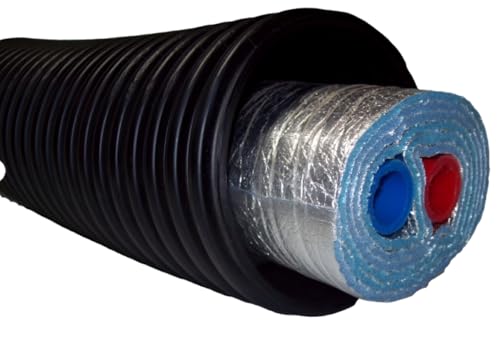
Brand: Badgerpipe. Features: Non Barrier. Best for compact installations with good heat retention. Suitable for shorter runs around a small outdoor boiler, where protection from freezing is important but barrier requirements are minimal.
Who it’s best for: homeowners needing a short, insulated run for a wood stove or small outdoor furnace. Limitation: non-barrier material may not be compatible with all closed-loop, pressurized systems.
1″ 200′ 3 wrap Insulated Pex Tubing Outdoor Wood Stove

Brand: Badgerpipe. Features: non-barrier. Best for longer outdoor routes where heat loss must be minimized across greater distances. Three-wrap insulation provides a solid balance of protection and flexibility for mid-to-large setups. Choose this if your run extends far from the boiler and you don’t need an oxygen barrier.
Who it’s best for: users with longer routing needs and non-pressurized configurations. Limitation: shorter insulation layers than five-wrap designs offer less protection in extreme cold.
1″ 60′ 3 wrap Insulated Oxygen Barrier Pex Tubing Outdoor Wood Stove

Brand: Badgerpipe. Features: oxygen barrier. Best for closed-loop systems where pressurized water requires an oxygen barrier to prevent corrosion. Shorter run length makes it suitable for nearby installations or retrofits. Limitation: oxygen barrier adds material cost and complexity; ensure compatibility with your boiler’s pump and fittings.
Buying Guide
What to consider when choosing outdoor wood boiler PEX pipe:
- Barrier Type: Oxygen Barrier (O2) is required for pressurized or closed-loop systems to prevent corrosion. Non-O2 is common for open-loop setups but may not suit all installations.
- Insulation and Wrap: Five-wrap insulation offers superior heat retention, beneficial for longer runs and freezing-prone climates. Three-wrap or three-layer insulation balances cost and performance.
- Pipe Size and Length: Match the internal diameter (1″ vs 1.25″) to your boiler output and desired flow rate. Longer runs benefit from thicker insulation to reduce heat loss.
- Underground Readiness: If burial is planned, ensure the version is rated for underground use and includes end caps or sealing components.
- System Type: Choose barriers and insulation based on open-loop vs closed-loop designs. Closed-loop systems often demand O2 barrier and compatible fittings.
- Installation Considerations: Routing obstacles, frost depth, and trenching requirements can affect performance and maintenance access.
Frequently Asked Questions
- What is an oxygen barrier and why is it important for outdoor boiler piping? An oxygen barrier prevents oxygen from diffusing into the water, reducing the risk of corrosion inside the pipes in closed-loop systems.
- Can I use non-barrier PEX for underground runs? Non-barrier PEX is typically suitable for open-loop or non-pressurized setups; underground use may require specific product versions or additional protection.
- How deep should the trench be for underground PEX piping? This depends on climate and local codes, but generally deeper than frost depth reduces freezing risk. Check local regulations.
- Are five-wrap insulated PEX pipes worth the extra cost? Higher wrap counts reduce heat loss, improving efficiency on longer routes and in cold climates.
- What size PEX should I choose for a medium outdoor boiler? Most outdoor boiler installations use 1″ piping, with 1.25″ options available for higher flow or longer runs.
- Do I need end caps for underground PEX? Yes, many underground installations require end caps to seal the buried lines and prevent debris ingress.
Add a Comment