If you need immediate, reliable air pressure on demand for heavy-duty vehicles, trailers, or off-road equipment, an on demand air compressor is the right solution. This guide highlights five practical options, focusing on ease of installation, pressure capability, and compatibility with air bags, suspension systems, and air tools. Each pick targets a specific use case: portable inflations, onboard suspension control, or universal 12V power solutions. The list helps buyers identify which system best fits a truck, van, trailer, or performance setup, while avoiding models that don’t meet typical on-the-go needs.
| Product | Best For | Key Benefit |
|---|---|---|
| Trucks, Trailers, and Heavy-Duty Vehicles | Durable aluminum tank with high pressure | |
| In-cab control for air bag suspensions | Fast inflation with driver-seat control | |
| Portable tire inflation and air tools | Pre-wired for quick setup | |
| Train and air horn applications | 2.5 gallon tank with multiple ports | |
| Trucks and vans seeking easy air bag management | Gauge-driven pressure for bags with no tank |
CNRAQR 150 PSI Air Compressor With 1.6 Gallon Tank

The CNRAQR unit is designed for direct installation in a range of mobile platforms, including trains, trucks, and trailers. It delivers a maximum working pressure of 150 PSI, with intermittent capability up to 250 PSI, making it suitable for tire inflation and powering basic air tools on heavy-duty jobs. The 1.6-gallon aluminum tank adds durability while keeping weight manageable for mobile setups. Best for buyers who want a rugged, all-in-one package with straightforward installation and a compact footprint.
- Best for: Heavy-duty vehicles needing reliable on-site inflation and tool use.
- Why selected: Aluminum tank increases longevity under stress; proven high-pressure output.
- Caution: Limited tank size may require frequent top-ups on long inflations or large tire systems.
RETRUE Onboard Air Compressor System
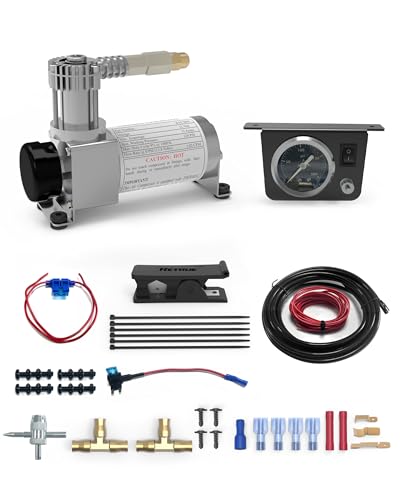
The RETURE system focuses on in-cab operation for air bag suspensions. It inflates quickly—reaching 100 PSI in minutes—while an in-cab control setup keeps users from over-inflating. This kit emphasizes ease of use and real-time control, which helps drivers manage ride height and stability on the road. Best for owners who value quick, seat-side adjustments and simple, reliable inflation of air springs.
- Best for: Drivers who want direct, from-the-seat control of air bags.
- Why selected: Fast inflation times save time during setup and adjustments.
- Caution: Some users may need to verify gauge accuracy if precise PSI readings are critical for their system.
VIAIR 380C Plug-N-Play Compressor

The VIAIR 380C is a compact, pre-wired system designed for portability and quick deployment. It can fill its 1.5-gallon tank up to 200 PSI and is compatible with tires, air tools, and air nozzles. The 12V power source makes it suitable for most vehicles, from trucks to vans. Best for users seeking a ready-to-go, plug-and-play solution with solid pressure capabilities for mobile inflations and tool use.
- Best for: Quick, portable inflation and tool operation on the go.
- Why selected: Pre-wired design reduces setup time; strong 200 PSI capability.
- Caution: Limited tank size may slow very large inflations without supplemental storage.
LLNSEAUTO Medium Duty Onboard Kit

This kit is tailored for train and air horn applications, featuring a 2.5-gallon air tank and multiple port options. It provides robust capacity with several ports for hoses and fittings, enabling flexible configuration for complex systems. Best for operators needing multiple connections and a larger on-board reservoir for rapid, repeated inflations or tool use.
- Best for: Complex systems requiring multiple ports and a bigger tank.
- Why selected: Higher tank capacity supports sustained use and quick inflations.
- Caution: Setup can be more involved due to the number of ports and fittings.
maXpeedingrods On Board System (Universal)
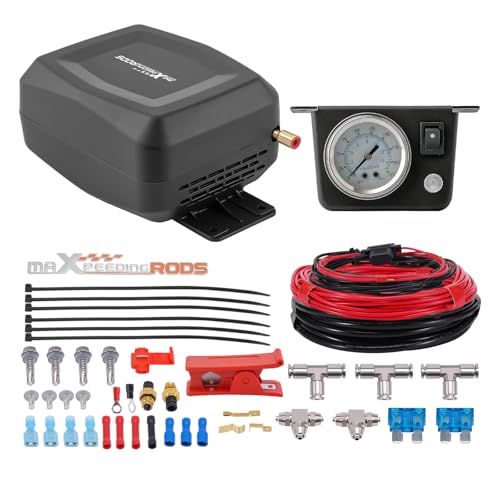
The maXpeedingrods universal onboard system emphasizes ease of use with a simple, single-path design. It can operate without an extra air tank and focuses on precise bag pressure from the cab. Best for buyers who want straightforward control over air springs and a compact install without an auxiliary tank. Choose this if you prioritize in-cab adjustments and minimal hardware footprint.
- Best for: Users who want in-cab control with minimal hardware complexity.
- Why selected: No tank requirement simplifies installation and maintenance.
- Caution: Some suspension setups may benefit from a larger tank for sustained inflations.
Buying Guide
Key considerations when selecting an on demand air compressor:
- Application needs: Are you inflating tires, powering air tools, or adjusting air bag suspensions? Match the unit’s main use to your vehicle and environment.
- Pressure and flow: Check maximum working pressure and recovery speed. Higher PSI and faster inflations suit heavy-duty or repeated tasks.
- Tank size and ports: Larger tanks reduce top-off frequency; verify the number and arrangement of ports to fit your hose routing.
- Power source and installation: Plug-and-play vs. full install — ensure compatibility with your vehicle’s electrical system and wiring access.
- Durability and materials: Aluminum tanks and rugged housings improve longevity in mobile settings.
- Maintenance and gauges: Easy-to-read gauges and accessible filters simplify ongoing upkeep and monitoring.
FAQ
- What is “on demand” air in typical use?
It refers to systems that provide air pressure when needed, often controlled from the cab or via a switch, for tasks like inflating suspensions or tires.
- Can these systems run without a separate air tank?
Some models are designed to operate without an extra tank, while others include a dedicated tank for faster and more stable inflations.
- Which unit is best for trailer use?
Units with larger tanks and multiple ports suit trailers, as they support frequent inflations and various accessories.
- Is pre-wired setup easier for beginners?
Yes, plug-and-play models typically require less wiring and enable quick deployment right out of the box.
- What maintenance should I perform?
Regularly inspect fittings, hoses, and pressure switches, and verify gauge accuracy during routine checks.
Add a Comment