When selecting a Nema 23 compatible worm gearbox, look for models engineered to deliver reliable torque, smooth operation, and easy mounting. This guide highlights top picks that pair well with NEMA 23 stepper or servo motors, offering clear takeaways on who each product suits best. Use the summary table below to compare key specs at a glance.
Summary of chosen products
| Product | Gear Ratio | Output Shaft | Mounting | |
|---|---|---|---|---|
| XUNKUNER NMRV030 RV030 15:1 | 15:1 | 14 mm | NEMA23 flange (60×60) | Light to moderate torque needs, compact builds |
| XUNKUNER NMRV030 RV030 25:1 | 25:1 | 14 mm | NEMA23 flange (60×60) | Higher torque with same footprint |
| Jecoupoon NMRV-030 80:1 | 80:1 | 14 mm | Flange input for NEMA23 | Steady motion with higher reduction |
| XUNKUNER NMRV030 RV030 50:1 | 50:1 | 14 mm | NEMA23 flange (60×60) | Balanced torque and speed |
| CNCTOPBAOS NMRV030-40 40:1 | 40:1 | 14 mm | NEMA23 mounting standard | Accurate speed regulation in automation |
XUNKUNER NMRV030: 15:1 NEMA23 Worm Gearbox
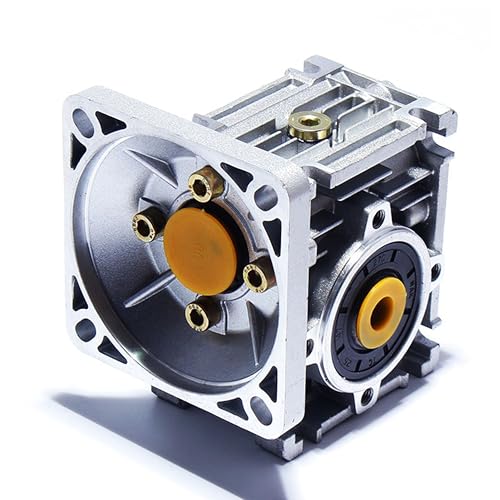
Model: NMRV030 with 11 mm input bore and 14 mm output shaft. This unit uses a NEMA23 (60×60) flange and is constructed from aluminum alloy with a QT-400 ductile iron worm gear and 20CR steel worm rod. The die-cast ADC12 housing provides strong sealing and light weight. It features IP55 protection for dust and moisture resistance and is designed for high torque and stable operation. Best for compact setups where moderate torque is required and space is limited.
Best for: Light to moderate torque applications using NEMA23 motors in compact CNC or automation projects. Choose this if you need a slim footprint with robust IP55 protection and straightforward installation.
Caution: The 15:1 ratio limits safety margin for very high-load tasks; verify torque needs before committing to this exact ratio.
XUNKUNER NMRV030: 25:1 NEMA23 Worm Gearbox
Specifications mirror the 15:1 model: NMRV030, input 11 mm bore, output 14 mm shaft, NEMA23 flange, aluminum housing, QT-400 worm gear, 20CR worm rod, IP55 protection. The 25:1 ratio provides higher torque while maintaining a compact form factor. Best for users who require more torque without upgrading motor size.
Best for: Projects needing increased torque without enlarging the system footprint. Avoid if you require finer speed control beyond standard reductions.
Caution: Higher reduction can reduce dynamic response; ensure motor driver settings compensate for slower output if needed.
Jecoupoon NMRV-030: 80:1 Turbine Gearbox

Model NMRV-030 with 11 mm input and 14 mm output, NEMA23 flange input, aluminum housing, and IP55 protection. This model focuses on very high reduction at 80:1, enabling very slow and precise movement with high torque at low speeds. Best for precise positioning tasks in CNC or servo-controlled systems where stall resistance matters.
Best for: Precision positioning or slow, high-torque tasks. Choose this if your application tolerates lower speed in exchange for strong holding torque. Limitations: high reduction may reduce dynamic response in fast cycles.
XUNKUNER NMRV030: 50:1 NEMA23 Worm Gearbox
This 50:1 variant keeps the same compact NEMA23 mounting, 14 mm output, and aluminum housing with IP55 protection. The higher ratio offers more torque with a modest speed reduction, suitable for processes requiring steadier load handling without oversized gearboxes. Best for: workloads that demand smoother torque delivery with less motor strain.
Caution: As with higher ratios, check motor driver compatibility to avoid oversaturation or stalling under dynamic loads.
CNCTOPBAOS NMRV030-40: 40:1 NEMA23 Gearbox

Model NMRV030-40 offers a 40:1 speed ratio with the same NEMA23 mounting and 14 mm output. The aluminum enclosure provides good heat dissipation and rigidity, making it well-suited for automation lines and CNC systems requiring precise speed control and reliable torque. Best for: balanced speed and torque in medium-demand cycles. Consideration: frame fits standard NEMA23 mounts, but verify your motor’s shaft compatibility and mounting spacing before purchase.
Buying Guide
- Torque vs. Speed: Higher gear ratios increase torque and reduce speed. Match the ratio to your motor’s torque rating and the required output speed.
- Mounting Compatibility: Ensure the NEMA23 flange and mounting hole spacing (60×60 mm) align with your motor and frame.
- Output Shaft and Housing: Look for 14 mm ouput shafts and aluminum die-cast housings for durability and heat dissipation.
- Protection Rating: IP55 or higher helps protect against dust and moisture in workshop environments.
- Material Quality: QT-400 worm gear and 20CR shaft indicate robust transmission; verify corrosion resistance for your environment.
- Application Fit: Servo and stepper motors pair well with these gearboxes in CNC, automated assembly, and motion-control tasks. If your application involves rapid accelerations, favor lower ratios for better dynamic response.
- Maintenance: Access to lubrication points and ease of disassembly affect long-term upkeep; prefer units with straightforward serviceability.
FAQ
- What is a NEMA23 worm gearbox best used for? It is typically used to increase torque while reducing speed in CNC, automated tooling, and servo/stepper motor setups where space is constrained.
- How do I choose the right gear ratio? Consider required output speed and torque, motor capability, and the load profile. Higher ratios boost torque but slow the output.
- Are IP55-rated gearboxes necessary in a dry workshop? They provide extra protection against dust and moisture, which can extend useful life in harsher environments or dusty rooms.
- Can these gearboxes be used with both servo and stepper motors? Yes, most models are designed for both servo and stepper NEMA23 motors with standard flange mounting.
- What maintenance is required? Regular inspection of seals, lubrication intervals, and checking for gear backlash help maintain performance over time.
- Is a higher torque gearbox always better? Not necessarily; higher torque can come at the cost of speed and dynamic response. Choose based on application dynamics and control strategy.
Add a Comment