Direct answer: If you need strong, reliable torque in a compact NEMA 23 form factor, these high-torque stepper motors are ideal for CNC mills, lathes, routers, and 3D printers. They suit builders seeking precise micro-stepping control and robust holding torque. Top picks favor machines requiring 2.5–3 Nm of holding torque for motion and cutting tasks, while others offer solid performance at lower torques for lighter setups. The table below highlights five strong options to compare at a glance.
| Product | Holding Torque | Shaft & Size | Voltage Range |
|---|---|---|---|
| STEPPERONLINE High Torque Nema 23 CNC Stepper Motor 3Nm | 3.0 Nm (425 oz.in) | 57 x 57 x 100 mm, 8 mm shaft | 24–48 VDC |
| STEPPERONLINE Nema 23 Stepper Motor 2.4Nm | 2.4 Nm (339.8 oz.in) | 57 x 57 x 82 mm, 8 mm shaft | 24–48 VDC |
| RICHCNC Nema 23 High Torque 2.5Nm | 2.5 Nm (353 oz.in) | 57 x 57 x 100 mm | 26 V |
| RICHCNC High Torque Nema 23 3.00Nm | 3.0 Nm (425 oz.in) | 57 x 57 x 112 mm | Unknown (listed 2-phase 4-wire) |
| STEPPERONLINE CNC Stepper Motor 1.9Nm | 1.9 Nm (269 oz.in) | 57 x 57 x 82 mm, 6.35 mm or 8 mm shaft options | 24–48 VDC |
STEPPERONLINE High Torque 3Nm Nema 23 Motor
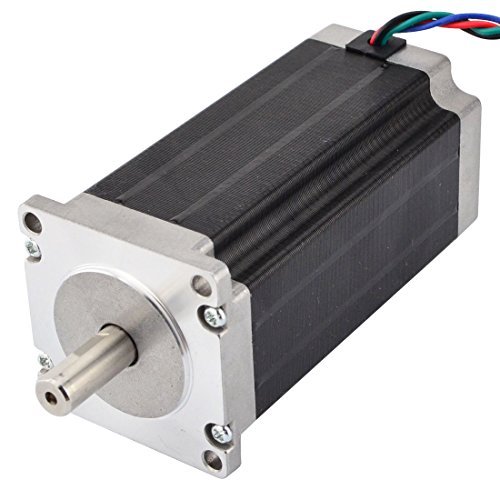
Holding torque of 3 Nm (425 oz.in). NEMA 23 bipolar, 4-wire construction, and a compact 114 mm body length. Best for heavy-duty CNC milling tasks or routing where high static torque is critical. This motor is ideal for larger hobby CNC setups or small production machines that require robust hold in a compact package.
Best for: users needing maximum torque in a NEMA 23 footprint, such as CNC mills or lathes with rigid spindles. Caution: Higher torque often requires appropriate drive electronics and cooling for continuous operation.
STEPPERONLINE Nema 23 2.4Nm Motor

Offers 2.4 Nm (339.79 oz.in) holding torque with an 8 mm shaft. Suitable for mid-to-large size CNC routers, mills, or 3D printer systems that need stronger motion without stepping up to higher voltages. Drive voltage suggested: 24–48 VDC, with a recommendation around 36 VDC for optimal performance.
Best for: users balancing torque and heat with standard 24–48 V drives. Choose this if you need more torque than a typical 1.8–2.0 Nm motor but want to avoid mass or heat associated with the very highest torque variants.
RICHCNC Nema 23 2.5Nm High Torque

2.5 Nm holding torque, 4-wire bipolar design, and 2-phase configuration. Size: 57 x 57 x 100 mm. Includes 80 cm cable suitable for 3D printers and similar setups requiring extended wiring. Best for mid-range torque needs with a longer body for added mounting stability.
Best for: projects needing reliable mid-high torque with an extended cable length. Avoid this if the longer body interferes with tight space enclosures.
RICHCNC 3.00Nm Nema 23 Motor
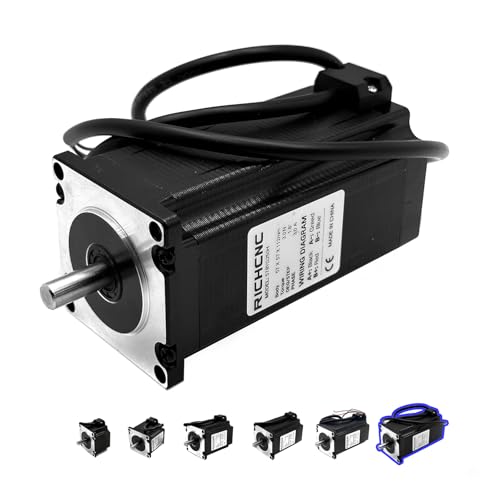
3.0 Nm holding torque on a NEMA 23 bipolar 4-wire platform with dimensions 57 x 57 x 112 mm. This motor is best for small to mid-sized CNC machines requiring substantial torque in a compact footprint. It is suitable for milling, routing, and other heavy-duty tasks within a compact frame.
Best for: high-torque CNC applications needing more length for mounting stability. Caution: ensure the drive electronics and cooling can handle the higher torque class under load.
STEPPERONLINE 2.8A Nema 23 1.9Nm

1.9 Nm (269 oz.in) holding torque, suitable for smaller CNC setups or DIY CNC mills and routers. It uses a 2.24″ x 2.24″ footprint and a 4-wire configuration. The motor is a good fit when space or weight reduction is a priority without sacrificing torque too severely.
Best for: compact builds or lighter-duty tasks where the motor size must stay minimal. Avoid this if your project demands higher torque to maintain accuracy under heavy loads.
Buying Guide
What torque level do you need?
Torque determines how much load the motor can hold without stalling. For cutting or milling, higher torque reduces stalling risk at low speeds. Evaluate your spindle weight, cutting forces, and desired feed rates to pick between 1.9–3 Nm motors.
Voltage and driver compatibility
Most Nema 23 motors listed are compatible with 24–48 VDC drivers. Confirm your driver supports the motor’s current rating and coil configuration (bipolar, 4-wire). Efficient cooling and proper current limiting are essential for sustained performance.
Physical fit and mounting
Check motor dimensions (57 x 57 mm face, length varies). Some variants have 8 mm shafts; others may differ. Confirm your mounting plate, couplings, and belt pulley compatibility to avoid clearance issues.
Wiring and cables
Most Nema 23 motors use 4-wire, 2-phase configurations. Cables vary in length; longer cables add flexibility but may introduce noise. For CNC tasks, keep cabling neat, shielded where possible, and maintain consistent grounding.
Load type and application
Identify whether your machine operates under steady-state holding torque or dynamic cutting loads. If you expect frequent heavy loads, select a motor with higher torque and plan for adequate cooling and power supply headroom.
Quality and compatibility considerations
Choose brands with clear documentation on torque, size, shaft, and wiring. Consistency between datasheets and your controller can reduce integration risk. When possible, verify mounting patterns and shaft tolerances to ensure a smooth upgrade path.
Motor lifecycle and maintenance
High-torque motors can generate more heat. Consider cooling solutions, such as heatsinks or fans, and plan for regular inspection of wiring and connectors in harsh environments.
Summary recommendation
For demanding tasks like CNC milling and routing with compact form factors, the STEPPERONLINE 3Nm and RICHCNC 3.0Nm variants offer the strongest torque. If you need substantial but not maximum torque, the 2.4Nm and 2.5Nm models provide a balanced middle ground. For space-constrained builds, the 1.9Nm option remains a viable choice.
FAQ
- What is NEMA 23 in motor terms? It refers to the faceplate mounting size (57 x 57 mm) and is a standard form factor for bipolar stepper motors.
- What torque should I choose for a CNC router? Higher torque (2.5–3 Nm) is beneficial for heavier loads and faster start-ups, especially with larger spindles or rigid mounts.
- Do these motors require special drivers? Yes. Use proper bipolar drivers with current limiting, compatible voltage, and adequate cooling.
- How important is shaft size? An 8 mm shaft is common and compatible with many couplings; ensure your drive system matches shaft diameter and coupling type.
- Can I mix motors from different brands? Mixing is possible if electrical specs, mounting, and wiring schemes are compatible. Align torque and current expectations to avoid controller mismatch.
- Is extra cooling needed for high-torque models? Yes. High-torque motors can overheat under heavy loads; provide cooling or duty-cycle management.
Add a Comment