When safeguarding gas lines, choosing a reliable shutoff valve is essential. This article surveys five top options that balance safety, durability, and ease of use for residential gas systems. From compact inline ball valves to durable brass fittings and even a multi-pack for bulk projects, these picks help you manage natural gas and LP gas flow with confidence. Each product highlights key features to help you compare performance and installation requirements at a glance.
| Product | Brand | Key Benefit |
|---|---|---|
| Eastman Straight Gas Brass Ball Valve, 1/2 in FIP x 1/2 in FIP, 1/4-Turn | Eastman | Compact inline control, robust brass body |
| Eastman Straight Gas Brass Ball Valve, 1/2 in FIP x 1/2 in OD Flare Female, 1/4-Turn | Eastman | Versatile connection with OD flare option |
| Eastman 1 Inch FIP Straight Gas Ball Valve, 1/4-Turn | Eastman | Solid durability with easy operation |
| Eastman Straight Gas Brass Ball Valve, 3/4 in FIP x 3/4 in FIP, 1/4-Turn | Eastman | In-line flow control for larger lines |
| [5-Pack] PROCURU 1/2-Inch FIP Straight Gas Ball Valve | PROCURU | Cost-effective bulk option, corrosion-resistant brass |
Eastman Straight Gas Brass Ball Valve, 1/2 in FIP x 1/2 in FIP
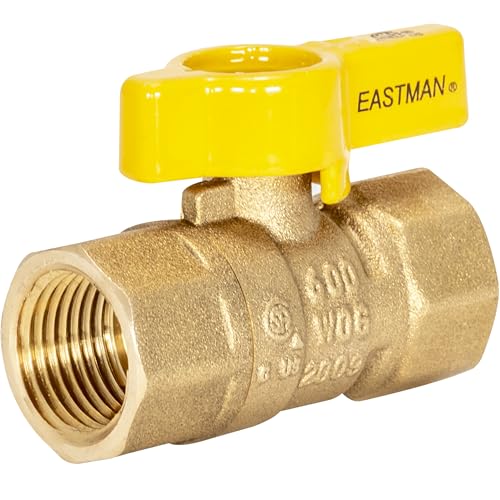
This gas shutoff valve is designed as a straight inline connection for two pipes oriented in the same direction. It is suitable for controlling gas flow with liquids and gases up to 175 PSI and is rated at 5 PSI for indoor shutoff applications. The construction uses a two-piece solid brass body with double O-ring packing to enhance structural integrity and reduce leakage over time.
Eastman Straight Gas Brass Ball Valve, 1/2 in FIP x 1/2 in OD Flare Female

This straight inline valve pairs 1/2 inch female iron pipe threads with an OD flare female connection. It remains suitable for LP gas and air mixtures up to 175 PSI and shares the same indoor shutoff rating of 5 PSI. A durable two-piece brass body with double O-ring packing supports long service life and dependable gas shutoff performance.
Eastman 1 Inch FIP Straight Gas Ball Valve

The 1-inch inline gas shutoff valve features a 1/4-turn lever handle for quick on/off control. It is designed for use with liquefied petroleum gas and air mixtures up to 175 PSI. The aluminum lever provides easy operation, and the valve’s brass fitting construction contributes to durability in residential gas piping applications.
Eastman Straight Gas Brass Ball Valve, 3/4 in FIP x 3/4 in FIP

This 3/4 inch inline shutoff valve is built for reliability in gas lines, featuring a two-piece brass body and double O-ring packing to create a secure, long-lasting connection. The quarter-turn aluminum lever enables quick and precise gas flow control, making it well-suited for mid-range piping applications in homes or small commercial setups.
[5-Pack] PROCURU 1/2-Inch FIP Straight Gas Ball Valve

The five-pack provides 1/2 inch FIP x FIP straight gas ball valves with a quarter-turn design. Constructed from rust-resistant brass, these valves are intended for on/off control in natural gas or propane lines. The compact, inline design supports straightforward installation in standard residential piping projects.
Buying Guide: Key Considerations For Choosing A Natural Gas Shutoff Valve
When selecting a shutoff valve for natural gas lines, consider the following factors to ensure safety and compatibility with your system:
- Connection type and size: Match FIP, flare, or NPT threads to your piping. Common residential sizes include 1/2″ and 3/4″ fittings.
- Valve operation: Quarter-turn (1/4 turn) valves offer fast shutoff and clear on/off positions; multi-turn valves provide precise control but take longer to operate.
- Material and durability: Brass bodies with O-ring packing are common for gas applications due to corrosion resistance and leak prevention.
- Pressure rating: Check the valve’s rated PSI and ensure it aligns with your gas system, typically well below 175 PSI for residential lines.
- Indoor vs. outdoor use: Some valves are optimized for indoor shutoff within gas lines; assess environmental exposure and enclosure suitability.
- Compliance and certification: Look for CSA or other recognized certifications to assure safety standards are met.
- Bulk options: If you’re working on multiple lines, a multi-pack can reduce procurement time and ensure uniform performance across installations.
- Installation considerations: Some valves are easier to install with standard hand tools; others may benefit from professional installation depending on piping layout.
- Maintenance: Opt for valves with robust seals and straightforward disassembly for inspection and potential replacement of O-rings.
In evaluating the selection, balance the need for quick, reliable shutoff with connection compatibility and installation practicality. For bulk or multi-line projects, a cost-efficient option like a multi-pack can help standardize components, while individual high-grade ball valves offer precise control and long-term durability in critical gas lines.
Add a Comment