When choosing a natural gas pressure gauge, reliability, readability, and compatibility with low-pressure lines are essential. This guide highlights five solid options for professionals and DIYers who need precise readings in low-pressure gas lines, regulators, and test manifolds. Best for: contractors testing natural gas lines, technicians calibrating regulators, and homeowners doing safe gas system checks. Below is a quick comparison to help you decide which gauge fits your setup.
| Product | Dial Size | Pressure Range | Connection | |
|---|---|---|---|---|
| SENCTRL 0-15 Inches of Water Column Gauge | 2.5″ | 0–15 in. WC | 1/4″ NPT lower mount | Low-pressure testing in natural gas lines |
| MEANLIN MEASURE 0-35” WC Manifold Kit | 2.25″ | 0–35 in. WC | 1/8″ NPT fittings, 40″ hose | Gas testing on manifolds and flexible line setups |
| CARBO INSTRUMENTS Gas Test Gauge | 2″ | 0–15 psi | 3/4″ FNPT | General gas line testing with durable brass/steel body |
| Solimeta 2″ Economical Gas Test Gauge | 2″ | 0–30 psi | Standard gas test assembly | Residential and commercial gas testing on a budget |
| SENCTRL 0-30 Psi Gas Pressure Test Gauge | 2″ | 0–30 psi | 3/4″ FNPT | Higher-range gas line checks with robust brass body |
SENCTRL 0-15 Inches of Water Column Gauge

Best for: technicians needing precise low-pressure readings in natural gas lines, propane regulators, and similar systems. Features a capsule measurement system for improved sensitivity at low pressures. Chrome-plated steel housing adds durability, and brass wetted parts support compatibility with non-corrosive gases and liquids. The gauge reads 0–15 inches of water with a stated accuracy of ± 2.5% of span. Choose this for compact, low-pressure checks where space is limited and quick adjustments are common. Caution: not suited for high-pressure gas testing beyond its 15 in. WC range.
MEANLIN MEASURE 0-35” WC Manifold Kit

Best for: professional testers who work on gas manifolds or larger-diameter lines and require a longer hose for reach. This kit provides a 40-inch extended hose and 2-1/4″ dial face, with 1/8″ NPT fittings and barbed connectors to fit multiple gas systems. It supports quick connections with included bushings and fittings, making it adaptable to various locations. Limitation: the kit’s broader range may be more than needed for simple residential tasks, so consider using a lower-range gauge if only small adjustments are required.
CARBO INSTRUMENTS Gas Test Gauge

Best for: users who need a sturdy, easy-to-read 2″ dial with a 3/4″ FNPT connection. Brass valve and chrome-plated steel body offer durability in rugged testing environments. The gauge is suited for general gas line testing and places where a compact, readable display is preferred. Limitation: this model operates up to 15 psi, so it’s not ideal for higher-pressure applications or systems requiring broader ranges.
Solimeta 2″ Economical Gas Test Gauge
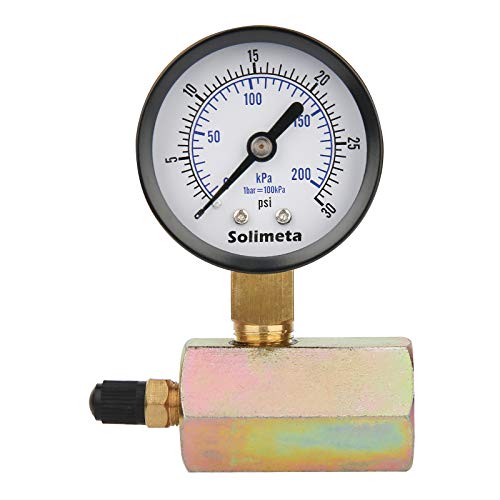
Best for: budget-conscious buyers who still need reliable readings up to 30 psi. The Solimeta gauge is designed for residential and commercial testing of natural gas, air, and water lines. Its bleed port and plated housing help with maintenance and longevity. Caution: the device is economical in price, so verify durability requirements for heavy industrial use or high-vibration environments.
SENCTRL 0-30 Psi Gas Pressure Test Gauge

Best for: higher-range gas line testing needs with a robust brass valve and forged brass bell-shaped body. The 2″ dial provides clear visibility in industrial or field settings, and the 3/4″ FNPT connection ensures solid integration with common gas lines. Limitation: higher pressure range may not be necessary for simple residential checks, so a lower-range model could be more cost-effective in such cases.
Buying Guide
What gauge range do I need for natural gas testing?
Low-range gauges (0–15 in. WC or 0–35 in. WC) are ideal for measuring regulator offsets and small leaks in residential lines. Higher ranges (0–30 psi) suit larger manifolds and commercial installations. Choose a range that matches your task to avoid unreadable readings or unnecessary cost.
Which connection type should I choose?
Common options are 1/4″ NPT lower mount, 1/8″ NPT fittings, and 3/4″ FNPT. For most home or small-business tests, 1/4″ to 1/2″ NPT connections are convenient. If you connect directly to a gas line or regulator, ensure compatibility with existing fittings and provide secure, leak-tested seals.
Is a capsule gauge better for low-pressure testing?
Capsule-based gauges excel in low-pressure readings because their design responds quickly to minor changes, offering better sensitivity. They’re a good match for natural gas lines with regulators that operate at low pressures. However, for higher pressures, traditional bourdon-style gauges may be more appropriate.
What features improve durability in field testing?
- Chrome-plated or steel housings resist corrosion and impact.
- Brass wetted parts improve compatibility with non-corrosive gases and liquids.
- A readable dial size (2″ or larger) reduces eye strain in dim or distant work environments.
Are longer hoses and quick-connect fittings beneficial?
Yes. A longer hose (as in the 40″ setup) provides flexibility to reach distant manifolds or awkward placements. Quick-connect fittings simplify setup and ensure a stable connection across different gas systems.
FAQ
- What is the difference between in. WC and psi gauges?
- Can these gauges be used on propane lines as well as natural gas?
- How do I ensure a leak-free connection when testing?
- When should I choose a manifold tester kit over a single-gauge unit?
- What maintenance is recommended for brass and chrome-plated components?
- Are there any gauges with built-in bleed valves?
Add a Comment