Answering the question buyers ask most: which natural gas powered generator is best for commercial or serious home backup? The following picks offer tri-fuel versatility (gasoline, propane, natural gas) with substantial power, making them suitable for larger properties, small businesses, or emergency power continuity. Each product suits specific buyers—from full-home backup users to jobsite operators needing transfer-switch readiness. Below is a quick reference of five strong choices.
| Product | Best For | Key Benefit |
|---|---|---|
| DuroStar DS13000MXT | Large homes, storm power backups | 13,000 watts tri-fuel flexibility |
| DuroMax XP13000HXT | Power-hungry properties, contractors | Broad fuel choice with robust 500cc engine |
| Westinghouse 14500 Peak | Backup power for big loads | High peak and solid running watts |
| WEN TF-1450X | Transfer-switch ready setups | Tri-fuel with CO watchdog and wheels |
| Westinghouse 12500 Peak | Medium-to-large homes with remote start | Versatile tri-fuel with remote start |
DuroStar DS13000MXT 13,000-Watt Tri Fuel Generator

This 13,000-watt tri-fuel generator offers flexibility to run on gasoline, propane, or natural gas. It features a CO alert for safer operation and a transfer-switch-ready 50-amp outlet, making it suitable for home backup or small commercial use. Best for homeowners who want reliable power with multiple fuel options during extended outages.
Best for: large homes or remote facilities needing full-house backup with fuel versatility. Why selected: high output, CO alert, and a ready transfer switch connection help ensure continuous power during storms.
Caution: Fuel availability and conversion setup should be planned for natural gas use to prevent supply interruptions during long outages.
DuroMax XP13000HXT 13,000-Watt Tri Fuel Generator

Equipped with a 500cc OHV engine, this tri-fuel generator supports gasoline, propane, or natural gas, designed to maintain home or workshop power during outages. It includes CO alert for safety and a strong power profile for heavy loads. Better for: users who want robust power with flexible fuel choices in a portable package.
Best for: property owners needing dependable backup with multiple fuel sources. Why selected: powerful engine and clear CO alert improve safety and reliability in variable power environments.
Caution: Heavier unit with multiple fuel connections means careful handling during fueling and setup is required to optimize performance.
Westinghouse 14500 Peak Watt Tri-Fuel Portable Generator
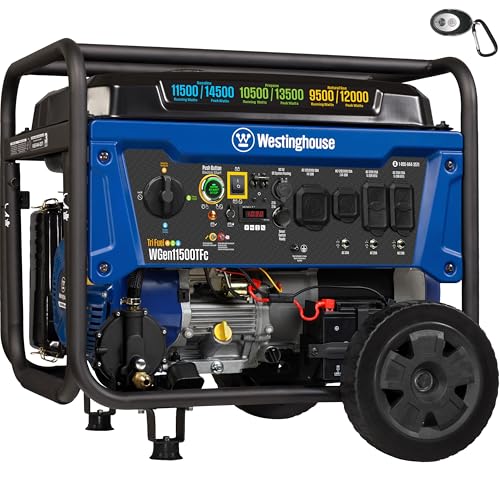
This model delivers 14,500 peak watts with 11,500 running watts on gasoline, plus substantial propane and natural gas outputs. Features include a heavy-duty 550cc Westinghouse engine and a long runtime on a sizable fuel tank. Best for: larger homes or job sites needing strong peak power for brief surges and steady running power.
Best for: users who prioritize long runtime and multiple fuel options. Why selected: high peak performance and durable engine design support heavy loads during outages.
Caution: Runtime varies by fuel type; plan fuel management and storage accordingly for extended outages.
Westinghouse 12500 Peak Watt Tri-Fuel Starter

This unit offers autonomous start with a remote control, 3-way fuel capability, and a transfer-switch-ready design. It delivers 12,500 peak watts, with configurable running watts by fuel type. Best for: homeowners seeking convenient remote starting and reliable tri-fuel operation.
Best for: remote-start users and backup power with simple interface. Why selected: convenient start features and solid tri-fuel performance for mid-to-large loads.
Caution: Outlets are rubber-covered for safety, but the unit’s size and weight require secure placement and proper anchoring in windy conditions.
Buying Guide
- Fuel versatility: All listed units support gasoline, propane, and natural gas. Consider your available fuel sources and storage options when choosing a model.
- Power needs: Compare peak watts and running watts to ensure the generator meets your essential load requirements. For homes, look for at least 9,000–12,000 running watts for basic house circuits plus critical loads.
- Transfer switch compatibility: If you plan to connect to a home’s electrical system, verify transfer switch readiness and available inlet/outlet configurations (e.g., 50-amp or 30-amp routes).
- Safety features: CO alert or CO watchdog systems reduce risk. Ensure proper ventilation and obey local safety guidelines when running indoors or in enclosed spaces.
- Run time and fuel tank: Longer runtimes on a full tank are beneficial during outages. Check tank size and fuel efficiency for your typical outage duration.
- Portability vs. installation: Standby or portable models differ in footprint and mobility. Decide whether you need wheels or a fixed setup with an automatic transfer switch.
- Noise and environment: Large portable generators can be noisy. If operating near neighbors or in noise-sensitive zones, consider models with noise attenuation features or strategic placement.
FAQ
- What is tri-fuel power? Tri-fuel means the generator can run on gasoline, propane, or natural gas, offering flexibility during fuel shortages or supply changes.
- Is remote start common on commercial-grade generators? Yes, several models include remote start or electric start for quick power activation and reduced manual effort.
- Do these generators require professional installation? Some setups, especially with transfer switches, benefit from professional installation or electrical guidance to ensure safety and code compliance.
- How do I choose between peak watts and running watts? Peak watts cover surge needs (appliances with high startup currents), while running watts indicate continuous load; ensure running watts meet your essential loads.
- Can natural gas support long outages? Natural gas reliability depends on the service line and gas pressure; having propane as a backup can improve assurance in extended outages.
- What maintenance is typical for tri-fuel generators? Regular oil changes, air filter checks, spark plug inspections, and fuel system care are standard; follow the manufacturer’s schedule to maintain performance.
Add a Comment