When choosing a natural gas flexible pipe, the key is durable stainless steel construction, reliable fittings, and easy routing to fit your space. This guide highlights five CSST options that balance flexibility, safety, and ease of installation for outdoor grills, patio heaters, generators, and more. Each product is best for different setups, from tight crawl spaces to longer outdoor runs. The summary table below helps you compare at a glance.
| Product | Length | Diameter | Best For |
|---|---|---|---|
| NORSGATEN 1/2″ CSST Gas Line — 33 ft | 33 ft | 1/2″ | Indoor/outdoor runs with tight bends |
| Kinchoix 17 ft 1/2″ CSST Gas Line | 17 ft | 1/2″ | Smaller outdoor appliances and tight spaces |
| Vruelia 70 ft 3/4″ CSST Gas Line | 70 ft | 3/4″ | Long outdoor routes and whole-home setups |
| Kinchoix 37 ft 1/2″ CSST Gas Line | 37 ft | 1/2″ | Med-length outdoor runs and grills |
| Kinchoix 35 ft 1/2″ CSST Gas Line | 35 ft | 1/2″ | Versatile outdoor setups |
Note: Each product uses stainless steel bellows with a protective jacket and brass fittings designed to resist gas leakage and corrosion. Consider length, inner diameter, and the available space when selecting the best option for your system.
NORSGATEN 1/2″ CSST Gas Line — 33 ft

The seamless 304 stainless steel tube minimizes mid-line joints, reducing potential weak points. It includes a PVC jacket for surface protection and a brass fittings set for secure connections. Inner diameter is 0.47″ (12 mm); outer diameter 0.63″ (16 mm); PVC adds protection in indoor and outdoor runs. Best for users needing a robust, flexible line in constrained spaces where kinking must be avoided. A caution: ensure proper assembly of brass connections to prevent leaks.
Kinchoix 17 ft 1/2″ CSST Gas Line

This 17-foot line uses 304 stainless steel bellows with a rubber outer layer to prevent leakage. It features solid brass connectors on both ends and three-layer pressure testing for durability. Best for smaller outdoor setups like grills or patio heaters that require a compact, easy-to-manage run. Choose this if you need a shorter, reliable flexible line; avoid if your run exceeds 20 feet without additional fittings.
Vruelia CSST Gas Line 70 ft — 3/4″
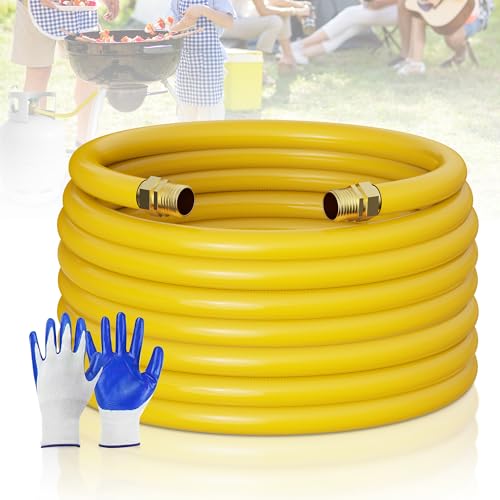
Designed for longer runs, this 3/4″ line handles up to 150,000 BTU for whole-home or multi-appliance setups. It includes two pre-attached brass NPT male adapters and can be cut to fit. Best for installations requiring extended length while maintaining safe flow. A limitation: the larger diameter may not fit tight outdoor recesses without additional routing planning.
Kinchoix 37 ft 1/2″ CSST Gas Line

The 37-foot length provides a balanced option for mid-range runs, with a 1/2″ inner diameter and brass fittings at both ends. It uses stainless steel bellows and a yellow UV-resistant jacket to withstand outdoor exposure. Best for grills, heaters, and small generators in spacious yards. A caution: ensure you have adequate clearance for the inner passage when routing around joists or obstacles.
Kinchoix 35 ft 1/2″ CSST Gas Line

This 35-foot option uses 304 stainless steel bellows with a rubber jacket and three-layer pressure testing for durability. It includes solid brass connectors and supports lengths suitable for multiple outdoor appliances. Best for flexible routing in medium to long outdoor runs. Consider this if you need a versatile mid-length line, and avoid if your project requires a shorter, tighter bend radius.
Buying Guide: Key Considerations for Natural Gas CSST Lines
- Material and build: Look for seamless stainless steel tubes (304 SS) and a protective jacket to resist scratches, bending stress, and weather exposure. Brass fittings typically offer tighter seals than plastic or rubber.
- Length and diameter: Choose a size that matches your appliances’ BTU requirements and the route you’ll take. Larger diameters handle higher BTU loads but require more space.
- Fittings and connectors: Ensure the kit includes compatible NPT brass fittings and sealing rings. Verify that the ends are designed for your appliances and gas supply.
- Flexibility and routing: Consider routes around joists, craters, attics, or crawl spaces. A line with minimal mid-run interfaces reduces leak risk and simplifies installation.
- Safety and compliance: Adhere to local codes for gas piping and CSST use. Follow manufacturer instructions for assembly, cut-to-fit steps, and mounting methods.
Frequently Asked Questions
- What is CSST gas line used for?
– It provides flexible natural gas or propane piping for grills, heaters, generators, and similar outdoor or indoor appliances. - Which diameter should I choose for a high-BTU appliance?
– A 3/4″ line supports higher BTU loads up to about 150,000 BTU, while 1/2″ lines cover many residential uses up to tens of thousands BTU. - Can CSST lines be cut to fit a run?
– Yes, most lines are designed to be cut to length with standard tools, but always follow the manufacturer’s cut-to-fit instructions. - Are brass fittings better than plastic?
– Brass fittings generally provide tighter, more durable seals and are less prone to degradation over time than plastic or rubber. - Is a longer CSST line always better?
– Not necessarily. Longer lines add potential leakage points and pressure drop; choose the length needed for your layout without excessive slack. - Do these lines require professional installation?
– Local codes vary; some installations may require a licensed gas fitter, especially for whole-home or high-BTU setups.
Add a Comment