If you need reliable protection against multiple gas types, a multi gas leak detector is the practical choice for homes, garages, workshops, and confined spaces. This guide identifies five top options, explains who each device is best for, and why they stand out. Use the quick comparison table below to narrow your picks before reading each product’s details.
| Product | Best For | Key Benefit | Notes |
|---|---|---|---|
| Kidde CO + Explosive Gas Alarm (3rd Edition) | Homes needing CO plus gas leak monitoring | Digital display and 9V backup for outages | Plug-in with battery backup; displays “GAS” for explosive gas |
| TOPTES PT520A Natural Gas Detector | Tight spaces and hard-to-reach leaks | 17-inch gooseneck probe; fast 0.5s response | Detects methane, propane, natural gas, LPG, butane |
| TopTes PT-356 Rechargeable Natural Gas Detector | Portable, data-rich monitoring | Full-color display with real-time PPM and trend graph | 0-20% LEL range; dual display modes |
| Klein Tools ET120 Gas Leak Detector | Versatile trade-use with wide range | Adjustable sensitivity; strong audible/visual alerts | 18-inch gooseneck; responsive detection |
| TopTes Guard-101 4-Gas Monitor | Worksites needing robust alarms | Triple alarm and long battery life | H2S, CO, LEL, O2 with vibration alerts |
Below, five selected products are explored in detail. Each entry follows a structured format to help you compare features, assess suitability for different environments, and make an informed choice quickly.
Kidde CO Plus Explosive Gas Alarm
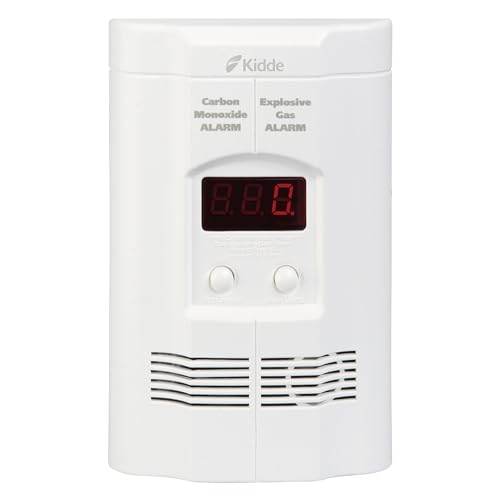
The Kidde model combines carbon monoxide monitoring with explosive gas detection in a plug-in unit that includes a 9-volt backup battery. The digital LED display shows CO levels or indicates “GAS” when explosive gases are detected. Best for homeowners who want an all-in-one warning device with easy installation and outage protection. Choose this if your priority is a simple, predictable home installation that covers both CO and gas leaks.
Best for: Homeowners seeking a compact, plug-in detector with battery backup and a clear digital readout.
Limitation: The device relies on a standard outlet; ensure there is space for placement away from heat sources and flammable materials.
TOPTES PT520A Natural Gas Detector

The PT520A emphasizes pinpointing gas leaks in hard-to-reach areas thanks to its 17-inch gooseneck probe. It detects methane, propane, natural gas, LPG, butane, and similar fuels with a rapid 0.5-second response and a 75 dB alarm that grows louder as gas concentration increases. Best for technicians, RV owners, and homeowners inspecting tight spaces like pipelines or basements. Choose this if you need a long-reaching probe and fast alerts in confined spots.
Best for: Detection in cramped or recessed spaces where probe reach matters most.
Caution: In open, well-ventilated areas, consider monitoring with additional devices to confirm localized leaks.
TopTes PT-356 Rechargeable Detector

The PT-356 is a rechargeable detector with a 10-inch goose neck and a full-color display. It detects 0-20% LEL, covering methane, propane, butane, natural gas, and more. The dual display modes present real-time PPM values and a minute-long history trend, with a triple-alarm system combining visual, audible, and vibrating alerts. Best for users who value data visualization and flexible power management. Choose this if you want contextual data and mobility in a single device.
Best for: Situations needing live data graphs and adjustable display settings for varied lighting and work conditions.
Limitation: More advanced features may require a learning curve to interpret trend graphs effectively.
Klein Tools ET120 Gas Leak Detector

The Klein Tools ET120 offers a wide detection range from about 50 to 10,000 ppm, with adjustable sensitivity for high or low ranges. It provides enhanced visual and audible alerts through five red LEDs and an 85 dB speaker that intensifies with gas levels. Best for field technicians and homeowners who need a versatile device with clear, scalable alarms. Choose this if you want adjustable sensitivity and a robust gooseneck for difficult-to-reach leaks.
Best for: Professionals or DIYers who require adjustable sensitivity and a strong, long-reach probe.
Caution: Range and sensitivity should be matched to the specific gas type and environment to avoid false alarms.
TopTes Guard-101 4-Gas Monitor
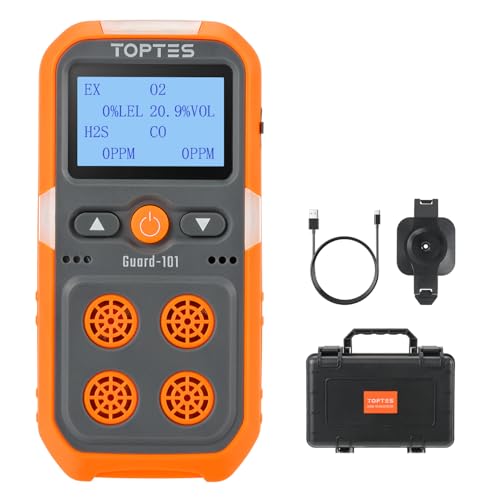
The Guard-101 is designed as a four-gas monitor covering H2S, CO, LEL, and O2. It features a fast 0.5-second response time and triple alarm modes (LED, vibration, sound). The unit is built with a sturdy ABS housing and includes password protection to prevent accidental operation. Best for work sites and home environments needing quick, multi-gas surveillance with secure operation. Consider this if you need a rugged, multi-gas device with robust alarm options and data storage capabilities.
Best for: Environments where rapid, multi-gas detection plus secure operation and data storage are important.
Limitation: Heavily feature-rich units may require more setup and ongoing calibration for accuracy over time.
Buying Guide: Key Considerations For Multi Gas Detectors
- Gas types detected: Decide which gases you need to monitor (CO, H2S, O2, LEL, methane, propane, etc.).
- Detection range and sensitivity: Match ppm or %LEL ranges to your typical leak scenarios and space constraints.
- Alarm systems: Consider devices with multiple alarms (visual, audible, vibration) for loud environments or PPE-limited settings.
- Power and portability: Choose plug-in units with battery backups or portable handheld models based on your location and power stability.
- Display and data: Prefer devices with clear digital readouts, trend graphs, or data export for audits and compliance.
- Probe length and accessibility: Longer goosenecks help reach tight spaces; consider whether you need a built-in fan for faster sampling.
- Durability and safety standards: Look for rugged housings and protection against dust, water, or impact if used on worksites.
- Calibration and maintenance: Some models include calibration certificates or require regular calibration for accurate readings.
- Mounting and portability: Decide between wall-mountable, plug-in, or handheld devices based on space and usage patterns.
Frequently Asked Questions
- What is the difference between LEL and ppm readings?
- Do I need a detector for CO and gas leaks in the same device?
- How often should a detector be calibrated?
- Can these detectors be used in RVs or confined spaces?
- What should I do if a detector alarms?
- Are there detectors with data logging?
LEL stands for lower explosive limit and measures the concentration of flammable gases; ppm (parts per million) quantifies certain gases like CO or H2S for health risk monitoring. Many detectors show both types or provide a ppm reading alongside LEL to indicate gas concentration and flammability risk.
Not always. Some devices combine CO and gas detection, while others specialize in different gas families. If you have both risks, a multi-gas detector that covers CO and combustible gases is practical.
Calibration frequency depends on the device and environment. Follow the manufacturer’s guidance; environments with dust, humidity, or chemical exposure may require more frequent checks.
Yes. Several models include long probes and portable features suitable for confined spaces, basements, or vehicle compartments where leaks are likely to occur.
Follow the device’s alarm protocol: evacuate the area if necessary, ventilate the space, and verify readings with another detector or reference device. If safe to do so, locate leaks using the probe and address the source.
Some models offer data storage and USB export for monitoring records and compliance. Data logging is useful for trend analysis and incident investigations.
Add a Comment