Choosing the right mini skid steer loader involves weighing power, stability, and attachment versatility against the job site’s terrain and space. The following selection highlights five compact machines that balance performance with maneuverability, helping you tackle landscaping, construction, and material handling tasks efficiently. Each option is paired with a brief snapshot of standout features to aid quick comparison.
| Product | Brand | Key Feature |
|---|---|---|
| HY480C Crawler Stand-On | HUAYEE | Crawler track system for soft or uneven ground |
| HY480D Ride-On Wheeled | HUAYEE | Wheeled stability with central seated operator |
| ATTACHXPRO Mini Skid Steer Loader Stand-On | ATTACHXPRO | 5-Second attachment swap; compact dimensions |
| MMS Mini Crawler Skid Steer MS360T | MMS | Gasoline engine; wooden crate delivery and easy transport |
| MMS 380T Mini Triangular Track | MMS | 46-inch bucket width; high traction triangular tracks |
Each model listed offers a distinct approach to compact loading and material handling, from crawler tracks that spread load on soft ground to agile wheel designs ideal for hard surfaces. Review the specs, attachments, and terrain suitability to determine which fits your typical projects best.
HY480C Crawler Stand-On Mini Skid Steer Loader
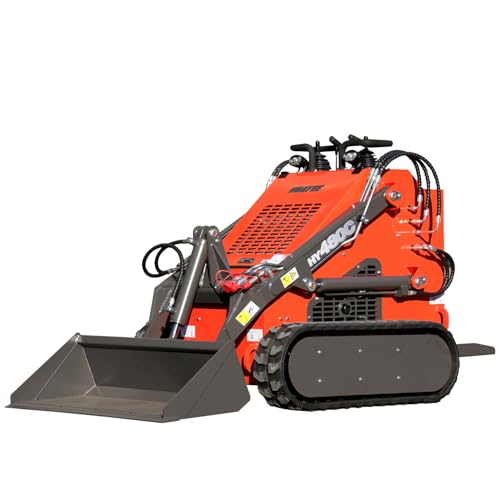
The HY480C uses a crawler track system to deliver improved grip and lower ground pressure, enabling operation on soft, muddy, uneven, or sloped terrains where wheeled units may struggle. Stability is enhanced when lifting and loading, making it suitable for challenging sites. A standard heavy-duty bucket is included for immediate material movement of soil, gravel, sand, or debris.
Key considerations: crawler traction supports safer operation on uneven ground; stand-on design keeps operator visibility high and machine width compact for tight spaces; ensure compatibility with preferred attachments beyond the included bucket for expanded versatility.
HY480D Ride-On Wheeled Mini Skid Steer Loader
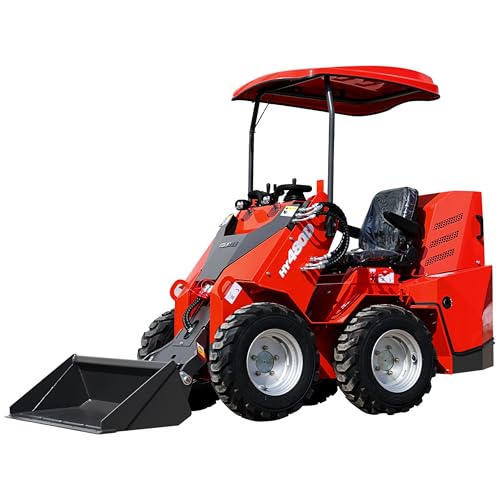
The HY480D blends a wheeled platform with a seated operator for stable control on hard surfaces such as concrete or asphalt. It arrives ready with a heavy-duty bucket, enabling immediate material handling tasks like moving dirt, gravel, demolition debris, and other construction materials. The wheel-based design typically delivers quicker setup and smoother rides over paved sites.
Key considerations: wheels offer faster travel but less surface adaptability on soft ground; seating position improves fatigue resistance on long shifts; confirm wheel tread and suspension options align with typical jobsite terrain.
ATTACHXPRO Mini Skid Steer Loader Stand-On (23 HP)

This ATTACHXPRO model features a 23hp gas engine and a universal quick-attach system for rapid swapping among buckets, forks, grapples, and fixtures. Its compact footprint supports tight spaces while maintaining robust power for loading, digging, and material handling. The design emphasizes ergonomic operation and easy maintenance with a front windshield for engine and hydraulic checks.
Key considerations: mid-range horsepower balances performance with fuel efficiency; 5-second attachment changes support workflow efficiency; verify pin spacing and plate dimensions to ensure compatibility with existing attachments.
MMS Mini Crawler Skid Steer MS360T

The MMS MS360T uses a gasoline engine (industry-standard 13.5 HP class) with a foldable foot pedal for space-efficient operation. The model emphasizes transport convenience and maneuverability, making it suitable for garden, farm, or small construction tasks. It supports various attachments through compatible mounting geometry and compact dimensions.
Key considerations: engine power paired with a compact footprint aids in narrow or confined sites; confirm crate-packed shipping and delivery requirements to ensure safe arrival; assess attachment compatibility with current tool lineup.
MMS 380T Mini Triangular Track Skid Steer Loader

Designed with triangular track undercarriage, the MMS 380T delivers high traction and uniform pressure distribution to reduce slippage on varied surfaces. Its bucket width up to 46 inches enables efficient material handling in tighter spaces such as courtyards and warehouses. The foldable foot pedal enhances space utilization for operators moving in compact environments.
Key considerations: triangular tracks improve flotation on soft ground; bucket width and track layout influence stability and load capacity; verify maintenance needs for track components and pedal mechanism in daily use.
Buying Guide: Key Purchase Considerations and Comparisons
- Terrain and ground conditions: Choose crawler tracks for soft or uneven ground, and wheels for smooth, hard surfaces. Some operators favor hybrid setups that balance ground pressure with travel speed.
- Engine power and efficiency: Horsepower affects lifting capacity and digging capability. For extensive projects, models around 20-23 HP typically offer a strong balance of performance and fuel use.
- Attachment versatility: The ability to swap attachments quickly (buckets, grapples, forks, augers) reduces downtime. Look for universal quick-attach systems and compatible mounting patterns.
- Operator positioning and ergonomics: Stand-on versus ride-on configurations influence visibility, fatigue, and control. Consider terrain, site accessibility, and operator preference.
- Size and maneuverability: Compact footprints aid in navigating tight spaces but ensure the machine’s width and turning radius meet your site constraints.
- Maintenance and parts availability: Evaluate ease of access to hydraulic components, engine serviceability, and availability of replacement parts in your region.
- Delivery and setup: Some models offer delivery and unloading services; confirm what is included and any additional setup requirements for immediate use.
- Safety features: Check guardrails, operator cab or windshield design, and standard safety controls to reduce risk on active sites.
When evaluating options, align product capabilities with typical jobsite tasks, such as grading, loading, trenching, or material transport. Consider running through a short checklist of your most common environments—soft ground, hard surfaces, or narrow spaces—to determine which combination of traction, size, and attachment flexibility delivers the best return on investment.
Add a Comment