The best mild steel U-channel options provide a strong, versatile framing profile for DIY projects, home workshops, and light structural work. This guide highlights five solid choices with clear, buyer-focused guidance. It helps you decide who each product is best for, what to expect in terms of sizing, and where to watch for limitations. Whether you need exact dimensions, budget-friendly channels, or longer lengths, these selections cover common U-channel uses from framing to supports.
| Product | Best For | Length/Size |
|---|---|---|
| Rocaris C Channel Steel | Small projects needing precise U-shape and clean cut | 12″ length, 1.85″ depth, 1.2″ flange |
| A36 Mild Steel Channel, 1/8″ Thick x 1″ x 2″ | General purpose framing, lighter duty | Pick your length |
| 4″ C Channel, C4 x 5.4 | Medium spans and structural support | 48″ length |
| 3″ C Channel, C3 x 4.1 | Compact framing with stronger profile | Pick your length |
| Generic 1/8″ Thick x 1/2″ x 2″ Channel | Shorter, lighter duty channels | 48″ length |
Rocaris C Channel Steel, 1.85″ Depth U-Shape
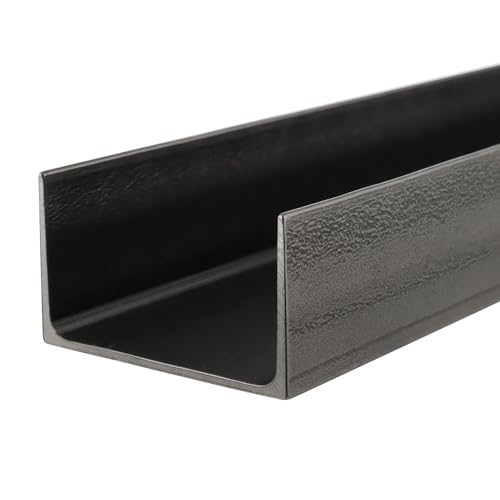
Best for: Small-scale projects and detailed work where exact sizing matters. This channel features a precise 1.85″ depth, 1.2″ flange width, and 0.1″ web thickness in a 12″ length. The U-shaped cross-section provides three-sided support suitable for light framing and custom brackets.
Why selected: The product is cut by an automatic machine and shipped with a smooth surface and burr-free edges, reducing finishing time on precision builds.
Caution: At 12″ length, this is best for short sections or splicing into longer runs; plan for joinery if your project requires longer spans.
A36 Mild Steel Channel, 1/8″ Thick x 1″ x 2″

Best for: General purpose framing where mild steel and moderate load-bearing are adequate. This channel uses 1/8″ thick steel with 1″ tall legs, making it a versatile choice for standard fabrication tasks.
Why selected: It provides straightforward sizing that fits common shop projects and easy cutting or drilling with standard tools.
Caution: The 1″ leg height may limit its use in taller-framed structures; verify if your design requires deeper channels.
4″ C Channel, C4 x 5.4 Structural Channel

Best for: Medium-span framing and structural support where a wider profile improves stiffness. A36 mild steel provides a reliable balance of strength and formability.
Why selected: The C4 x 5.4 profile offers a robust cross-section for longer runs and heavier loads compared to small channels.
Caution: Check all dimensional notes; confirm the exact flange width and overall height match your project layout before cut-and-waste planning.
3″ C Channel, C3 x 4.1 Structural Channel
Best for: Compact structural framing with a stronger cross-section than smaller channels. The C3 x 4.1 profile fits in tighter spaces while still providing load-bearing capacity.
Why selected: This option balances channel strength and profile size for projects where space is at a premium.
Caution: Ensure you have access to hardware and tools that accommodate the 3″ width and 4.1 weight per foot, especially on longer runs.
Generic 1/8″ Thick x 1/2″ x 2″ Channel

Best for: Lightweight, short-span projects where a slim channel is advantageous. The 1/8″ thickness and 1/2″ x 2″ foot print suit trim work or small brackets.
Why selected: It provides a budget-friendly option with a compact cross-section that can be easier to work with for fine-detail builds.
Caution: Check the web thickness and leg height against your load requirements; this channel is lighter and may not suit higher-stress applications.
Buying Guide
Key considerations when choosing mild steel U-channels include profile size, thickness, and length. Material quality and finish impact corrosion resistance and machining suitability. Here are practical questions to help you compare options.
What size channel do I need?
Measure the available space and required load path. Larger channels offer greater stiffness, while smaller channels fit tighter spaces and lighter loads. Consider depth, flange width, and leg height in relation to mounting points and fasteners.
Is 1/8″ thick steel enough for my project?
For light-duty framing, bracing, or trim, 1/8″ is often sufficient. For structural spans or higher loads, thicker options provide better resistance to bending and flex.
Should I choose stainless steel or mild steel?
Mild steel channels are typically easier to work with and more affordable for non-corrosive environments. Stainless steel channels offer superior corrosion resistance but at a higher cost and different fabrication characteristics.
What length should I buy?
Longer lengths reduce joints but can require cutting and handling. Choose lengths that minimize waste in your project, or select standard lengths when compatible with your design.
What are common limitations to watch for?
Be aware of burrs, edge quality, and precise dimensional tolerances. Some suppliers offer pre-cut lengths with smooth surfaces, which reduces finishing time. Validate the dimension specs against your drawing before purchase.
How should I plan for installation?
Prepare hardware compatible with mild steel channels. Ensure you have appropriate fasteners, brackets, and tools for cutting, drilling, and fastening to match the channel size and edge finish.
Comparison at a glance
- Best for small, exact pieces: Rocaris C Channel Steel (12″ length).
- Best for general framing: A36 Mild Steel Channel (1″ x 2″).
- Best for mid-span structural work: 4″ C Channel (C4 x 5.4).
- Best for compact framing: 3″ C Channel (C3 x 4.1).
- Best budget option for light duty: Generic 1/8″ Thick x 1/2″ x 2″.
FAQ
- What is a mild steel U-channel used for?
Mild steel U-channels provide structural framing, supports, brackets, and lightweight enclosures in a wide range of projects.
- How do I cut mild steel channels cleanly?
Use a metal-cutting saw, blade suitable for steel, and secure clamps to prevent bending. Deburr edges after cutting.
- What finishes are common for mild steel channels?
Plain mill finish is common; some channels arrive with rust-removal and oil spray for protection during shipping. Apply primer or paint for corrosion resistance as needed.
- What should I consider for long-term durability?
Environmental exposure, coating options, and ensuring proper drainage and moisture control will influence longevity.
- Are there safety considerations when handling channels?
Wear eye protection and gloves, handle to prevent cuts from sharp edges, and support long pieces to avoid tipping or loss of control.
- How do I choose between these five options?
Choose based on project size, load requirements, space constraints, and budget. Larger profiles offer more stiffness; smaller profiles fit compact spaces.
Add a Comment