Direct answer: When choosing a metal plate bending machine, prioritize a model that delivers precise 90° bends, durable build, and reliable bearings or dies for your material set. The top picks below are suited for professionals and hobbyists needing accurate corners, smooth operation, and versatile materials such as steel, aluminum, copper, and stainless steel. Each entry includes who it’s best for and why it stands out.
Buyer snapshot table
| Product | Best For | |
|---|---|---|
| MXBAOHENG 90° Flat Bar Bender (3X50mm) | Metal fabricators needing accurate 90° angles | 9 bearings for smooth operation |
| MXBAOHENG 7.87” Steel Bending Brake | Compact setups with precise angle control | ±1° bend accuracy |
| MXBAOHENG 0.55” Manual Rebar Bender | Rebar and metal rod shaping | 200° bending range |
| MXBAOHENG 90° Flat Bar Bender (5X50mm) | Thicker flat bars with consistent angles | 7 bearings and stainless handle |
| VEVOR YP-9 Manual Bender | Versatile dies for various diameters | 7 interchangeable dies |
MXBAOHENG 90° Flat Bar Bender (3X50mm)

This manual flat bar bender is designed to form right angles with a 90° target, making it suitable for projects needing precise perpendicular corners. It uses a dual-zone nine-bearing design to provide smoother bending and reduce effort during operation, especially with galvanized flat strips, steel, copper, aluminum, and 304 stainless steel. The laser-cut steel plates and chamfered edges support accurate sizing and clean finishes. Best for: small to medium labor-intensive fabrication in workshops where consistent 90° bends matter.
Why selected: The nine bearings together with 90° accuracy offer reliable performance across common metals, helping maintain uniformity in repeated parts. Caution: Larger or thicker stock may require more manual force or longer setup to avoid deflection.
MXBAOHENG 7.87” Steel Bending Brake

This compact sheet metal bender provides 0-90° bending with a tight control error of ±1°, ensuring precise angles for thin iron, stainless steel, aluminum, and copper plates. It features a 400mm extended solid rod to reduce bending stress on the force mechanism and three fixing screws to minimize positional deviation during use. Best for: precision work in tight spaces where consistent angles are essential and material thickness stays within its designed range.
Why selected: The combination of angle accuracy, a long solid rod, and secure mounting makes this model a solid choice for users prioritizing repeatable, high-precision bends. Caution: Not ideal for very thick plates or heavy-duty industrial production without confirming material limits.
MXBAOHENG 0.55” Manual Rebar Bender
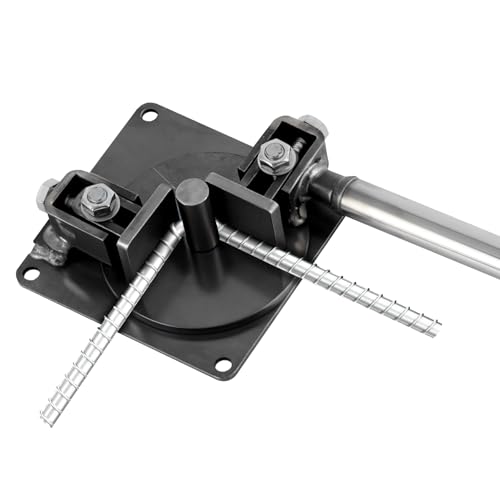
This manual rebar bender concentrates on 200° bending for steel, copper, aluminum, iron, and 304 stainless steel, providing a broad range of forming possibilities. The stainless steel handle ensures high hardness and durability, while laser-cut plates with chamfered edges contribute to smoother operation and cleaner edges. Best for: projects requiring more than a simple 90° bend, particularly in rebar and rod work with moderate complexity.
Why selected: The 200° capability expands versatility beyond right-angle bends, and the durable handle supports repeated use. Caution: Handle ergonomics may still cause fatigue on extended sessions; plan for breaks on long runs.
MXBAOHENG 90° Flat Bar Bender (5X50mm)

This 90° flat bar bender targets slightly thicker flat bars with a 5x50mm profile and seven bearings for smoother operation. It maintains accurate right-angle bending, ensuring that the finished part has a uniform angle and clean edges. The stainless steel handle contributes to long-term durability and rust resistance. Best for: users who need reliable performance on medium-thickness bars and consistent results across multiple cycles.
Why selected: The reduced bearing count (7) compared to larger models still delivers smooth bending while offering a compact form factor. Caution: For very heavy-duty production, check material thickness limits to avoid overloading the mechanism.
VEVOR YP-9 Manual Bender
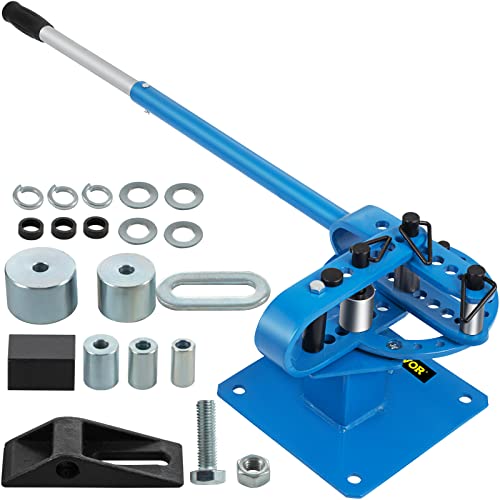
The VEVOR YP-9 manual bender is designed for solid round and square bars, delivering efficient and precise bending with seven interchangeable dies. This versatility makes it well-suited for construction sites and home workshops that require quick changes in die size for different diameters. Best for: professionals who need a multi-diameter solution and easy changeovers for quick jobs.
Why selected: The seven dies provide broad compatibility for a range of diameters, supporting diverse tasks. Caution: Die swaps should be performed with care to maintain alignment and prevent tool wear.
Buying Guide: Key Considerations for Metal Plate Bending Machines
- Bend Angles and Precision: Look for models offering true 90° bending with tight angle tolerances (±1° is common for accurate work). Consider whether you need 0–90° versatility or specialized ranges such as 200° bends for bars and rods.
- Material Compatibility: Confirm compatible materials (steel, stainless steel, aluminum, copper, iron, galvanized metals). Heavier-duty units handle thicker or harder stock, while lighter models suit thin sheets.
- Bearings and Drive System: More bearings generally mean smoother action and less effort. Dual-zone or multi-bearing designs reduce resistance during bending.
- Die and Rod Options: Interchangeable dies or long solid rods increase versatility for different diameters and profiles. Check whether the unit supports your needed thickness and width.
- Mounting and Stability: Some models include fixed installation options or clamps to prevent movement during bending. Stability improves accuracy and safety.
- Portability vs. Capacity: Compact brakes are handy for small shops or on-site work, but verify the maximum material size and weight they can safely bend.
- Ergonomics and Durability: Stainless handles and laser-cut surfaces contribute to longevity and ease of use, especially for frequent or long sessions.
Frequently Asked Questions
- What is the typical bend angle accuracy I should expect?
Most quality units offer around ±1° to ±2° accuracy for standard 90° bends depending on material and setup.
- Can these machines bend materials other than flat bars?
Yes, some models support rods or rebar, and certain dies enable curved or circular forms, but verify each machine’s stated capabilities.
- Which features improve long-term durability?
Stainless steel handles, laser-cut plates, proper chamfering, and high-quality bearings reduce wear and extend life.
- How do I choose between a compact brake and a larger bender?
Choose based on material thickness, required bend angles, space, and job frequency. Larger units handle thicker stock but require more workspace.
- Are interchangeable dies essential for versatility?
Interchangeable dies greatly increase versatility across diameters and shapes, making them worthwhile for multi-use setups.
- Is mounting necessary for accurate bends?
Mounting reduces positional deviation and improves repeatability, especially for production or repeated tasks.
Add a Comment