When shopping for a mass flow meter, reliability, accuracy, and ease of use are key. This guide highlights five devices from leading manufacturers that are well-suited for lab work, field audits, automotive diagnostics, and industrial testing. Each product is presented with its best-use scenario, a quick pros/cons note, and practical buying considerations. The list focuses on devices that balance portability, accuracy, and flexible power or integration options, making them useful across a variety of measurement tasks.
| Product | Best For | Key Benefit | Limitations |
|---|---|---|---|
| MF5706 (Rendrox) | Lab and field audits | Compact, battery or AC powered, RS485 Modbus | 0-20 L/min range may be limiting for higher flows |
| MF5712 (Maisutseb) | Outdoor use and high flexibility | Direct mass flow measurement without compensation | Requires understanding of its two power modes |
| AF10043 (Delphi) | Automotive diagnostics | OE-grade accuracy and low signal noise | Primarily designed for vehicle air intake sensing |
| AF10060 (Delphi) | High-precision airflow sensing | Engineered for wide temperature ranges | Not a handheld flow meter style |
| Zpana MAF Sensor | Vehicle compatibility and replacement | Replaces multiple OEM numbers | Compatibility depends on exact model year and configuration |
1/4″ NPT Portable Digital Thermal Mass Flow Meter (MF5706) by Rendrox

Best for: field maintenance technicians and lab researchers needing a compact device to measure 0-20 L/min of compressed air, nitrogen, or oxygen with digital readouts. This meter offers a handheld form factor with a rotatable LCD for easy viewing in tight spaces and supports RS485 Modbus for integration with data systems. It is powered by four AA batteries or an external AC adapter, making it suitable for on-site audits and mobile testing.
Why selected: The combination of portability, dual power options, and Modbus compatibility makes it a practical choice for processes requiring quick, on-site flow checks without sacrificing data connectivity. The NPT 1/4″ threads ease integration into standard pneumatic lines.
Caution: The 0-20 L/min range is ideal for low to moderate flow tests; higher flow scenarios will require a different meter or an expanded range model. Battery operation depends on AA availability and may limit continuous unattended use.
Maisutseb Digital Gas Mass Flow Meter MF5712

Best for: environments requiring accurate, direct mass flow readings without pressure or temperature compensation. Its capability to measure up to 250 L/min and a high-resolution output (0.01 L/min instantaneous, 0.001 m³ cumulative) supports laboratory and industrial gas testing where precise dosing matters.
Why selected: The meter’s single-chip design with wide dynamic range enables sensitive detection across small and large flows, making it versatile for gas flow validation, sensor calibration, and process audits. Dual power options extend field usability.
Caution: As with many digital meters, correct interpretation of readings relies on proper installation and calibration. Verify the external power source and wiring for outdoor use to ensure uninterrupted operation.
Delphi AF10043 Mass Air Flow Sensor
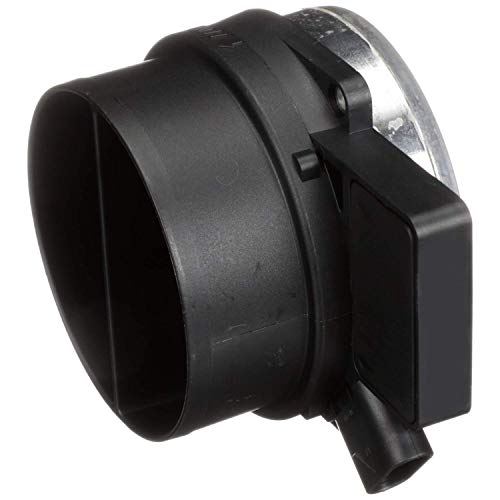
Best for: automotive diagnostic applications where established OE-grade accuracy and robust signal integrity are critical. This Delphi MAF sensor is known for reliable performance across a broad range of ambient temperatures and is a traditional choice for engine airflow measurement.
Why selected: Delphi has a long history of OE-sensor production, and AF10043 is frequently referenced as a benchmark for precision in air intake measurements, helping reduce signal noise in ECU communications.
Caution: This device is primarily intended for automotive use; ensure proper vehicle compatibility and installation procedures before integration into non-vehicular systems.
BDFHYK Mass Air Flow Sensor Meter MF74-50011
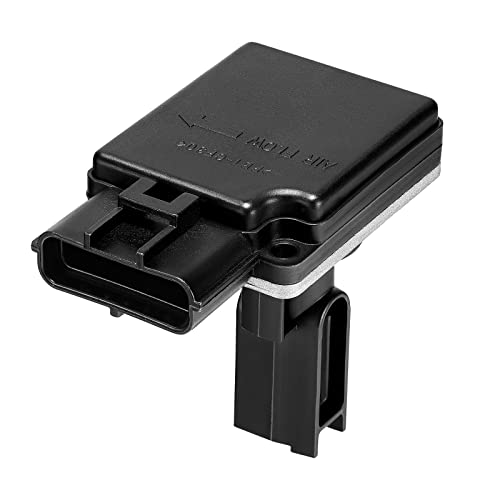
Best for: automotive repair and replacement where OEM part compatibility is important. The MF74-50011 MAF sensor is positioned as a direct or compatible replacement for several Ford and Mazda models, aiding quick maintenance and part substitutions.
Why selected: Its relevance to common mid-2000s to early-2010s vehicles makes it a practical option for shop inventories focused on vehicle airflow sensing components. It provides a straightforward way to restore accurate MAF readings in compatible models.
Caution: Verify exact OEM compatibility and model year fitment to avoid inapplicable parts. MAF sensors depend on precise electrical connections and fitment geometry.
Zpana Car Mass Air Flow Meter Sensor

Best for: car owners and technicians needing OEM-like replacement parts across a broad model range. This sensor claims compatibility with multiple Nissan/Infiniti models and other vehicles across years, offering a versatile fit for many projects.
Why selected: It consolidates various OEM references into one replacement option, which can simplify parts selection for repairs or upgrades in mixed fleets.
Caution: Double-check the exact OEM numbers and vehicle compatibility. Compatibility notes are extensive, so confirm fitment for your specific model and year before purchase.
BBLKLQJDM 5WK98504 Mass Air Flow Meter MAF Sensor

Best for: contexts where OEM alternative MAF sensors are sought for established vehicle models with compatible part numbers. The listing targets the 5WK98504 MAF sensor code, useful for quick identification in parts catalogs.
Why selected: Provides a straightforward option for technicians looking to match a known OEM reference, reducing misfit risk in repairs and replacements.
Caution: Ensure the 4-pin configuration matches your vehicle’s harness and that the sensor’s electronic characteristics align with your ECU’s expectations.
Delphi AF10060 Mass Air Flow Sensor

Best for: professional shops requiring high-precision airflow readings over a wide temperature range. This Delphi option emphasizes engineered accuracy and is built to match stringent OEM standards for ECU communication.
Why selected: Its emphasis on wide ambient temperature performance and precise sensing elements makes it a strong choice for reliability in diverse climates and engine conditions.
Caution: As with other MAF sensors, verify precise vehicle compatibility and installation guidelines to prevent measurement or engine-management issues.
Buying Guide: Mass Flow Meter Considerations
- Measurement range and fluid type: Ensure the device covers your target gases or air flows. Some models are optimized for low flows (0-20 L/min) while others handle hundreds of L/min.
- Power and connectivity: Decide between handheld, battery-powered meters and lab-grade units with external power or data interfaces (RS485, USB, etc.). Consider field use, data logging, and integration needs.
- Port compatibility: Check NPT or other thread types and whether adapters are required for your piping or hoses.
- Temperature and pressure compensation: Some meters measure mass flow directly without compensation, which simplifies use in varying conditions; others may require calibration for accuracy.
- Vehicle compatibility: For automotive MAF sensors, confirm exact OEM numbers and model compatibility to avoid fitment issues.
- Data output and analysis: Look for devices with clear digital readouts, logging capabilities, and compatibility with Modbus or other industrial protocols if you integrate with control systems.
- Durability and environment: For outdoor or workshop use, assess ruggedness, casing, and resistance to dust or moisture.
Frequently Asked Questions
- What is a mass flow meter used for?
A mass flow meter measures the mass of gas or air passing through a system, enabling precise control in processes, calibrations, and diagnostics.
- Do all mass flow meters require temperature or pressure compensation?
Some meters measure mass flow directly without compensation, while others rely on compensation to maintain accuracy across conditions.
- Can automotive MAF sensors be used in non-automotive applications?
MAF sensors are designed for specific engine and ECU interfaces; using them outside their intended context may require adapters or may not be compatible.
- Which feature matters most for field use?
Portability, battery life, and data connectivity are critical for field work, along with a clear display and robust construction.
- How do I choose the right range for a mass flow meter?
Match the meter’s maximum flow to your highest expected test flow, with some headroom to avoid saturating the sensor.
- Is RS485 Modbus important?
Yes, for industrial environments where the meter needs to report data to a centralized control system or data logger.
Add a Comment