Refueling a boat, dinghy, or other watercraft requires equipment that is reliable, safe, and easy to use in variable conditions. The following selections focus on marine-compatible fuel transfer pumps that handle diesel, gasoline, kerosene, and similar fuels with features like auto-stop nozzles, self-priming, and long hoses. This guide compares practical capacities, power options, and portability to help boat owners choose pumps that work well at the dock, on deck, or in a garage before a day on the water.
| Product | Brand | Key Feature | Flow Rate |
|---|---|---|---|
| Keimi Fuel Transfer Pump | Keimi | Auto-stop nozzle, battery or USB powered | 3.2 GPM |
| Orion Motor Tech Diesel Transfer Pump | Orion Motor Tech | 12 GPM, self-priming, low-noise | 12 GPM |
| Mxmoonant 12V Oil Transfer Pump | Mxmoonant | Self-priming, compact, versatile hoses | 3.2 GPM |
| 12V DC Electric Fuel Transfer Pump (OBALOGI) | OBALOGI | Cigarette lighter or battery power, high flow | Up to 110 GPH (≈1.83 GPM) |
| FUELIO USB Fuel Transfer Pump | FUELIO | Auto-stop nozzle, USB or battery power | 3.2 GPM |
The following product sections highlight five pumps that are well-suited to marine fueling tasks, focusing on safety features, ease of use, and compatibility with common boat fuel needs. Each entry includes a product link, key specifications, and practical considerations for on-water fueling scenarios.
Keimi Fuel Transfer Pump With Auto-Stop

The Keimi unit offers a safe refueling workflow with an intelligent auto-stop nozzle that detects a full tank and stops the flow, reducing spill risk during on-deck fills. It supports a 3.2 GPM flow rate, enabling faster transfers for boats with larger tanks or multiple accessories like portable dockside tanks. Power flexibility comes from battery operation using four AA batteries for everyday portability or USB-powered operation via a power bank if no outlet is near. The pump is designed for marine-friendly refueling of cars, lawn equipment, motorcycles, and even small yachts, making it a versatile choice for mixed-use vessels.
Key considerations for marine use include ensuring the nozzle’s seal maintains when subjected to vibration and deck movement, and verifying battery life for expected fueling sessions. The included 51-inch hose also helps reach taller tanks or deep fill points on some boats. The combination of speed, safety features, and rechargeable versatility makes this pump a practical choice for dockside refueling or emergency aboard-water needs.
Orion Motor Tech Diesel Transfer Pump

This 12V transfer pump is designed for diesel and other low-viscosity oils, with a self-priming mechanism that makes it suitable for boats that rely on diesel engines or auxiliary tanks. It pumps up to 12 GPM and can lift fluid from a substantial suction distance, which helps when accessing stern tanks or jerry cans. A safety feature includes an inner bypass valve to protect the motor from clogging while a metal strainer safeguards against impurities that could damage components in marine environments. The system is relatively quiet and compact, offering dependable performance for routine onboard maintenance or on-site fuel changes.
Considerations for marine scenarios include verifying compatibility with every diesel variant used on the vessel, ensuring hose fittings align with boat canisters, and planning for storage and portability in bilge or locker spaces. This pump suits boat owners performing regular oil changes, diesel transfers, or refueling tasks where a robust yet compact device is preferred.
Mxmoonant 12V Oil Transfer Pump

The Mxmoonant model emphasizes strong suction with relatively low noise, featuring a self-priming range up to 3 meters and a maximum flow of 3.2 GPM. A compact design with 3/8-inch diameter ports supports a range of hoses commonly found in marine setups. The product includes basic accessories like a one-meter hose and fixing clips, enabling quick setup on boats with tight headroom or limited storage space. It’s suitable for transferring diesel, kerosene, lubricants, and similar fluids, though users should avoid gasoline-petroleum fuels as noted in the listing.
For marine users, the ability to install the unit in various orientations can be advantageous when rigging hoses along rails or under seating. The noise level is manageable for deck refueling, and the unit’s self-priming capability simplifies operations on vessels without a ready external power source near the tank.
12V DC Electric Fuel Transfer Pump (OBALOGI)
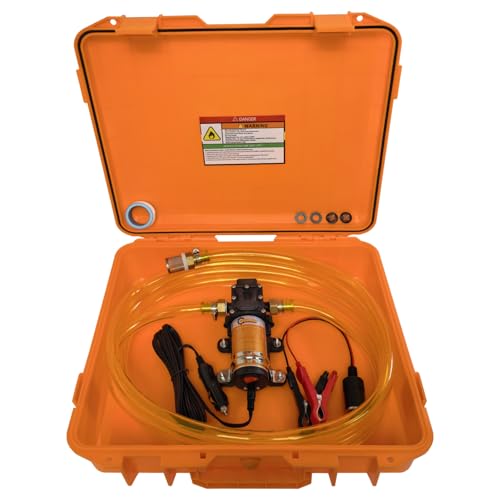
This high-flow 12V pump moves up to 110 gallons per hour, making it a strong choice for larger boats or heavy equipment aboard where time is a factor. It can be powered via a car cigarette lighter or a direct DC battery connection with included cables, offering flexible setup at dockside or on the move. The design prioritizes hands-free operation with a simple on/off switch that allows drawing fuel directly from a drum into the vessel’s tank or to onboard equipment. The compact assembly is suited for boats needing a quick, efficient top-off or refueling during travel or camping trips by the water.
Marine considerations include ensuring the pump’s power draw is compatible with the boat’s electrical system and that the wiring is protected from moisture and vibration. The capability to connect to a DC battery around the vessel makes it a practical utility for emergency refueling or routine top-offs when shore power isn’t available.
FUELIO Fuel Transfer Pump (USB & Battery)

The FUELIO unit blends convenience with safety, featuring an automatic stop sensor that prevents spills, a USB-C power option, and battery operation as a backup. It supports multiple fuels with a transfer rate around 3.2 GPM, making it suitable for quick deck-side fills of gasoline, diesel, kerosene, and light oils. The nozzle includes a locking clip for hands-free operation, and a long 22-inch suction tube helps reach tall containers or large cans, which is useful when topping off bigger boats or jerry cans stored on deck or in a storage locker.
In marine contexts, the USB power option is a strong advantage when dockside power is intermittent or during camping moorings. The locking clip and auto-stop feature contribute to safer fueling practices on moving vessels, though care should be taken to secure hoses and maintain dry handling surfaces on deck.
Buying Guide: Key Purchase Considerations for Marine Fuel Transfer Pumps
- Fuel compatibility: Confirm the pump handles the specific fuels you use (gasoline, diesel, kerosene) and avoid units not rated for your tank contents to prevent damage or safety issues.
- Flow rate and tank size: Higher GPM is helpful for large tanks or frequent top-offs, but consider quieter operation and power availability when choosing between 3.2 GPM and faster options.
- Power options: Buoyant boats may rely on 12V DC from the battery, cigarette lighters, USB power banks, or AA batteries. Assess what is readily available at your dock or marina.
- Safety features: Auto-stop nozzles, bypass valves, and gravity-free operation reduce spill risk. Look for ergonomic, lockable nozzles for hands-free use and secure hose connections to prevent leaks.
- Portability and storage: Compact, lightweight units with long hoses travel well and store easily in bilges or lockers. Self-priming and minimal assembly save setup time on deck.
- Maintenance and durability: Marine environments demand corrosion resistance, robust housings, and easy cleaning. Pumps with metal components and protective casings tend to last longer in saltwater use.
- Hose and fitting compatibility: Ensure hose diameter and inlet/outlet fittings align with your boat’s tanks and containers, and that the hose length accommodates reach to the deck or gunwale.
- Regulatory and safety guidelines: Always follow local fueling regulations and safety practices aboard, including grounding and spill containment measures.
Add a Comment