Answering the need for efficient, small to midsize pellet production, these pellet mill machines are suitable for hobbyists, small farms, pet-feed prep, and small commercial operations. Each top pick offers different power, die sizes, and portability, helping buyers match their material types and throughput. This guide highlights five options and explains who benefits most from each model.
Summary of selected products
| Product | Best For | Key Feature | Power (approx.) |
|---|---|---|---|
| Dewinston 110V Pellet Mill Machine | Versatile home or small farm use | Multiple discharge sizes 2.5–8 mm | 5.5 kW |
| YUCHENGTECH Electric Animal Feed Pellet Machine | Small-to-midscale pet or farm use | 3/5/7 mm molds | 500 W |
| VEVOR Feed Pellet Mill Machine | Small farm and hobby farming | 3-roller design; 6 mm pellets | 3 kW |
| Bonxrdun Feed Pellet Machine | Rural farms with diesel access | Diesel engine; 4 mm die | Diesel-powered |
| Canglan Technology 3KW 120 Model | Small-scale commercial prep | Up to 110 lb/h; various feeds | 3 kW |
Dewinston 110V Pellet Mill Machine

The Dewinston 110V Pellet Mill is a 5.5 kW copper-motor machine designed for reliable, continuous pellet production. It offers multiple discharge sizes from 2.5 mm to 8 mm, making it adaptable to different feed types and pellet profiles. The large discharge port helps reduce feed scattering, and an integrated voltage display aids real-time monitoring. This model is best for small-to-medium operations that require consistent output and a range of pellet sizes.
- Best for: Home workshops, small farms, and mixed feed operations needing multiple pellet sizes.
- Why selected: Strong torque and stable power with durable components for longer life.
- Caution: Proper clearance and feed preparation are essential to avoid jams; ensure consistent material particle size.
YUCHENGTECH Electric Animal Feed Pellet Machine

This YUCHENGTECH model provides versatility with 3 mm, 5 mm, and 7 mm pellet boards and supports a range of materials, including grains and powders. It emphasizes user guidance and precautions to prevent failures, such as avoiding overly viscous mixtures and ensuring pre-dried materials. It is best for pet-owners or small producers who want flexible pellet sizing and straightforward operation.
- Best for: Small pet-feed production or mixed-material pellets.
- Why selected: Flexible mold options and guidance for achieving consistent pellets.
- Caution: Not suitable for bones, nuts, or hard shells; moisture control is critical for pellet quality.
VEVOR Feed Pellet Mill Machine

The VEVOR pellet mill features a three-roller design and a 6 mm grinding disc for efficient, steady production. Its 3 kW copper-motor setup provides reliable output suitable for poultry and livestock pellets, with safety-focused features like a control panel, status indicators, and an emergency stop. This model is best for hobby farms or small-scale commercial setups seeking dependable performance with built-in monitoring.
- Best for: Farms needing safe, monitored pellet production.
- Why selected: Balanced throughput with protective design and real-time monitoring.
- Caution: Enclosed design means you should verify material consistency to prevent jams.
Bonxrdun Feed Pellet Machine
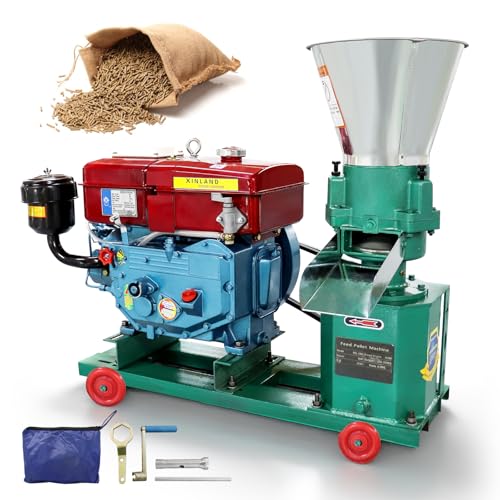
The Bonxrdun pellet machine is diesel-powered, designed for farms in areas with unreliable electricity. It outputs 175–330 pounds per hour and ships with a 4 mm die plate, with options for other sizes on request. This model is ideal for large operations or remote locations where electric power is inconsistent or unavailable.
- Best for: Rural farms or zoos with limited electrical infrastructure.
- Why selected: Diesel power enables continuous production in off-grid settings.
- Caution: Diesel fuel availability and maintenance are necessary for dependable operation.
Canglan Technology 3KW 120 Model

The 3KW 120 Model from Canglan Technology emphasizes high-capacity output for small commercial batches, capable of producing up to 110 lb/h. It supports a variety of feed pelleting applications, including poultry and small livestock feeds, pet foods, and biomass pellets. The straightforward operation and hopper design aim to simplify batch production.
- Best for: Small commercial pellet production or batch cooking for multiple animals.
- Why selected: Clear throughput target with easy operation for quick scaling.
- Caution: Limited to mid-range production; may require additional equipment for very large runs.
Buying Guide
What to consider before buying a pellet mill
- Intended use: Home hobby, small farm, or commercial batch production dictates power, throughput, and die sizes.
- Motor type and power: Copper motors generally provide reliable torque and longevity; choose between electric or diesel power based on location and energy access.
- Die sizes and shapes: Common options include 2.5–8 mm; select sizes to match your feed material and animal requirements.
- Throughput and efficiency: Check pounds per hour or kilograms per hour to match your production goals; consider multi-roller designs for smoother operation.
- Material compatibility: Some units advise against bones, nuts, or fibrous materials; ensure your feed ingredients fit the machine’s guidance.
- Safety and monitoring: Look for emergency stop, overload protection, and real-time monitoring features to prevent jams and injuries.
- Portability and footprint: Portable units suit on-farm use or home kitchens; larger models fit shed or workshop spaces.
Frequently Asked Questions
- What power source is best for pellet mills? Electric models are common for home and small farms; diesel-powered units work well in remote, off-grid locations.
- Which pellet size should I choose? Sizes like 2.5–8 mm cover most poultry, livestock, and pet-feed needs; select based on your animals and feed formulation.
- Can I pelletize all materials? Not all materials—avoid bones, nuts, hard shells, or very fibrous substances unless the model specifies compatibility.
- How much maintenance is required? Regular inspection of the motor, rollers, and dies helps prevent jams and ensures consistent output.
- Is a higher price worth it? Higher-priced models often offer better durability, safety features, and longer life, which can reduce long-term costs.
- What is the best choice for a beginner? A compact electric model with multiple die options and clear operating guidelines is typically easiest to start with.
Add a Comment