Answering the question “which hydraulic cylinder products and stroke control kits suit my needs?” this guide highlights five top options that appeal to different buyers: both projects requiring quick stroke adjustments and robust, long-lasting cylinders. The top picks include stroke control kits for quick length changes, compact welded cylinders for light-to-moderate loads, and larger bore options for heavier tasks. This article helps contractors, hobbyists, and shop operators decide which toolset fits their specific cylinder sizes and operating conditions.
Summary table of selected products:
| Product | Best For | Key Benefit |
|---|---|---|
| Stroke Control Kit – AMRAP Hydraulics (0.75″–1.5″ thickness) | Multiple cylinder sizes | Versatile stroke conversion with four clamp sizes |
| WEN 3″ Bore, 12″ Stroke (TR-3012) | Medium-duty projects | High PSI capability with standard porting |
| Stroke Control Kit – Zorqon (1.0″–2.0″ thickness) | Larger shafts | Wide compatibility and portability |
| AMRAP 2.5×16 Cylinder | Heavy tasks with 2.5″ bore | High PSI, welded all-metal construction |
| AMRAP 2.5×14 Cylinder | Compact heavy-duty needs | Similar strength with a shorter stroke |
Stroke Control Kit for Hydraulic Cylinders – 0.75″–1.5″ Thickness
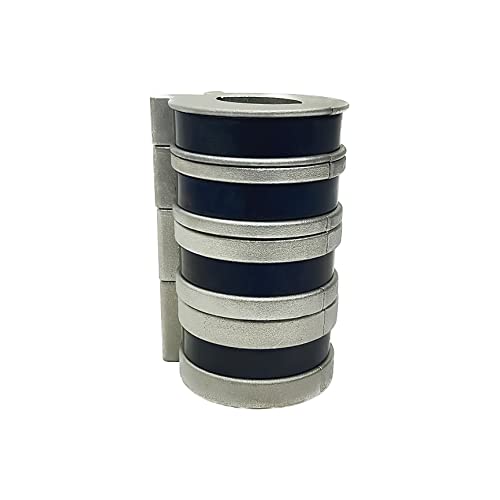
The kit fits cylinder shafts from Ø1.5″ and larger with adjustable thickness options of 0.75″, 1.00″, 1.25″, and 1.50″. Best for operators who frequently change stroke lengths on a range of cylinder sizes. It includes four clamp sizes to adapt quickly to different situations, enabling fast stroke length conversions without disassembly. This is a practical choice for shop floors or field service where cylinder compatibility varies.
Who it’s best for: contractors or workshop technicians who need flexible stroke conversion across multiple cylinder models. Why selected: broad compatibility and straightforward conversion process reduce downtime. Caution: verify exact shaft diameter and thickness before purchase to ensure a precise fit.
Wen 2500 PSI Tie Rod Hydraulic Cylinder (TR-3012)

This double-acting, welded steel cylinder delivers up to 2500 PSI with a 3″ bore and a 12″ stroke, plus a 1.25″ rod diameter. The 1/2″ NPT port supports standard hydraulic hoses, making it a solid choice for medium-duty tasks. Better for users needing moderate stroke length with reliable, simple setup in a compact form.
Who it’s best for: DIYers and small shops looking for a sturdy, ready-to-use cylinder. Why selected: balanced size and pressure rating suit common lifting and pushing tasks. Caution: not ideal for very high-speed cycling or extended ultra-heavy-duty use beyond 2500 PSI.
Stroke Control Kit for Hydraulic Cylinders – 1.0″, 1.5″, 2.0″, 4.0″ (1.75″–2.0″ Shafts)

This stroke control kit broadens compatibility for shafts from 1-1/8″ to 1.5″ and adds larger conversion sizes of 0.75″, 1.0″, 1.25″, 1.5″, 2.0″, and 4.0″. Its four clamps accommodate a wide range of working conditions, making stroke length changes quick and organized. Light enough to carry in a toolbox yet capable for demanding setups.
Who it’s best for: field technicians and shop teams dealing with diverse hydraulic systems. Why selected: broad size coverage and portable design. Caution: ensure the large 4.0″ option is actually needed for your cylinders; a smaller kit may suffice otherwise.
2.5×16 Hydraulic Cylinder – 2.5″ Bore, 16″ Stroke

Welded double-acting cylinder with a 2.5″ bore and 16″ stroke, rated for 3500 PSI. Features a 1-1/2″ rod diameter and 24″ retracted length, 40″ extended. SAE#8 ports with high-strength, corrosion-resistant construction. This model emphasizes durability and high load capacity, suitable for heavier-duty applications in industrial or agricultural settings.
Who it’s best for: operators needing substantial force and robust build for repetitive cycles. Why selected: high PSI and all-welded construction offer reliability in harsh environments. Caution: heavier unit with larger footprint; plan for mounting and space.
2.5×14 Hydraulic Cylinder – 2.5″ Bore, 14″ Stroke
Similar to the larger model but with a 14″ stroke, this welded double-acting cylinder uses a 2.5″ bore and 1-1/2″ rod. Rated at 3500 PSI, it maintains a compact, rugged profile while offering strong push and pull capabilities. Its shorter stroke makes it ideal for applications with limited travel or quicker cycling requirements.
Who it’s best for: projects needing strong performance in a smaller travel distance. Why selected: identical pressure rating and construction with a stroke length better suited to constrained spaces. Caution: shorter stroke may require a longer axis movement elsewhere in the system.
2×28 Hydraulic Cylinder – 2″ Bore, 28″ Stroke
This welded cross-tube cylinder delivers a 2″ bore with a long 28″ stroke, rated at 3500 PSI. Features a 1-1/4″ rod and a robust all-welded design, built to withstand outdoor use and heavy loads. It strikes a balance between travel distance and force, ideal for longer linear applications or deflection-aware setups.
Who it’s best for: users needing extended stroke without sacrificing strength. Why selected: longer stroke for increased reach while maintaining a compact cross-tube form. Caution: larger size requires secure mounting and alignment to avoid binding.
WEN Cross Tube Hydraulic Cylinder – 2″ Bore, 6″ Stroke

This cross-tube cylinder offers a smaller footprint with a 2″ bore and a 6″ stroke, rated up to 3000 PSI. It uses a welded steel construction and a 1.25″ rod diameter, with an SAE-6 port for compatibility with standard hydraulic hoses. It’s a good fit for compact systems requiring dependable linear motion.
Who it’s best for: projects needing a compact, reliable cylinder with moderate travel. Why selected: light footprint and ease of integration into existing cross-tube frameworks. Caution: shorter stroke may limit its applicability for longer travel tasks.
Buying Guide
What to consider when choosing hydraulic cylinders and stroke kits:
- Stroke length versus travel needs: choose a cylinder with enough stroke to complete the work without overextending or binding.
- Bore size and force: larger bores deliver more force; ensure the rod diameter and wall thickness suit your load and cycling requirements.
- Port type and compatibility: verify SAE or NPT ports and ensure hoses and fittings are compatible with your system’s pressure.
- Material and construction: welded steel cylinders offer durability in outdoor or heavy-use environments; consider coatings for corrosion resistance.
- Size and mounting: cross-tube versus tie-rod configurations affect installation, footprint, and load distribution.
- Stroke control kits: useful for mixing and matching cylinder sizes across a workshop; check kit clamp sizes for your specific shafts.
Quick buyer considerations
- Are you working with multiple cylinder sizes or a single, fixed size?
- Is space constrained, requiring a shorter stroke with a compact cylinder?
- Do you prioritize low maintenance and corrosion resistance in outdoor environments?
- Will the system require frequent quick-stroke adjustments or rare adjustments?
FAQ
- What is the meaning of “PSI” in hydraulic cylinders?
- Can stroke control kits fit multiple manufacturers?
- What is a welded hydraulic cylinder?
- What are common port sizes for hydraulic hoses?
- Is a longer stroke always better?
PSI stands for pounds per square inch and measures the system pressure that a cylinder can safely handle.
Yes, many kits are designed to fit a range of shaft sizes; verify compatible thicknesses and diameters before purchasing.
A welded cylinder is constructed with one piece welded steel tubes, offering robust strength and high load capacity.
Common ports include SAE and NPT types; confirm your hose fittings align with the cylinder port threading.
Not necessarily. Longer strokes enable more travel but require more space and can increase system complexity. Match stroke to the task.
Add a Comment