Looking for low profile, heavy-duty swivel casters that deliver smooth mobility and strong load support? This guide highlights five top options designed for heavy furniture, equipment carts, and industrial setups. Each product is evaluated for who benefits most, with practical pros, limitations, and usage notes to help you compare quickly.
Choosing the right caster set depends on the load, surface, and whether you need brakes or easy maneuverability. The table below summarizes the five products to help you decide at a glance.
| Product | Wheel Size | Load Capacity (Total) | Best For | Brakes |
|---|---|---|---|---|
| Bayite 4 Pack Low Profile Casters | 1 inch | 100 lb | Light to mid-weight furniture, tool carts | Yes (2 with brakes) |
| Finnhomy 1.5 Inch Caster Wheels | 1.5 inches | 2200 lbs | Heavier workbenches, large carts | Yes |
| Nefish 2-Inch Heavy Duty Casters | 2 inches | 2200 lbs | Industrial equipment, heavy carts | Yes |
| FactorDuty 1.5 Inch Polyurethane Casters | 1.5 inches | 800 lbs per wheel | Low-profile, heavy-duty projects | No brakes listed |
| AvrestYPT 1-Inch Plate Casters | 1 inch | 1,100 lbs total | Bed frames, workbenches, light industrial uses | No brakes listed |
Bayite 4 Pack Low Profile Casters
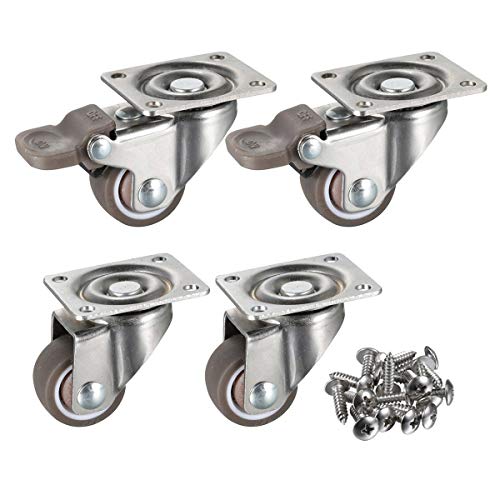
Features: 4 casters with 360-degree swivel, 2 brakes, 25 lb per wheel capacity, total 100 lb. Plate size 38 x 33 mm; screw size 4 x 16 mm; bearings are single ball. Includes screws for mounting. Best for lighter to mid-weight setups where braking capability on two wheels is desired for stability.
Who it’s best for: Small craft carts, portable tool benches, and light-duty furniture moving tasks. Choose this if you need occasional braking and a compact footprint for tight spaces.
Limitations: Low total load (100 lb) means not suitable for heavy machinery or high-weight tables. Brakes only lock the wheel, not the entire caster plate.
Finnhomy 1.5 Inch Caster Wheels Set

Features: Set of 4 heavy-duty low-profile swivel casters with 1.5″ dual wheels, brakes, and a total capacity of 2200 lbs (550 lbs per caster). Includes bolts, nuts, and washers. Low center of gravity improves stability on furniture and equipment.
Who it’s best for: Heavier workbenches, large carts, and dense equipment that require strong, quiet rolling and reliable braking. Best for projects needing higher load distribution and stability.
Limitations: Slightly larger footprint than 1″ options; relies on a double-wheel design which may not suit ultra-tight spaces.
Nefish 2-Inch Heavy Duty Casters

Features: 2″ weight capacity up to 2200 lbs, steel frames, nylon wheels with anti-slip treads, corrosion resistance, and a braking option. Designed for industrial environments with multi-surface performance and ultra-low center of gravity for stability.
Who it’s best for: Industrial equipment, heavy tool carts, and machinery that demand maximum load distribution and quiet operation on wood, tile, carpet, or outdoor surfaces.
Limitations: Larger wheel size may impact tight-turn maneuverability in small spaces. Brakes and wheel design favor stability over compactness.
FactorDuty 1.5 Inch Polyurethane Casters

Features: 1.5″ polyurethane casters with solid construction and a 200 lb capacity per wheel (800 lbs per set of four). The solid, non-marking polyurethane helps protect floors and resists most chemicals and oils. Low-profile design supports heavy loads without bulk.
Who it’s best for: Projects requiring durable, floor-friendly wheels with a low profile for tight spaces. Good for industrial carts or equipment that tolerate a slightly lower total capacity per wheel.
Limitations: Brakes are not listed in the data, which may affect users needing built-in stopping power on all wheels.
AvrestYPT 1-Inch Plate Caster Wheels
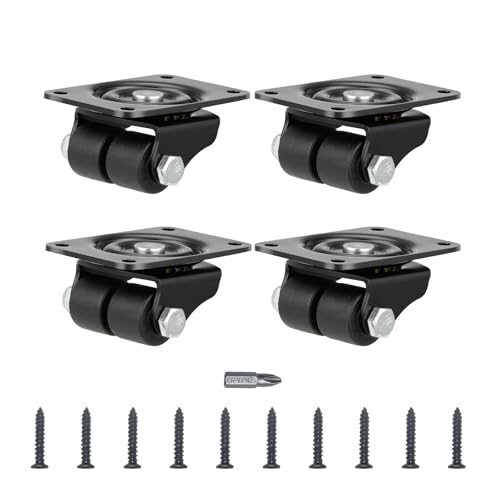
Features: 1″ diameter wheel, maximum capacity up to 1,100 lbs for a set of four; solid nylon double wheels designed for smooth rolling, quiet operation, and enhanced stability on various surfaces. Black finish for a clean look on furniture and equipment.
Who it’s best for: Home workshops and light industrial setups where a compact, sturdy caster set is needed without braking requirements.
Limitations: No explicit brakes listed; best for users who require rolling mobility with minimal stopping needs.
Buying Guide
Key considerations when selecting low profile heavy-duty casters include load requirements, wheel material, braking options, and mounting compatibility. Consider the following questions to guide your choice.
- What is the total weight you expect to move? Choose a set with a higher load rating per wheel if you regularly transport heavy items.
- Is braking essential on all wheels or just a subset? Brakes help prevent drift on inclines or during transfers.
- What surface will you roll on? Nylon and polyurethane wheels perform well on wood, concrete, and tile, with polyurethane offering floor protection.
- How much space do you have for turning? Larger wheels can reduce maneuverability in tight spots; a low-profile design helps fit under furniture but verify clearance.
- Is your load top-heavy? A low center of gravity improves stability, especially for equipment carts and workstations.
Installation and Compatibility Tips
- Check mounting hole spacing and plate size to match your furniture or cart frame.
- Use the included screws or suitable fasteners that fit your mounting surface to avoid wobble.
- For outdoor use or exposure to chemicals, select casters with corrosion resistance and appropriate wheel material.
Material and Performance Snapshot
- Wheel materials: Nylon vs. polyurethane—polyurethane often minimizes floor marks and offers chemical resistance.
- Center of gravity: Lower centers improve stability; consider low-profile options for top-heavy equipment.
- Brake configuration: Decide between partial braking (some wheels) or full-wheel brakes depending on control needs.
FAQ
- What is the advantage of a low-profile caster? A lower height reduces tipping risk and helps the equipment clear furniture or shelves while maintaining stability.
- Do I need brakes on every wheel? Not always. Brakes on select wheels can provide enough control for most setups; consider constant stability needs when choosing.
- Can these casters be used outdoors? Some designs are corrosion-resistant and suitable for indoor/outdoor use; verify wheel material and frame strength for outdoor conditions.
- How do I know the right load rating? Compare total required weight plus expected dynamic loads; always choose a set with a higher rating than your maximum anticipated load.
- Are these universal to all furniture? Mounting compatibility varies; measure plate size, mounting holes, and screw size to ensure fit.
- What maintenance is required? Regularly check screws, axles, and wheels for wear. Clean debris to maintain smooth rolling and braking effectiveness.
Add a Comment