If you’re shopping for low carbon steel tubing, you want options that combine strength, machinability, and value for common fabrication tasks. This guide highlights five practical tubes suited for DIY projects, repairs, and light industrial use. Each pick is described with who it’s best for, why it stands out, and any notable limitation to consider before purchasing.
| Product | Outer Diameter | Inner Diameter | Wall Thickness | Length |
|---|---|---|---|---|
| Small Parts 1″ Round Tube | 1.00 in | 0.8340 in | 0.083 in | 4 ft |
| 1″ DOM Seamless Tube | 1.00 in | 0.500 in | 0.25 in | Unknown |
| A513 Cold Roll Round Tubing | 1.375 in | 1.14 in | 0.12 in | 12 in |
| Small Parts 1-5/8″ Round Tube | 1.625 in | 1.385 in | 0.120 in | 4 ft |
| Otoolling DOM 1.25″ Tube | 1.25 in | 1.00 in | 0.125 in | 10 in |
Small Parts 1″ Round Tube, 0.083″ Wall

Best for light-duty projects and prototypes where precise outer dimensions matter. This 1″ OD tube has a 0.083″ wall and a 0.834″ ID, making it suitable for decorative frames, hobby robotics, or custom brackets. The tube is sold in a 4′ length, which supports longer builds without frequent joints. Best for hobbyists or makers needing a readily machinable, consistent tube material.
Selected for: predictable machinability, consistent wall thickness, and availability in common DIY stock sizes. Limitation: length is fixed at 4 ft, which may require cutting for shorter projects.
1″ OD x 1/4″ Wall DOM Seamless Round Tube

Best for projects requiring high strength-to-weight and tighter tolerances. DOM (drawn over mandrel) seamless tubes are typically well-suited for structural frames, handrails, or automotive components where smooth interior and exterior surfaces matter. This tube features a 1″ outer diameter with a 1/4″ wall, offering robust rigidity in a compact form. Best for professional fabrication or custom machinery frames.
Selected for: solid structural performance and clean interior surfaces. Limitation: DOM stock can be pricier and longer lead times than basic mill tubes.
A513 Cold Roll Tube, 1.375″ OD

Best for structural components where strength and rigidity are key, with slightly reduced machinability compared to lower-carbon grades. A513 tubing is drawn from high-carbon alloy steel, offering good strength for pins, shafts, and spindles. It is a practical choice for projects requiring firmer dimensional stability and durability in a compact footprint.
Selected for: strong, rigid performance and common use in manufacturing applications. Limitation: lower machinability and weldability than milder grades, which may impact some fabrication steps.
Small Parts 1-5/8″ Round Tube, 0.120″ Wall

Best for projects needing a larger diameter with a relatively thin wall, offering flexibility in design while maintaining strength. The 1-5/8″ OD with 0.120″ wall is suitable for frames, enclosures, and light-duty agricultural or workshop equipment. Best for builders needing more space inside the tube without dramatically increasing weight.
Selected for: larger footprint with manageable thickness. Limitation: increased inner clearance may reduce torsional stiffness compared to thicker-walled tubes.
Otoolling DOM 1.25″ Tube, 1/8″ Wall
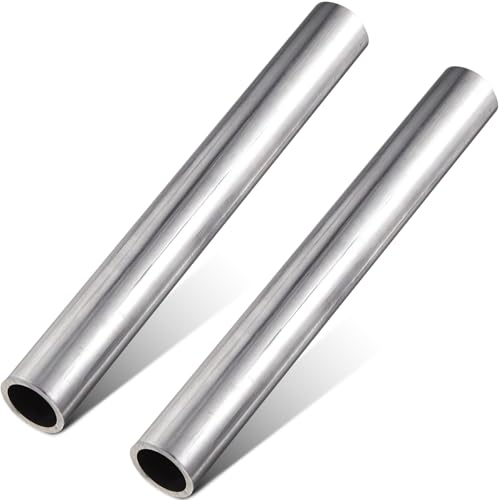
Best for industrial or automotive fabrication where seamless, precise dimensions are required. The tube features 1.25″ outer diameter, 1″ inner diameter, and a 0.125″ wall. It’s delivered in a 10″ length, which suits short-length assemblies or modular components. Good choice for replacements or custom brackets in workshop settings.
Selected for: reliable dimensional accuracy and compatibility with standard fasteners. Limitation: shorter length per piece may require more joints for longer runs.
Gisafai 3/4″ Od, 0.51″ Id Cold Rolled Tube

Best for versatile DIY and automotive applications requiring a balanced mix of strength and formability. The tube features a 3/4″ outer diameter, 0.51″ inner diameter, and 0.12″ wall, with 12″ length in the package. Cold-rolled steel provides a uniform finish and good machinability for mid-scale fabrication tasks.
Selected for: good overall strength, corrosion resistance, and consistent dimensions. Limitation: cold-rolled stock may exhibit tighter tolerances that require basic deburring or finishing steps.
Buying Guide: Choosing The Right Low Carbon Steel Tube
What should you consider when selecting low carbon steel tubing?
- Application demands: For DIY frames and hobby projects, lightweight tubes with reasonable wall thickness are ideal. For structural components, prioritize thicker walls and DOM or seamless options.
- Finish and tolerances: DOM and cold-rolled tubes often offer smoother interiors and higher dimensional accuracy, which can matter for mechanical assemblies and sliding parts.
- Machinability and weldability: Lower carbon grades are easier to machine and weld. If welding is planned, consider wall thickness and tube diameter to minimize warping.
- Length and stock availability: Fixed lengths (like 4 ft or 12 in) may require cutting; check whether shorter pieces are readily available to reduce waste.
- Corrosion resistance: For outdoor or humid environments, look for tubes with protective finishes or coatings, or plan for post-fabrication corrosion protection.
Key Comparisons
- Best for easy cutting and basic fabrications: smaller diameter, thinner walls (examples include 1″ rounds with 0.083″ wall).
- Better for structural frames: DOM seamless or A513 cold roll tubes provide higher strength and precise dimensions.
- Choose this if you need a larger bore: 1.625″ or 1.25″ tubes offer more internal space for components or wiring paths.
FAQ
- What is the difference between DOM and DOM-seamless tubes?
DOM tubes are drawn over mandrel to produce a uniform wall thickness and smooth interior. They often offer tighter tolerances and better surface finish than basic mill tubes.
- Which tubing is easiest to weld?
Low carbon, mild steel tubes are generally easier to weld. Thinner walls are simpler to weld, but thicker walls require more heat and careful technique.
- Can I use these tubes for outdoor projects?
Yes, but consider corrosion resistance or a protective coating, especially for outdoor exposure or moisture-prone environments.
- What is the best tube for DIY projects requiring fabrication compatibility with standard fasteners?
Smaller OD tubes with standard inner diameters, like 1″ or 3/4″ tubes, are typically compatible with common hardware and fittings.
- Do these tubes come in varying lengths?
Yes, lengths vary by product. Some are 4 ft, others 8–12 in, and a few are sold as multiple-piece sets. Check the listing for length details and cutting needs.
Add a Comment