When you need to transport and dispense fuel efficiently, large gasoline storage containers powered by sturdy construction and reliable pumping systems are essential. This guide highlights five top options that balance capacity, portability, and safety for a variety of users—from DIYers and farmers to boat owners and fleet managers. Each product is chosen for its practical design, ease of use, and value in real-world fueling tasks.
The following table summarizes the featured products, including capacity, primary use, and standout feature to help you compare at a glance.
| Product | |||
|---|---|---|---|
| VEVOR Fuel Caddy, 35 Gallon | 35 gallons | Auto repair, farms, marine uses | Bi-directional manual transfer pump with large wheels |
| SureCan 5 Gallon Type II | 5 gallons | Household and workshop quick refueling | Rotating, spill-controlled dispensing |
| VEVOR 30 Gallon Gas Caddy | 30 gallons | On-site fueling for large tasks | Comprehensive gauge and anti-static clamp |
| GarveeTech 35 gal Fuel Caddy | 35 gallons | Rugged environments, outdoor work | Two-way pump with visible fuel gauge |
| Garvee 30 Gallon Fuel Transfer Tank | 30 gallons | Vehicles, lawn equipment, boats | Durable wheels and robust build |
VEVOR Fuel Caddy, 35 Gallon — Best for Large Jobs

This 35-gallon caddy is designed for high-volume fueling tasks. It combines a spacious tank with durable 10″ wheels and a 2.5″ wheel option for stability on uneven ground. The manual two-way rotary pump supports both dispensing and siphoning, making it a versatile choice for job sites, farms, or marine settings. The anti-static ground clamp reduces shock risk, and the clear fill gauge helps prevent overfills. Best for professionals who bring fuel directly to equipment or vehicles, or for large property maintenance tasks.
Best for: Auto repair shops, farms, boat docks, and big-yard crews needing to move significant fuel quantities quickly. Caution: Heavier units require more effort to maneuver on soft terrain; use the push handle and proper technique to minimize strain.
SureCan 5 Gallon Type II — Best for Easy, Controlled Pouring

This 5-gallon container focuses on spill-controlled dispensing with an ergonomic thumb-trigger system. The downward-rotating spout enables clean pouring, especially into vehicle tanks or small equipment. Its compact size makes it a practical choice for homeowners or workshop owners who need quick access to fuel without handling heavy drums. Best for: Small shops, ATVs, lawn equipment, or emergency fuel kits where precision pouring matters. Caution: Limited capacity means frequent refills for larger fueling tasks.
VEVOR 30 Gallon Gas Caddy — Best Mid-Size Mobility

Equipped with a 30-gallon capacity, this caddy emphasizes mobility and efficiency. The manual rotary pump supports quick fueling, and the anti-static ground clamp enhances safety during transfer. An accurate fill gauge helps prevent spills, while the rugged wheelset handles versatile terrains. Best for: Mobile repair crews, ranches, and boaters who need a balance of capacity and transportability. Caution: Slightly smaller capacity than the 35-gallon model may require more trips for very large fuel needs.
GarveeTech 35 gal Fuel Caddy — Best for Harsh Environments

This 35-gallon unit emphasizes rugged construction with UV and scratch resistance. The two-way pump enables fast dispensing or siphoning, and a clear gauge ensures fuel level visibility. Anti-static grounding further supports safe operation in outdoor or workshop environments. Best for: Worksites with exposed conditions or heavy usage in garages and farms. Caution: Heavier build may be more challenging to maneuver on tight spots without adequate space.
Garvee 30 Gallon Fuel Transfer Tank — Solid All-Rounder

The 30-gallon Garvee transfer tank combines a practical capacity with a dependable two-way rotary pump. An anti-static ground clamp and a clear fill gauge support safer transfers and accurate fueling. The unit also features robust wheels and a push handle for easier transport on varied terrains. Best for: Home garages and light commercial use where reliable, steady fueling is needed. Caution: Not the largest capacity option, which may require more frequent refueling on high-demand sites.
PAMBEE 15 Gallon Gas Can — Best for Lightweight Portability
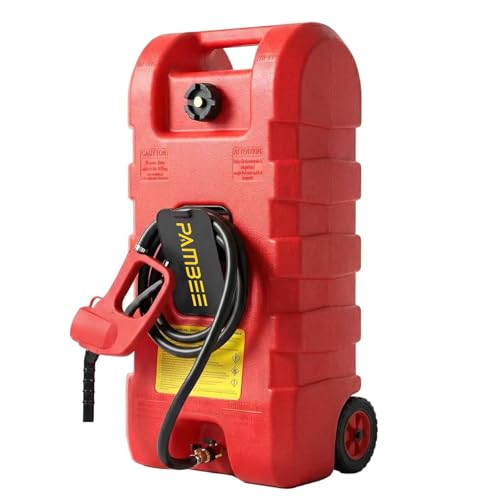
With a 15-gallon capacity, this can balances portability and capacity for smaller fueling tasks. It uses a durable PE construction and includes a 10-foot hose for reach. The product supports siphon and gravity flow, offering versatile operation for vehicles, boats, or outdoor equipment. Best for: Individuals who need a lighter, easy-to-move option for occasional refueling. Caution: More frequent refills required for larger fuel needs.
TUFFIOM 35 Gallon Fuel Caddy — Best for Extended Use

This model emphasizes high-volume storage with a long 11.9-foot hose, supporting rapid fuel flow and easy reach across large sites. The reversible pump allows efficient dispensing or siphoning, and the anti-static grounding clamp reduces risk during transfers. Best for: Agricultural operations, boat launches, or construction sites needing fast, safe fueling. Caution: The longer hose requires careful routing to avoid kinks in tight spaces.
Eagle 5 Gallon Type I Safety Can — Best for Flammable Storage

This 5-gallon safety can is designed for storing and transporting flammable liquids with a flame arrester and self-closing lid. It includes a fixed handle and a non-sparking bottom seam for added safety. The funnel and vented cap help manage vapors during transfers. Best for: Smaller quantities of gasoline or other flammables in home garages or workshops. Caution: Limited capacity means frequent refills for larger fueling tasks.
Buying Guide
What capacity do you need? For frequent, on-site fueling, larger containers (30–35 gallons) reduce trips and save time, but they are heavier to move. If you mostly refuel small equipment, a 5–15 gallon option may be more practical.
How important is portability? Look at wheel size, push handles, and overall weight when full. Heavy-duty wheels and integrated handles improve maneuverability across gravel, grass, or dock areas.
Which pump type suits you? Two-way pumps let you dispense and siphon without swapping components. Reversible rotary pumps paired with clear gauges help monitor fuel levels and prevent overfills.
What safety features matter? Anti-static grounding clamps, flame arrestors, and well-sealed caps minimize risks. A clear fill gauge helps you avoid spills, while secure lids prevent leaks during transit.
Materials and durability: Plastic tanks resist corrosion and UV exposure in outdoor use, while metal cans provide different mounting options and may suit certain environments. Consider UV resistance, impact tolerance, and long-term stability for your setting.
FAQ
- Q: What is the advantage of a two-way pump? A: It allows both dispensing and siphoning, reducing the need to switch components and speeding up transfers.
- Q: How do I prevent spills? A: Use an accurate fill gauge, secure caps, and keep the nozzle directed into the receiving container with controlled flow.
- Q: Are these containers suitable for diesel? A: Yes, many are designed to hold gasoline, diesel, or kerosene; always verify compatibility in the product details.
- Q: Should I prefer plastic or metal? A: Plastic tanks resist corrosion and are lightweight; metal cans may offer different durability and storage options depending on the setting.
- Q: How do I transport a full tank safely? A: Use the integrated wheels and the push handle, avoid overfilling, and keep the container upright during movement.
- Q: What maintenance is needed? A: Check for cracks or leaks, ensure caps seal properly, and inspect the grounding clamp for secure operation.
Add a Comment