Laminar air flow hoods provide a controlled, unidirectional air stream to protect sterile work surfaces. This guide highlights five top options from trusted brands to help researchers, mushroom growers, and lab technicians select a reliable laminar flow cabinet or hood that meets ISO Class 5 standards and practical lab needs. Each pick includes key specs and what to consider when choosing.
| Product | Brand | Approx. Size | Notes |
|---|---|---|---|
| HEPA H14-Filter Laminar Flow Hood (46.2″x22.6″ 110V) | TONGTONGFA | 46.2”x22.6” | Single unit with CE/ISO, 0.45 m/s, 600-700 m3/h |
| HEPA H14-Filter Laminar Flow Hood (46.2″x22.6″ 110V, Dual) | TONGTONGFA | 46.2”x22.6” | Two units, 0.8 m/s, 1900 m3/h |
| HEPA H14 Filtration Laminar Flow Hood (22.6″x22.6″ 110V) | TONGTONGFA | 22.6”x22.6” | Compact, 0.45 m/s, 600-700 m3/h |
| Bonsai 12″x12″ 99.99% HEPA Horizontal Laminar Flow Hood | Myco Labs | 12”x12” | Portable, replaceable HEPA, USA-made |
| Sentry Air Systems 18” Portable Clean Room Laminar Flow Hood | Sentry Air Systems | 18” | ISO Class 5, portable |
Below are five careful picks that balance filtration performance, footprint, and practical lab uses—from mushroom cultivation to tissue culture and electronics maintenance. Each product section includes a clickable Amazon link, an image, and core features to help you compare at a glance.
Laminar Flow Hood With Dual Fans and HEPA H14 (46.2×22.6)

The FFU HEPA H14 laminar flow hood from TONGTONGFA is CE and ISO certified for cleanroom use. It maintains a laminar air stream to keep work surfaces consistently protected, with a filtration efficiency of 99.995% for particles 0.3 microns and smaller. Durable construction features a galvanized frame, aluminum fan blades, a pure copper motor, and a thickened metal casing. Spectral parameters include a 46.2”x22.6”x11.37” size, three-speed airflow control, and an airflow rate around 600-700 m3/h depending on environment.
Laminar Flow Hood Dual-Unit 46.2×22.6

This updated FFU HEPA H14 filtration hood uses dual machines for intensified airflow. It shares CE/ISO certification and a laminar flow design that preserves a clean workspace. It employs two aluminum impeller fans and a copper motor in a robust metal housing. The unit is designed around a 46.2”x22.6” footprint with three adjustable airflow speeds; airflow can reach up to approximately 0.8 m/s, delivering about 1900 m3/h in suitable settings.
Laminar Flow Hood 22.6”x22.6” 110V

This 22.6”x22.6” FFU laminar hood from Tongtongfa emphasizes compact size for bench-top use while meeting ISO 5 cleanliness. The materials include a galvanized frame with aluminum blades and a copper motor inside a sturdy, safe enclosure with a locking mechanism. It offers three airflow speeds with a nominal 0.45 m/s air velocity and a 600-700 m3/h air volume, suitable for smaller-scale labs or mushroom work that requires a tight footprint.
Bonsai 12×12 Horizontal Laminar Flow Hood

The Bonsai 12×12″ horizontal laminar hood from Myco Labs provides a compact, replaceable 99.99% HEPA filter design, making it well-suited for mycology and small-scale mushroom work. As a portable option made in the USA, it emphasizes straightforward replacement and reliable filtration, helping maintain sterile surfaces where space is at a premium.
Sentry Air Systems 18” Portable Laminar Flow Hood
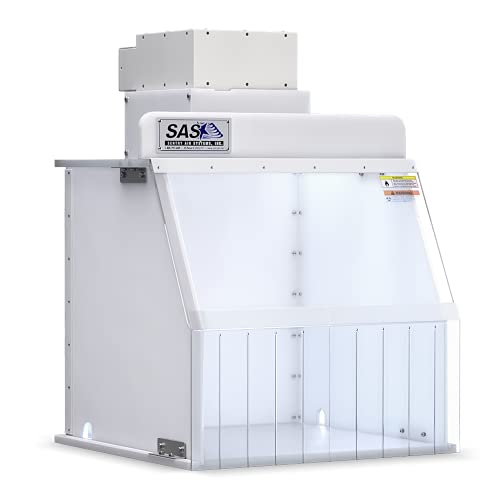
This portable clean room hood from Sentry Air Systems delivers ISO Class 5 performance for medical and laboratory tasks. The vertical laminar flow hood is designed for ease of deployment and consistent air quality, making it suitable for tissue culture, IV bag preparation, and other sterile workflows where mobility is beneficial. It emphasizes reliable filtration and a straightforward user experience.
Vertical Laminar Flow-Hood With FFU

Yzzwer’s vertical laminar flow hood offers a solid setup for ISO 5 cleanrooms with a 23.6”x23.6” working area. The unit utilizes a FFU design for consistent air delivery and features a three-position airflow control. The aluminum framework emphasizes durability and light weight, with a focus on straightforward installation and maintenance.
Buying Guide: Key Considerations And Comparisons
- Filtration Standard: For ISO Class 5 or similar cleanroom requirements, prioritize units with HEPA H13/H14 filtration in a certified FFU configuration. Check certification documents and airflow tests when available.
- Airflow Rate And Velocity: Look for adjustable airflow speeds and a reliable range (commonly around 0.45 m/s for general work, up to 0.8 m/s in higher-demand tasks). Higher airflow can improve particle control but may increase noise and energy use.
- Workbench Footprint: Choose a size that matches your bench space. Larger units deliver broader coverage, while compact models fit on small workbenches or mushroom cultivation stations.
- Construction And Durability: A galvanized frame (plus metal casing), copper motors, and durable housings typically translate to longer service life in busy labs.
- Portability vs. Fixed Installations: Portable units are flexible but may require more frequent filter changes and maintenance checks. Fixed installations can offer steadier air delivery and workload stability.
- Maintenance And Filter Replacement: Favor models with easily replaceable HEPA filters and accessible service panels. Some units offer dual fans or multiple pre-filters for extended life.
- Noise Considerations: Noise can affect work concentration. Look for units with noise-reducing features or user-reported quieter operation.
- Size Versus Usability: For mushroom and mycology work, smaller, shielded hoods can reduce contamination risk while enabling precise handling of small substrates and cultures.
- Certification And Compliance: Ensure the product carries CE/ISO marks if you need formal compliance for regulated environments.
- Cost Of Ownership: Consider filter replacement frequency and energy use alongside upfront cost, to estimate total ownership over time.
Add a Comment