Answer: For researchers and technicians needing at-source smoke and fume control, these lab fume extraction arms offer adjustable reach, versatile mounting, and adjustable flow to capture emissions near the source. The top picks below are best suited for metalworking, soldering, laser engraving, welding, or lab bench workflows. See the quick product table and buying guide to compare suitability and limits for your space.
- Bay Heights 4″ Articulated Hose, 3ft Long — best for compact benchtops and smaller labs.
- Bay Heights 75mm OD Articulated Hose, 3ft Long — ideal for medium-duty tasks with a rectangular nozzle footprint.
- ZC FLYYD 2-Pack Adjustable Fume Extraction Arm — best for multi-station setups and flexible ceiling or wall mounting.
- JUYO VONSAN Articulated Hose — best for soldering stations and electronics labs needing precise, multi-directional extraction.
- WPORDE Lab Exhaust Vent Fume Extractor Arm — best for durable, long-term use with 360° rotation and robust materials.
Bay Heights 4-Inch Lab Fume Arm With Hood
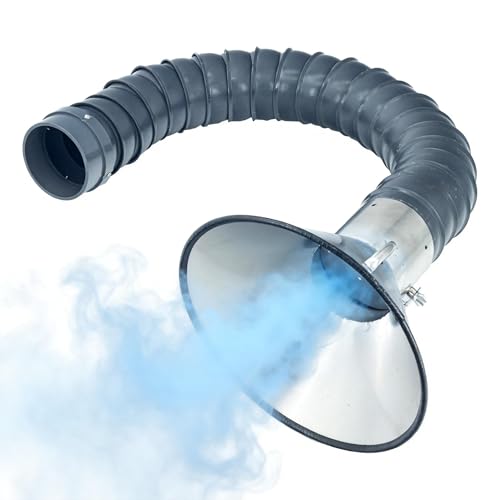
Overview: This 4 inch diameter hinged arm runs up to 3.3 feet and includes a detachable round nozzle/hood with an adjustable valve for airflow control. The 11.8 inch diameter base handle ensures stable positioning. Best for: small to mid-sized soldering, laser engraving, and welding tasks on compact benches where space is limited. Why selected: The round hood and adjustable valve provide straightforward local capture, reducing ambient smoke without complex installation.
Caution: The round nozzle is fixed to one end; for highly variable smoke sources, consider a larger or differently shaped hood if you need broader capture.
Key specs and suitability:
– Hose length: 3.3 feet; Diameter: 4 inches
– Adjustable valve for on-the-spot airflow control
– Detachable hood/collector for easy cleaning
Bay Heights 75mm OD Articulated Arm, 3ft

Overview: With a 75mm outer diameter and a 3.3 ft reach, this arm includes a rectangular hood and a valve-enabled nozzle for airflow control. Best for: mid-range lab tasks that require a wider hood footprint than a round nozzle can offer, such as broader smoke capture around soldering stations or laser work. Why selected: The larger rectangular hood provides versatile capture at typical workstation heights while maintaining manageable space requirements.
Caution: The rectangular hood may be bulkier than a round nozzle in tight setups; ensure adequate clearance for movement and rotation.
Key specs and suitability:
– Hose length: 3.3 feet; OD 75 mm
– Detachable rectangular nozzle/hood; adjustable valve
ZC FLYYD 2-Pack Adjustable Fume Arms

Overview: This value two-pack includes three-joint arms with 360° rotatable joints and universal compatibility with 90mm and 110mm ductwork. Best for: multi-station labs or workshops where multiple workpoints require quick, precise repositioning. Why selected: The two-arm package supports scalable setups and reduces cross-station airflow gaps by enabling direct local capture at each source.
Caution: The universal fit relies on compatible duct sizes; verify ductwork in your space before purchase to ensure a clean upgrade.
Key specs and suitability:
– Includes two complete fume arms; 3 joints per arm
– Compatibility: 90mm and 110mm ductwork
– Ceiling or wall mounting flexibility
JUYO VONSAN Articulated Arm for Soldering

Overview: A 3.3 ft flexible arm with a 50mm OD hose, designed for soldering stations and electronics labs. Best for: tasks requiring precise, multi-angle positioning to capture smoke directly at the source while keeping the bench clear. Why selected: The reinforced structure maintains shape under long use and minimizes sag, ensuring consistent suction without repositioning.
Caution: Slightly narrower hose diameter may limit capture volume for heavier smoke plumes; pair with a higher flow source if needed.
Key specs and suitability:
– Hose: about 3.3 ft; OD 50mm
– Reinforced design; airtight construction
– Multi-directional positioning capabilities
WPORDE Lab Exhaust Vent Fume Arm

Overview: Built from PP and aluminum alloy with protective coatings, this arm emphasizes longevity and robust daily use. Best for: long-term lab installations requiring dependable, rust-resistant construction and 360° rotation. Why selected: The design emphasizes both durability and practical airflow control for consistent fume management in busy labs.
Caution: The heavy-duty construction may be less suitable for very small labs where space is at a premium; ensure mounting supports are appropriate for ceiling or wall installation.
Buying Guide: Key Considerations for Lab Fume Extraction Arms
What should you measure before buying? Consider exhaust capacity, arm reach, mounting options, and hood size. A larger hood covers more area at the source but can add bulk. A longer reach helps capture fumes away from the workpiece but may require stronger support to prevent sagging.
How do I choose the right hood and nozzle?
Round nozzles are compact and versatile for tight spaces. Rectangular or larger circular hoods provide broader capture at the source. If you work with lasers or plasma processes, a hood with adjustable airflow helps balance suction without drawing in ambient air from the sides.
Which mounting configuration is best?
Ceiling-mounted arms save bench space in crowded labs, but wall-mounted options can be easier to install and service. Ensure your workspace has appropriate mounting points and load-bearing capacity for the arm you select.
What about airflow control?
Arms with adjustable valves permit precise control of suction. Three-position valves (Off/Half-open/Fully open) help reduce backflow and optimize capture without wasting energy.
Materials and durability: what to expect?
Look for arms made from corrosion-resistant materials such as stainless steel, aluminum, or coated plastics. PP and aluminum blends offer good durability in chemical environments. Coatings help resist rust and extend the life of the arm in daily lab use.
Maintenance considerations
Detachable nozzles and hoods simplify cleaning and replacement. Regularly inspect joints for wear and ensure joints retain their stiffness to maintain position without frequent readjustment.
Quick Comparison Table
| Product | Best For | Key Advantage | Limitations |
|---|---|---|---|
| Bay Heights 4″ Arm | Compact benchtops | Detachable round hood with airflow valve | Smaller hood may limit capture area |
| Bay Heights 75mm Arm | Medium tasks | Rectangular hood for broader capture | Bulkier hood than round options |
| ZC FLYYD 2-Pack | Multi-station labs | Two arms, 3 joints, universal duct compatibility | Requires compatible ducting for best fit |
| JUYO VONSAN Arm | Soldering stations | Flexible multi-angle positioning | Smaller ID may limit high-volume fumes |
| WPORDE Arm | Long-term lab use | Durable materials, 360° rotation | Heavier; space considerations on mounting |
FAQ
What is the most versatile fume arm for small labs?
Arms with 3-joint designs and both adjustable valves and detachable hoods offer flexible positioning and easy maintenance for compact spaces.
How do I know which duct size to choose?
Match the arm’s pipe diameter to your existing duct work. Common sizes include 90 mm, 110 mm, and 4 inches. Compatibility ensures optimal airflow and ease of installation.
Is a two-pack arm better for multi-station setups?
Yes. Two arms provide independent capture at separate work zones, improving efficiency and reducing cross-work contamination.
Can I install these arms on a ceiling or wall?
Most models support ceiling or wall mounting. Check the product’s mounting options and weight limits to ensure proper support.
How important is the hood shape?
Hood shape affects capture area. Round hoods are compact; rectangular or larger round hoods cover more surface area near the source.
What maintenance should I perform regularly?
Keep nozzles clean, inspect joints for wear, and replace hoods or hoses if there are signs of damage or leakage.
Summary: For bench-friendly setups, the Bay Heights and JUYO VONSAN arms provide precise, adaptable capture. For multi-station labs, the ZC FLYYD two-pack offers scalable, flexible placement. The WPORDE option emphasizes durability for long-term lab use, while the 75mm Bay Heights arm suits medium-duty tasks with a broader hood. Use the Buying Guide and FAQ to tailor choices to your space, workflows, and ducting compatibility.
Add a Comment