Answering the need for real-time, inline conductivity data, this guide highlights top inline sensors and controllers ideal for process automation, hydroponics, and water treatment. The best choices suit professionals who require reliable EC/TC measurements, robust remote alerts, and straightforward installation. The selected products cover real-time monitoring, flow-aware control, and temperature compensation, so you can pick the right model for inline dosing or process supervision. The quick overview table below helps compare core capabilities at a glance.
| Product | Core Use | Best For |
|---|---|---|
| Bluelab Guardian Monitor Inline | Inline EC/CF, TDS, and temperature with Wi‑Fi | Growers and hydroponics operators needing remote monitoring |
| Inline Flow Sensor Controller Conductivity Electrode | Inline conductivity sensing with flow control potential | Systems needing conductivity feedback in-line |
| Garosa Water Conductivity Sensor | Residential and hydroponic water quality sensing | DIY and small-scale monitoring setups |
| HM Digital EC-3M EC Meter | Electrical conductivity measurement with ATC | Portable or compact EC checks with storage |
| TrolMaster PCT-2 Inline EC+Temp Sensor | Inline EC and temperature sensing | Heavy-duty inline process dosing and control |
Bluelab Guardian Monitor Inline Wi-Fi for Real-time pH, Temperature, and Conductivity
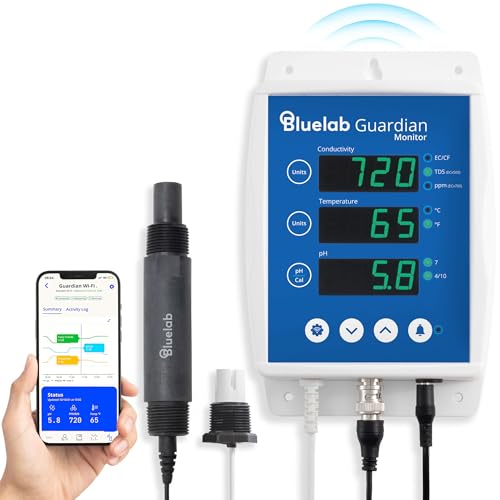
The Bluelab Guardian Monitor Inline Wi-Fi provides continuous real-time monitoring of pH, EC/CF, and temperature. It works with the Edenic by Bluelab app for remote monitoring, alerts, and history reporting. This device is best for growers and hydroponics operators who need constant oversight of reservoir conditions from any location. Display options include EC/CF and TDS (ppm 500 and 700 scales), with temperature shown in °C or °F. A key advantage is automated alerts to a smartphone, helping you respond quickly to parameter changes. A potential limitation is dependence on Wi‑Fi connectivity for remote features.
Who it’s best for: Professionals and serious hobbyists who want integrated pH, EC/CF, and temperature monitoring with remote access.
Why selected: It consolidates multiple inline measurements into one device with remote alerts, reducing the need for separate meters and data logging. The ability to keep settings during power loss is a practical safeguard in busy or remote installations.
Caution: Ensure stable Wi‑Fi and a compatible app setup to avoid losing remote monitoring capability during outages.
Inline Flow Sensor Controller Conductivity Electrode 00561372

This inline sensor focuses on conductivity sensing integrated with flow measurement aspects. It is designed for process controllers that require high sensitivity and accuracy in an inline configuration. The product is suitable for industrial or lab-style inline dosing setups where precise conductivity feedback drives dosing or process adjustments. A notable advantage is the potential for direct compatibility with inline flow control strategies, though users should verify compatibility with their existing controller hardware.
Who it’s best for: Operators needing inline conductivity sensing paired with flow considerations for precise dosing and process control.
Why selected: It complements inline dosing systems by providing reliable conductivity data in a streamlined inline package. Its emphasis on high sensitivity makes it attractive where fine control matters.
Caution: Availability of companion controllers and integration specifics vary; confirm compatibility before purchase.
Process Automation Sensor SA5000 Liquid Flow Measurement Sensor

The SA5000 focuses on fast flow detection and supports flow control, offering improved process visibility. It is best for inline systems where rapid detection of flow changes informs control decisions. While not a pure conductivity sensor, its role in inline process automation makes it a strong companion if your workflow relies on both flow and conductivity data for optimization. It is particularly suitable for facilities aiming to optimize throughput and pump timing in real-time.
Who it’s best for: Industrial or lab environments that require quick flow responses and inline process awareness.
Why selected: It provides fast detection and practical flow-control support, helping operators tune process performance with timely feedback.
Caution: Data interpretation depends on complementary conductivity sensors to create a full inline profile.
Garosa Water Conductivity Sensor For Water Quality Monitoring

The Garosa conductivity sensor is positioned for general water quality testing and hydroponics. It emphasizes compatibility with control systems and offers a plug-and-play approach. Typical users include DIY enthusiasts and small setups that require straightforward inline conductivity data. The device supports long-term monitoring by enabling data transmission to a controller rather than relying on paper logs alone. A limitation is that it may require compatible control hardware for full inline integration.
Who it’s best for: Home setups, hobbyists, and smaller hydroponic systems seeking an affordable inline conductivity sensor.
Why selected: It combines ease of use with inline data transmission capabilities, which is valuable for rapid deployment and straightforward monitoring tasks.
Caution: Verify your control system’s input requirements to ensure proper signal compatibility.
TrolMaster PCT-2 Inline EC+Temp Sensor, Heavy Duty

The TrolMaster PCT-2 provides inline EC and temperature sensing in a rugged, heavy-duty format. It is designed for inline process dosing and control environments where reliable conductivity data and consistent temperature readings are essential. Best for industrial or commercial setups that require robust inline sensors and straightforward plug-and-play installation. A potential limitation is that some users may need additional accessories to maximize compatibility with existing controllers.
Who it’s best for: Commercial facilities and systems requiring durable inline EC and temperature sensing for dosing and control.
Why selected: Its inline, robust design makes it a practical choice for high-demand environments where conductivity and temperature data drive automated decisions.
Buying Guide
Key considerations when selecting an inline conductivity sensor:
- Measurement needs: Decide whether you need EC/CF, TDS, or a combined data stream including pH and temperature.
- Inline integration: Check the sensor’s compatibility with your existing control system or SCADA platform.
- Remote monitoring: If you require alerts and remote data access, consider Wi‑Fi or network-enabled options.
- Durability and environment: For harsh or outdoor environments, prioritize rugged housings and chemical compatibility.
- Calibration and maintenance: Look for sensors with straightforward calibration procedures and clear maintenance schedules.
- Signal compatibility: Ensure voltage and signal ranges align with your controller’s analog or digital inputs.
Practical buying tips:
- For hydroponics, prioritize models with robust remote monitoring and easy sensor replacement.
- In industrial settings, choose sensors with fast response times and strong inline stability.
- Pair conductivity sensors with compatible flow or dosing controllers to optimize process performance.
FAQ
- What is inline conductivity sensing best used for?
Inline conductivity sensing provides real-time data to control dosing, monitor water quality, and maintain process consistency without manual sampling.
- Can I use these sensors with any controller?
Compatibility varies by model. Verify input types (analog/digital), signal range, and required power supply with your controller documentation.
- Is remote monitoring essential for inline sensors?
Not always, but remote monitoring adds convenience for off-site management and early issue detection.
- What maintenance is required for inline sensors?
Regular calibration, cleaning of the sensing element, and ensuring proper placement within the flow path help maintain accuracy.
- Which sensor suits small-scale hydroponics best?
Sensors with straightforward installation, affordable maintenance, and remote alerts are ideal for home or small setups.
- Do I need temperature compensation?
Yes, temperature affects conductivity readings. Choose sensors that offer temperature measurement or compensation for accurate EC readings.
Add a Comment