When shopping for an industrial-grade wood laser cutter, you want a machine that combines power, precision, and reliable workflow. This guide highlights five capable options, clarifying who each is best for, what makes them stand out, and potential limitations. Ideal buyers include small businesses, workshop professionals, and serious hobbyists who regularly work with wood, acrylic, leather, and other materials. The table below compares key strengths of each model to help you decide quickly.
| Product | Best For | Key Strength | Limitations |
|---|---|---|---|
| xTool P3 80W Flagship | Mid-to-large workshops, professionals needing fast, precise cuts | Large workspace, dual HD cameras, auto-focus, high speed | Higher cost |
| Longer Ray5 20000mW | Materials variety and multi-pass cutting | High power with color engraving, multi-machine control | Requires careful ventilation for thick cuts |
| ACMER S1 | Fine detail on small-format projects | 3500mW diode with versatile material support | Relatively compact bed size |
| Carverall K15 Pro | Compact, versatile DIY projects | True 10W diode power, 4 detachable heightening columns | Limited bed area compared to CO2 systems |
| Creality Falcon 10W | Broader material compatibility, larger work area | 72W effective output, large workspace | Relies on diode/CO2 hybrid approach |
xTool P3 80W Flagship CO2 Laser Cutter
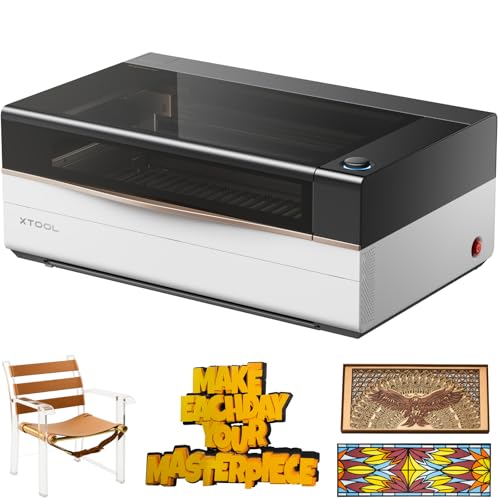
The xTool P3 80W is designed for industrial-like CO2 cutting within a desktop footprint. It combines a large 36″ × 18″ workspace with an automated system that streamlines setup. Best for shops that need to process sizable panels and curved or complex shapes quickly. The dual HD cameras (16MP each) and LiDAR autofocus provide precise placement and consistent results, while the AutoLift Base accommodates taller items. Caution: CO2 lasers require proper ventilation and safety measures in operation.
Who it’s best for and why
- Medium to large home studios and small shops needing high throughput
- Projects featuring wood, acrylic, leather, and thin metals
Why selected
- Large working area improves productivity on bigger parts
- Autofocus and dual cameras reduce setup time and errors
- Razor-sharp alignment helps with multi-part assemblies
Caution
- Higher purchase price and ongoing safety/storage considerations for CO2 systems
Longer Ray5 Laser Engraver 20000mW

The Longer Ray5 is a high-power, versatile laser system designed for demanding projects. It combines a 20000mW laser with a 400×400 mm working area and a 256-color palette for advanced color engraving. Ideal for shops needing fast, multi-material engraving and cutting, including wood, metal, plastic, and acrylic. The ESP32-based control enables multi-machine coordination. Note that multi-pass cutting may be necessary for thicker materials, and cooling/ventilation is important with extended runs.
Who it’s best for and why
- Enthusiasts and small businesses doing high-volume production
- Users needing fast, colorful, detailed engravings and deep cuts
Why selected
- High output power supports tougher materials
- Color engraving adds design flexibility
- Multi-machine control can scale operations
Caution
- Requires robust ventilation and proper electrical setup for 20W-class operation
ACMER S1 Laser Engraver

The ACmer S1 offers a compact, precise solution with a 3,500mW diode laser and a 130×130 mm working area. It emphasizes high-precision engraving with up to 10,000 mm/min speeds and 0.01 mm repeatable accuracy, making it suitable for fine detail work on wood, leather, plastic, and more. It ships with AcmerTool software and supports other workflows. Best for small, detail-focused projects and hobbyists who require accuracy at a small scale. Caution: limited bed area may constrain larger pieces.
Who it’s best for and why
- Creators focusing on detailed small items like jewelry blanks or signs
- Users who prefer an out-of-the-box software experience
Why selected
- High precision in a compact format
- Free-to-use software with versatile workflow support
Caution
- Small engraving area limits larger projects
Twotrees TTS-55 Pro Laser Engraver

The Twotrees TTS-55 Pro focuses on a compact 300×300 mm work area with a 5.5W laser. It adds air assist compatibility, a safety-focused design, and high-precision engraving with a 0.1 mm minimum engraving accuracy. This model is well-suited for hobbyists and small businesses that want a capable machine for wood, leather, acrylic, and more. Caution: smaller bed size may require material tiling for larger parts.
Who it’s best for and why
- Hobbyists and micro-business owners
- Projects involving wood, leather, and acrylic with tight detail
Why selected
- Good balance of price and capability
- Air assist-ready for cleaner cuts
Caution
- Limited cutting area for large panels
Creality Falcon 10W Laser Engraver

The Creality Falcon pairs a comprehensive 72W effective output with a 0.06×0.06 mm compressed spot for precise cuts and detailed engraving. It offers a substantial 400×415 mm work area and a high engraving speed of up to 10,000 mm/min. The device supports engraving on more than 200 materials, including wood, leather, acrylic, and metal, making it a versatile option for mixed-material projects. Caution: ensure material compatibility and safe operation with thicker cuts.
Who it’s best for and why
- Workshops needing a larger bed with solid throughput
- Projects across wood, leather, acrylic, and metals
Why selected
- Large workspace enables single-pass processing of bigger items
- Broad material compatibility expands project scope
Caution
- Industrial-scale power demands careful ventilation and safety practices
Buying Guide
What should you consider when choosing an industrial wood laser cutter?
- Working area: Measure your typical material size to decide between compact (300×300 mm) and large-format beds (up to 36″×18″).
- Power and material compatibility: Higher wattage enables deeper cuts and faster throughput, especially on wood and thicker substrates.
- Laser type: CO2 vs diode/fiber hybrids affect material capabilities and cost. CO2 often handles wood, acrylic, and organics well; diode/fiber can excel on metals and hard plastics.
- Precision and repeatability: Look for autofocus, multi-camera previews, and stable mechanical design to minimize wasted material.
- Ventilation and safety: CO2 systems require venting; diode systems may produce less fumes but still require enclosure and eye protection.
- Software and workflow: Native software and compatibility with LightBurn or industry tools can reduce design-to-cut time.
- Expansion and future needs: Consider whether you may add rotaries, risers, or auto-feeders to scale up production.
Material-specific tips
- Wood engraving: prioritize stable bed and precise z-axis or autofocus systems.
- Acrylic and plastics: ensure clean edge quality with proper lens and nozzle configuration.
- Metal engraving: fiber or specialized diode options are required; verify material type and surface finish expectations.
Operational considerations
- Maintenance: regular cleaning of optics and air paths extends machine life.
- Safety: use appropriate eye protection and enclosure for all laser types.
FAQ
- What is the best laser type for wood cutting? CO2-based systems are commonly preferred for robust wood cutting and engraving, especially at larger scales.
- Can these machines engrave metal? Some models with fiber or diode capabilities can engrave certain metals; verify the exact materials listed by the manufacturer.
- Do I need a professional setup? Many units include user-friendly software, but larger CO2 systems may benefit from professional installation and ventilation planning.
- Is a bigger bed always better? Not always; consider material size and workflow to determine if a larger bed improves efficiency for your use case.
- What maintenance is essential? Regular cleaning of lenses, mirrors, and air paths, plus periodic calibration, maintains engraving accuracy.
- Are air assists required? For some high-power cutting, air assist improves cut quality and reduces charring.
Add a Comment