Answering the question: which industrial wood dust collector delivers reliable air cleaning for a busy shop? This guide highlights top options suited for different workshop needs, from small- to mid-size operations to high-demand environments. The top picks are best for: small shops needing portable power, mid-sized shops with multiple tools, and workflows requiring heavy-duty dust handling. Below is a quick comparison table of five recommended models to help you decide quickly.
| Product | Best For | Airflow (CFM) | Key Advantage |
|---|---|---|---|
| WEN DC1300 | Versatile small to mid-size shops | 1,300 | Dual 4-inch inlets for multiple tools |
| JET DC-1100VX-CK | Quiet, single-stage efficient pickup | ~1,100 | Easy bag installation, durable motor |
| VEVOR 1550 CFM | Pro-style throughput with dual large bags | 1,550 | Two 42-gallon bags for extended runs |
| Oasis DC5000 | Heavy-duty, multi-tool capability | 2,760 | Three or more tools connected at once |
| WEN DC3401 | Compact, mobile dust collection | 660 | Simple setup with wall-mount option |
The following sections detail five selected products. Each entry explains who it is best for, what stands out, and any notable limitations to consider when planning a shop upgrade.
WEN DC1300 1,300 CFM Dust Collector

Best for: Small to mid-size woodshops needing solid airflow with flexible tool connections. The DC1300 circulates up to 1,300 CFM and features dual 4-inch inlets, allowing you to run two tools simultaneously while keeping dust under control. The vertical 50-gallon collection bag reduces frequent emptying in moderate workloads.
Why selected: It balances mobility, capacity, and throughput without overwhelming a typical garage or hobby shop. The dual inlet design helps minimize tool-switch downtime and keeps debris flowing into the bag efficiently.
Limitation: As a mid-range unit, it may require careful duct planning for very large, multi-station setups to optimize flow.
JET Vortex Cone DC-1100VX-CK

Best for: Shops prioritizing easy maintenance and quiet operation with a simple single-stage design. The DC-1100VX-CK uses a durable motor and quick-connect bag system, offering straightforward setup and long-duty performance.
Why selected: Its single-stage configuration keeps operation economical and quieter relative to some industrial options, making it a good pick for moderate workloads with frequent tool changes.
Limitation: It may provide less suction for very large, chip-heavy jobs compared to higher-CFM models or multi-tool configurations.
VEVOR Dust Collector, 1550 CFM

Best for: Pro-style throughput in mid-to-large workshops where robust dust control is essential. The VEVOR unit delivers 1,550 CFM and uses dual 42-gallon bags to support longer continuous runs with less frequent bag changes.
Why selected: High airflow and large-capacity bags help maintain a cleaner shop environment during heavy sanding, cutting, and routing tasks, improving overall productivity.
Limitation: The system can be bulkier and may require more floor space and ducting considerations than smaller units.
Oasis Machinery DC5000 Heavy Duty 5 HP

Best for: High-demand workshops with multiple machines and frequent dust generation. The DC5000 features a 5 HP motor, 3-way 4″ inlets, and an air suction capacity of 2,760 CFM, enabling three or more tools to run simultaneously.
Why selected: Concrete performance for shops needing flexible tool connections and powerful dust management, reducing downtime and improving air quality under heavy workloads.
Limitation: This unit is larger and heavier, which may require dedicated space and more complex installation planning.
WEN Woodworking Dust Collector DC3401
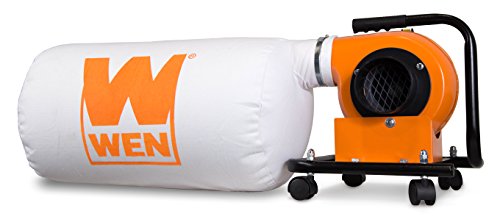
Best for: Small shops needing a compact, mobile dust collection solution. The DC3401 combines a 5.7-amp motor with a 12-gallon bag and a 6-inch dust port for easy integration with favorite woodworking tools.
Why selected: Its compact footprint and mobile base make it ideal for hobbyists or small workshops where space is at a premium and flexibility is important.
Limitation: Lower airflow compared to larger units may require closer ducting or fewer simultaneous tool connections.
ExploreHorizon Industrial 1500W Dust Collection System
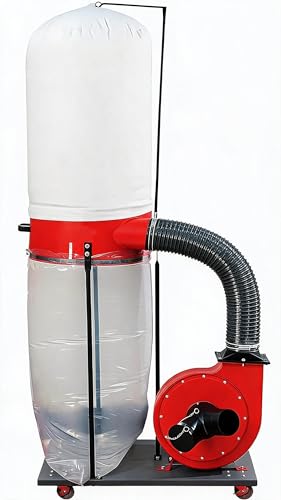
Best for: Workstations that need a powerful 1500W motor and a single high-capacity bag system. This system emphasizes heavy-duty dust collection with a 50-gallon bag and robust filtration for woodworking tasks.
Why selected: A practical option for extended sessions that require strong suction and minimal interruptions from bag changes.
Limitation: It may rely on specific electrical requirements and space considerations typical of mid-to-large workshops.
DEWALT DWXAF101 Air Filtration System
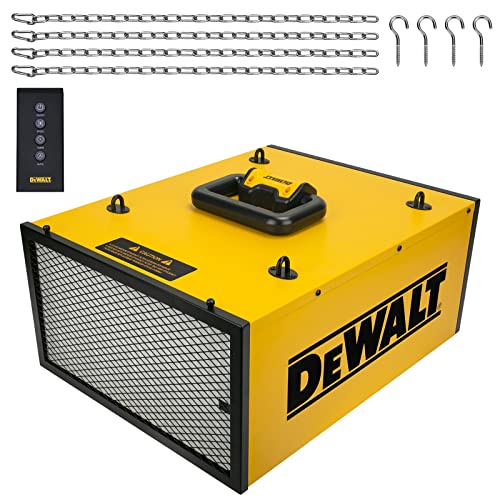
Best for: Shops prioritizing enhanced air quality with programmable filtration and remote control. The DEWALT DWXAF101 offers two-stage filtration with pre-filter and HEPA, plus timer and multiple modes including auto sensor-based operation.
Why selected: It complements dust collection by improving overall air cleanliness, especially in environments with fine dust from sanding and finishing tasks.
Limitation: Primarily an air filtration system rather than a full-dust-collection unit; consider pairing with a strong collector for comprehensive dust control.
Buying Guide: Key Considerations for Industrial Wood Dust Collectors
- Shop size and layout: Measure floor space and plan for ductwork to optimize airflow without excessive pressure loss. Larger units suit bigger shops, while compact models fit garages and small studios.
- Airflow requirements: For multi-tool usage, prioritize higher CFM and the ability to run multiple inlets or hoses without drastic performance drops.
- Bag capacity and disposal: Higher bag volume reduces downtime but requires more space. Consider bag material and ease of replacement when selecting a model.
- Tool compatibility: Check inlet sizes (typically 4″ or 6″) and the number of inlets supported. Ensure compatibility with your existing tools and dust-collection ducting.
- Filtration quality: For fine dust, prioritize systems with finer filtration or HEPA options. Consider filtration stages to match tasks like sanding and routing.
- Noise and energy use: If the workshop operates for long hours, consider models with quiet operation and energy efficiency.
- Mobility versus fixed installation: Portable units offer flexibility, while fixed installations can deliver consistent performance for larger shops.
Frequently Asked Questions
- What is a good airflow target for a typical woodworking shop? Aiming for 1,000–1,500 CFM is common for mid-size shops, with higher airflow needed when running multiple tools simultaneously.
- Can I run two dust collectors at once? Yes, many units support dual inlets or can be paired with a secondary collector, but ensure the system design maintains adequate suction at each inlet.
- Is a multi-stage filtration system worth it? Yes, for environments with fine dust and finishing particulates, a two-stage or HEPA filtration improves air quality significantly.
- Should I buy extra bags for my dust collector? Extra bags reduce downtime between changes and improve productivity, especially in busy shops.
- How important is bag size versus height? Larger bags minimize emptying downtime but can increase unit height and footprint; balance space with workflow needs.
- Can these systems improve overall health and safety? Effective dust collection reduces airborne particulates, helping protect lungs and keep surfaces cleaner, especially during sanding and sawing tasks.
Add a Comment