Answering the search intent for durable, high-performing band saws designed to tackle demanding wood-cutting tasks. This guide highlights top options and explains who each model is best for, from hobbyists scaling up projects to small shops needing steady power. For quick comparisons, see the summary table and the five featured products below.
| Product | Best For | Key Benefit |
|---|---|---|
| WEN 9-Inch Band Saw (BA3959) | Beginner to intermediate woodworkers | Compact benchtop with solid speed for small projects |
| QD-KYOHO 14-Inch Bandsaw | Versatile hobbyists to small shops | Dual-speed with large table and adjustable tilt |
| SHOPMAX 4.2 Amp 10-Inch Band Saw | Budget-conscious setups | Strong motor and versatile tilt / depth capacity |
| WEN 10-Inch Band Saw With Stand (BA3962) | Shop workflows needing stand | Two-speed operation with sturdy stand |
| DEWALT 9-Inch Band Saw (1700/2500 SPM) | Pro or serious hobbyist | High-speed two-speed with LED worklight |
WEN 9-Inch Band Saw, 2.8-Amp Benchtop (BA3959)

The WEN BA3959 provides a compact benchtop design with a 2.8-amp motor that drives the blade up to 2,500 feet per minute. It creates cuts up to 3-1/2 inches deep and 9 inches wide, and accepts standard 59-1/2-inch blades in sizes from 1/8 to 3/8 inches. Best for: beginners or hobbyists who need a small, affordable unit for straight cuts, curves, and small patterns in softwoods. Caution: smaller cutting capacity may limit handling of thick workpieces or heavy hardwoods.
QD-KYOHO 14 Inch Bandsaw

The QD-KYOHO 14-Inch Bandsaw features dual-speed settings: 1,445 FPM for hardwoods and 2,950 FPM for softer woods, powered by a 2 HP, 14-amp motor. It offers a large cast-iron table (21-1/2″ x 15-3/4″) and a maximum throat of 13-5/8″ with a 111″ blade, capable of tilting 45° right and 5° left. Best for: woodworkers who need versatile speed control and a robust table for complex shapes. Limitation: higher power needs may require a larger footprint and stable mounting.
SHOPMAX SHOPMAX 4.2 Amp 10-inch Benchtop Band Saw

Equipped with a 4.2-amp induction motor, this benchtop model handles a variety of wood materials and can cut up to 4.5 inches deep and 10 inches wide. The worktable angles up to 45 degrees, and the 67.4″ blade ranges from 0.14″ to 0.47″ in width. Best for: budget-conscious shop setups needing greater depth than typical hobby models while maintaining portability. Caution: smaller blade width limits very tight curves compared to larger floor models.
WEN Band Saw With Stand, 10-Inch (BA3962)
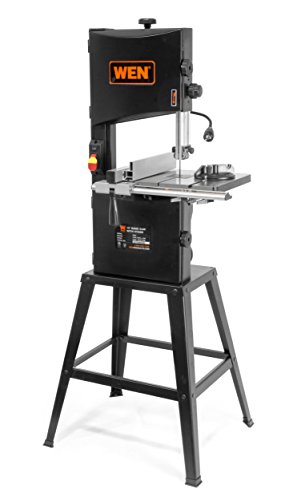
This two-speed model delivers up to 6 inches deep and 9-3/4 inches wide cuts, using 72-inch blades from 1/8 to 1/2 inch. The 14-1/8″ x 12-1/2″ cast aluminum work table bevels up to 45 degrees for angled cuts. Best for: users who need a stand-ready solution with generous table space. Limitation: benchtop footprint may still be moderate for very small shops.
JET 10-Inch Woodworking Band Saw with Stand
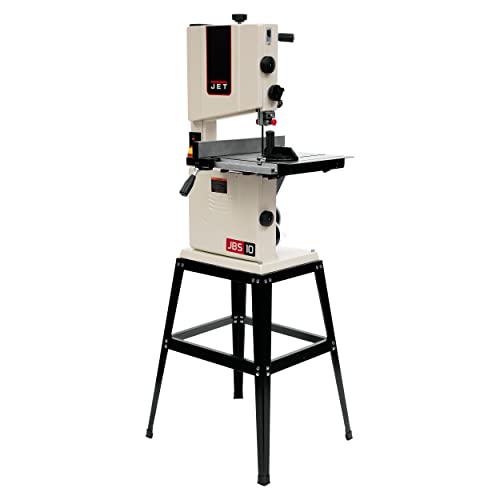
The JET JWB-10 emphasizes portability with a rigid steel stand that supports bench-to-floor transitions. It uses a heavy-duty 1/2-HP induction motor suitable for a range of cutting tasks. Best for: shops needing a compact, transportable option that can move between locations. Caution: power and capacity are modest compared to larger 14″ or larger models.
DEWALT 9″ Band Saw, 3.5 Amp
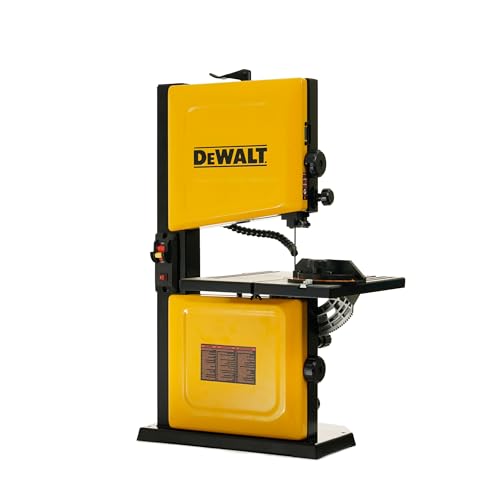
The DEWALT 9″ Band Saw features a 3.5-amp motor with two speeds (1700 and 2500 SPM) and an integrated LED worklight for improved cut visibility. Best for: users requiring strong performance and precise visibility for intricate cuts in a compact unit. Limitation: it’s a smaller capacity unit, so thicker stock may need alternative equipment for aggressive stock removal.
DEWALT 20V MAX Band Saw (DCS374B)
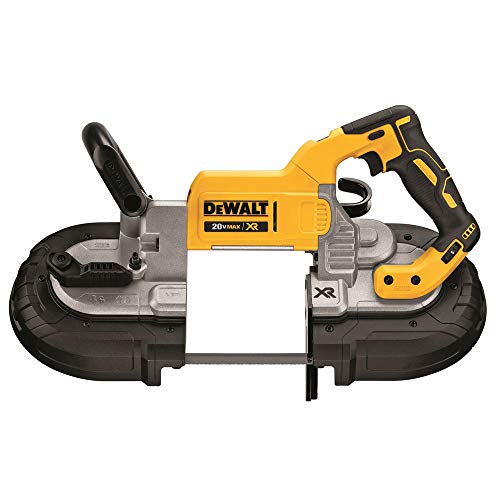
This bare-tool 20V model features a 5″ cutting capacity and integrated hang hooks for easy storage. Best for: cordless cuts in light to medium wood tasks without staying tethered to a power outlet. Caution: battery-powered performance depends on charge and tool availability.
144″ Sawmill Bandsaw Blades 5-Pack
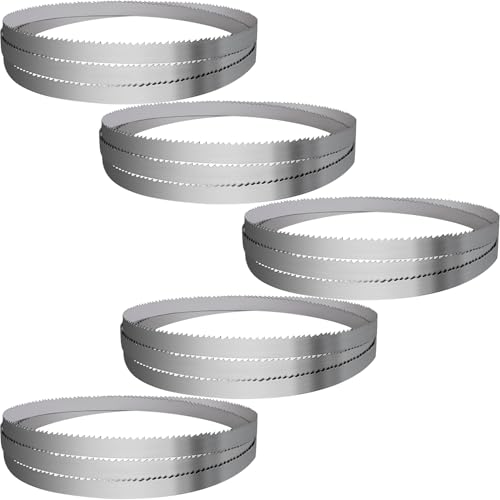
These 144″ blades are compatible with Wood-Mizer, Harbor Freight, Frontier, Timbery, and TMGl mills, with a 1-1/4″ width and 0.042″ thickness. Best for: sawmill operations needing long, consistent blades for wide-cutting applications. Caution: not suitable for small benchtop bandsaws due to blade length and application scale.
Buying Guide
- Cutting capacity: Match the deepest cut you need. Benchtop models usually reach 3–6 inches deep; floor models offer much larger throat capacities.
- Motor power and speed: Higher HP and adjustable speeds unlock faster cuts in hardwoods and complex shapes. Two-speed systems help tailor performance to material.
- Table size and tilting: Larger cast-iron tables with 45-degree tilt enable precise angled cuts and more stable setups for complex work.
- Portability vs. stability: Benchtop units are portable; floor models with stands provide greater rigidity and accuracy for long sessions.
- Blade compatibility: Ensure blade length and width match the machine; wider blades provide straighter cuts but require more torque.
FAQ
- What should I look for in a first industrial wood band saw? Look for cutting capacity, motor power, table size, blade compatibility, and overall stability.
- Are dual-speed band saws better? Yes, dual-speed models let you choose slower speeds for hardwoods and faster speeds for softwoods or smoother finishes.
- Is a stand necessary? A stand can improve stability and posture during long sessions, especially for larger models.
- Can benchtop models handle hardwoods? Some can, but extended use on dense hardwoods may require a larger, more robust machine.
- What maintenance is needed? Regular blade changes, tracking alignment, and cleaning of dust buildup help maintain performance.
- How do I choose between fixed and portable bandsaws? Fixed units offer greater precision and power; portable or benchtop units emphasize mobility and space efficiency.
Add a Comment