Answering the need for robust, high-capacity belt sanders, this guide highlights five industrial-grade options suited for metal and hardwood workpieces. The selections emphasize wide belts, stable power, and adjustable speeds to handle heavy-duty grinding with precision. Ideal buyers include professional woodworkers, metal fabricators, cabinet makers, and shop owners seeking durable machines for continuous use. Below is a quick comparison table of the chosen products to help you decide faster.
| Product | Key Benefit | Best For |
|---|---|---|
| Jinlida JLD Professional Belt Grinder Sander | 2×72 inch belt with 1500W motor and 2.2kW VFD for stepless speed (0-2800 rpm) | Heavy-duty metal and wood grinding; versatile curved/flat/arc grinding |
| WEN Benchtop Belt and Disc Sander (4×36 / 6×6) | Two-in-one with belt and disc, tilting belt, sturdy cast iron base | Versatile shop sander for general metal/wood finishing |
| Bucktool 2×42 Belt Sander / 6 in Bench Grinder Combo | CSA-certified, 1/2 HP induction motor, 3450 RPM belt speed | Multi-material finishing; compact benchtop setup |
| JET Variable Speed 8″ Grinder & 4×36 Belt Sander | Industrial strength with large spark guard and sealed bearings | Heavy-duty industrial use with long-term durability |
| DEWALT 20V MAX Belt Sander (Cordless) | Brushless motor, up to 22% more power, efficient dust collection | Cordless convenience for large-surface sanding |
Jinlida JLD Professional Belt Grinder Sander
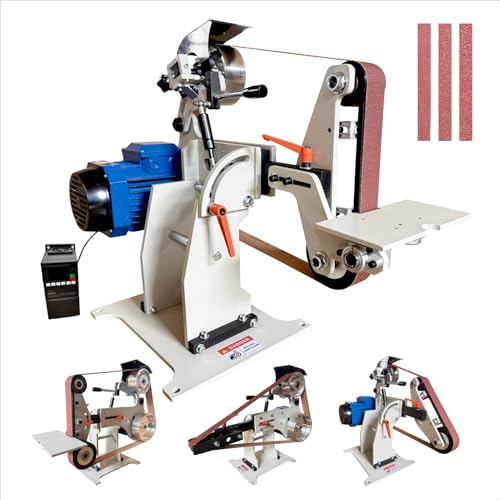
Best for heavy metal and woodworking applications requiring serious material removal with controlled speed. This model uses a 1500W copper motor paired with a 2.2kW VFD to provide stepless speed from 0 to 2800 rpm, improving grinding efficiency by up to 30% over standard models. The kit includes two grinding sets for circular, flat, and arc grinding, making it ideal for curved parts and irregular profiles. A caution: the machine’s power setup and wide belt require a stable, well-ventilated workspace to manage heat during prolonged use.
WEN Benchtop Belt and Disc Sander (4×36 / 6×6)
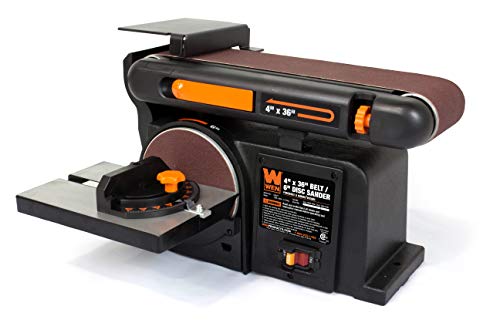
Best for small to medium shop tasks that benefit from a dual-belt setup. The 4-by-36 inch belt and 6-by-6 inch disc provide versatile finishing options, while the belt’s tilt (0–90 degrees) supports varied angles for trimming profiles. The cast-iron base reduces vibration for steadier sanding. Choose this if you need a compact yet capable two-in-one machine for wood and light metal work.
Bucktool 2×42 Belt Sander / 6 Inch Bench Grinder Combo
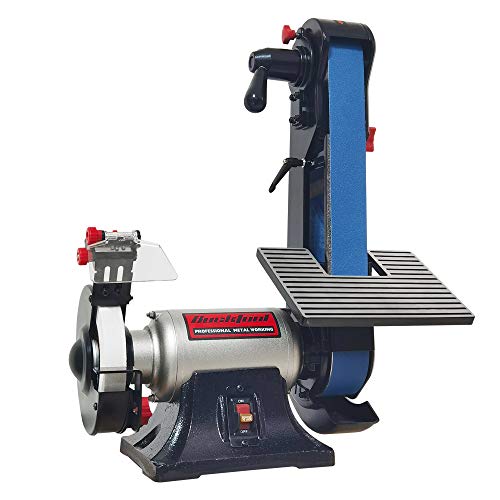
Best for multi-material finishing in a compact package. This combo unit uses a 1/2 HP, 3.5 Amp induction motor with a 3450 RPM wheel and 4480 FPM belt speed, enabling solid performance on wood, metal, and plastics. Its belt tilts 0–90 degrees, and the housing swivels to convert between horizontal and vertical sanding. Caution: lower horsepower means it may struggle with very hard metals under heavy load compared to larger industrial models.
JET Variable Speed 8″ Grinder & 4×36 Belt Sander

Best for demanding industrial use where long-term durability matters. This model combines an 8″ grinder with a 4×36″ belt, offering heavy-duty construction and a large spark guard for safer operation. Rubber-sealed bearings help reduce maintenance. Choose this if you need a dedicated, rugged setup for frequent grinding and edge work.
DEWALT 20V MAX Belt Sander (Cordless)

Best for cordless convenience in remote or space-constrained environments. The brushless motor delivers efficient performance and longer runtime, with DEWALT’s dust-collection compatibility options. This model is suitable for large sanding areas where access to a power outlet is limited. Caution: cordless power may limit continuous heavy throughput compared to corded industrial units.
Buying Guide: Key Considerations for Industrial Wide Belt Sanders
- Belt width and power: Wider belts (2×72 inches, 4×36 inches) offer higher material removal and smoother finishes but require more space and power. Match belt size to your typical workpieces and throughput needs.
- Motor type and speed control: A high-torque motor and a smooth, stepless speed drive (VFD or electronic variable speed) enable consistent finishes on different materials. Consider heat management for prolonged use.
- Versatility: Look for models with multiple grinding configurations (flat, circular, arc) or integrated discs, tilting belts, and adjustable table angles to handle diverse shapes and profiles.
- Stability and vibration: A heavy, well-built base (cast iron or reinforced steel) with vibration isolation improves accuracy and reduces operator fatigue.
- Dust management: Effective dust collection improves visibility and health. Prefer machines with compatible dust ports or integrated bags.
- Safety features: Large spark guards, adjustable belt tracking, and reliable guards help prevent accidents during aggressive grinding.
Frequently Asked Questions
- What is considered an industrial wide belt sander?
– Typically a belt sander with wider belts (such as 2×72 inches or 4×36 inches) designed for higher power and durable, continuous use in professional shops. - Are these machines suitable for metal and wood?
– Yes, many models support both metals and woods, with variable speeds and robust motors to handle different material hardness. - Do belt sanders require special maintenance?
– Regularly check belt alignment, clean dust paths, lubricate bearings if specified, and replace worn belts promptly to maintain performance. - Is a cordless belt sander as capable as corded models?
– Cordless units offer portability but may have limited continuous runtime and power compared to corded industrial machines. - What safety practices are recommended for heavy-duty sanding?
– Use appropriate PPE, secure workpieces, maintain stable stance, and use guards and dust collection to reduce debris and noise. - How do I choose the right belt width?
– Wider belts remove material faster and produce smoother finishes on large workpieces; smaller belts are better for detail work and tight curves.
Add a Comment