When choosing an industrial walk-behind sweeper, reliability, capacity, and sweeping width matter most. This guide highlights five top options designed for large spaces such as warehouses, factories, parking lots, and outdoor work sites. Each model offers a different balance of manual power, debris capacity, and maneuverability to fit various cleaning needs. Read on to compare features, assess practical benefits, and find the right fit for efficient, low-noise, cost-effective upkeep.
Summary of chosen products:
- VEVOR Walk-Behind Hand Push Floor Sweeper — 25.6″ sweeping width; 5-gallon waste capacity; foldable, adjustable handle
- Kärcher Walk Behind Outdoor Push Sweeper S 6 Twin — 33.9″ width; 10-gallon capacity; very quiet, motorless
- LUSHIJIE 41″ Industrial Walk-Behind — 41″ wide path; 55L capacity; 45000 sq ft/hour
- Tomahawk Industrial 38″ Walk Behind — wide path; adjustable, versatile for indoor/outdoor
- bwoopop Walk Behind Floor Sweeper — 41″ width; 55L capacity; heavy-duty urban/industrial use
VEVOR Walk-Behind Hand Push Floor Sweeper

The VEVOR model uses a human-powered sweeping mechanism that eliminates electricity or fuel requirements. A 25.6-inch sweeping path covers more ground per pass compared with standard brooms, increasing cleaning speed and efficiency. Its 5-gallon waste container reduces trips to the trash, and the unit features a hidden front wheel with two large rear wheels to handle varied surfaces with low noise. The adjustable, foldable handle supports ergonomic use and compact storage, making it suitable for workshops, garages, yards, and walkways.
Kärcher S 6 Twin Walk-Behind Push Sweeper

Designed for large outdoor and industrial spaces, the S 6 Twin delivers up to six times faster cleaning than a traditional broom. Its sweeping width reaches 33.9 inches, enabling rapid debris collection across sidewalks, garages, and warehouses. The 10-gallon capacity minimizes emptying frequency, while a motorless, quiet operation at about 42 dB keeps work areas comfortable and unobtrusive. This model is ideal for users seeking a robust, low-noise, hands-on sweeping solution without electricity or gas.
LUSHIJIE 41″ Industrial Walk-Behind Sweeper

With a 41-inch-wide sweeping path and a 55-liter debris capacity, this industrial sweeper targets large areas efficiently. It is designed for both indoor and outdoor use, offering a high-duty, rust-resistant polypropylene bristle system for durability against concrete, asphalt, and rough surfaces. The unit emphasizes a push-powered design that requires no external power source, making it suitable for roadways, parking lots, factories, warehouses, and public squares where speed and capacity matter.
Tomahawk Industrial 38″ Walk-Behind Sweeper
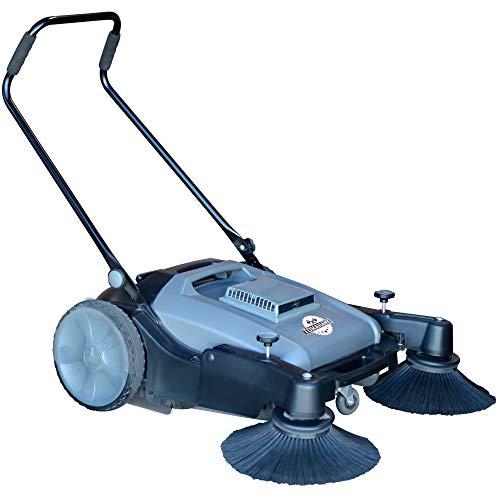
The Tomahawk sweeper is designed for fast coverage in both indoor and outdoor environments. It features a wide 38-inch path with triple power side brooms to enhance debris pickup across dust, litter, and small debris. Its operation is quiet, enabling use in store aisles or near customers, and it offers adjustable settings to optimize performance on various hard surfaces such as concrete, asphalt, tile, and vinyl. The model is positioned for those who need both versatility and speed on large cleaning jobs.
bwoopop Walk Behind Floor Sweeper

The bwoopop sweeper emphasizes a wide, 41-inch sweeping path and a large 55-liter debris container for extended cleaning sessions without frequent emptying. It is designed for heavy-duty use in warehouses, farms, shops, parks, and outdoor areas, delivering efficient, push-powered cleaning with minimal downtime. The unit’s construction supports rugged environments and aims to maximize productivity in large-scale cleaning tasks.
Buying Guide
Key purchase considerations for industrial walk-behind sweepers include:
- Sweeping width and capacity — wider paths reduce passes; larger waste containers minimize downtime.
- Power source — manual, motorless models offer quiet operation and lower running costs, while powered versions can boost speed in very large areas.
- Durability and materials — rust-resistant frames and durable bristles extend life in harsh environments such as concrete, gravel, and dirt roads.
- Surface compatibility — choose models designed for indoor floors, outdoor pavement, or mixed sites depending on the job.
- Portability and storage — foldable or compact handles improve storage in limited spaces; wheel arrangements affect maneuverability on uneven terrain.
- Noise levels — quieter units minimize disruption in retail spaces or workshops with customer traffic.
Comparative considerations across the five featured models:
- Best for speed and convenience: Kärcher S 6 Twin offers a high sweep width and large capacity with almost silent operation, ideal for frequent cleanup tasks in public or semi-public spaces.
- Best for large outdoor areas: LUSHIJIE and bwoopop provide oversized paths and capacities, suitable for parking lots and warehouses where long cleaning runs are common.
- Best for compact storage and ergonomic use: VEVOR’s foldable handle and adjustable height support easy storage in limited spaces without sacrificing effectiveness.
- Best all-around versatility: Tomahawk combines wide coverage with adjustable settings to adapt to various hard surfaces, indoors and outdoors.
Note: All models listed are manual or semi-manual push sweepers designed to minimize energy use while maximizing debris pickup. When selecting, consider the typical debris types (dust, leaves, gravel, litter), daily square footage, and whether use will be intermittent or continuous across large sites. Maintenance needs, such as bristle wear or wheel maintenance, should also factor into long-term cost assessments.
Add a Comment