Choosing the right industrial dust collection system can protect equipment, improve air quality, and extend the life of shop vacuums. This guide reviews top models designed to separate debris before it reaches filters, helping you maintain suction and reduce maintenance. Below you’ll find concise product sections, a quick comparison, and essential buying considerations to help you choose.
| Product | Brand | Key Benefit | Typical Use |
|---|---|---|---|
| DEWALT DXVCS003 | DEWALT | High-efficiency cyclone separator with 10 gal stainless tank | Professional workshop dust control |
| DEWALT DXVCS002 | DEWALT | Versatile 6 gal system with wide compatibility | General shop vacuum protection |
| Dustopper PRO | Dustopper | Low-profile, high-efficiency separation | Wet/dry vacuums and tools |
| Fein Turbo I | Fein | Ultra-quiet, high suction for demanding cleanup | Industrial and job-site cleanup |
| WEN DC3401 | WEN | Compact, mobile dust collection with 12-gallon bag | Woodworking tooling and portability |
Note: This summary highlights five models chosen for broad industrial suitability, performance, and compatibility with common workshop vacuums and dust collectors.
DEWALT DXVCS003 10 Gal Dust Separator

This high-efficiency cyclone dust collector captures up to 99.5% of debris before it enters the vacuum, protecting the fan and extending filter life. It uses a 10-gallon stainless tank and offers a simple, portable design with compatible 1-7/8″ and 2-1/2″ ports. Ideal for wood chips, drywall dust, concrete dust, and other common shop debris, it reduces suction loss and maintenance time. The durable base and cyclone technology help maintain steady airflow even with heavy debris loads.
DEWALT DXVCS002 6 Gallon Dust Separator

Featuring high efficiency to minimize suction loss and protect filters, this model handles a wide range of materials, including wood chips, drywall dust, silica dust, and more. Its four-caster base improves mobility, and the connection ports support common hoses and vacuums, making it adaptable for most workshop setups. The design prioritizes stability and easy emptying with a 6-gallon capacity, enabling quick cleanouts between jobs.
Dustopper PRO Low-Profile Dust Separator

The Dustopper PRO is a low-profile separator designed to collect more than 99.9% of typical shop dust before it reaches the vacuum. It fits standard 2.5″ hoses and buckets, pairing a patented low-profile design with high-flow performance. It is compatible with most wet/dry vacuums and tools, helping protect filters and extend vacuum life. The system emphasizes economical maintenance and broad applicability across woodworking, metalworking, and general contracting environments.
Mullet High-Speed Cyclone Dust Collector
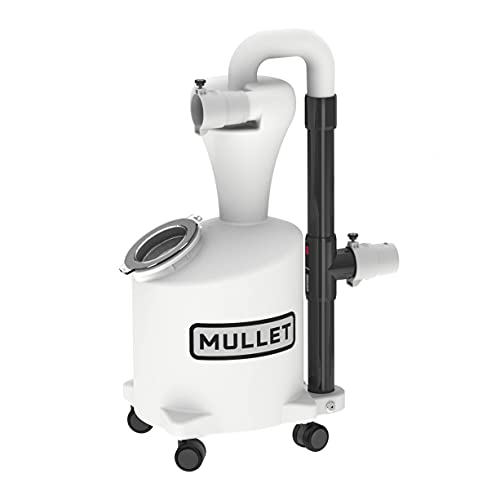
The Mullet cyclone design pre-separates over 99% of debris, delivering clean air to the shop vac and restoring suction quickly. Its parabolic shape enhances airflow and capture efficiency, while a rigid, cut-to-fit PVC connection creates an airtight seal that reduces leaks and keeps filters cleaner for longer. This setup is particularly well-suited for woodshops seeking a straightforward, effective way to reduce dust loads on vacuums and dust extractors.
DEWALT 10 Gal vs 6 Gal: Quick Comparison
Overview: The 10-gallon model offers greater capacity and similar cyclone efficiency for heavier workloads, while the 6-gallon variant emphasizes portability and quick moves around a compact shop. Both models feature cyclone technology designed to protect vacuums by separating debris prior to entering filters. Choose based on the scale of the workshop, typical material loads, and preferred mobility. Both are compatible with standard shop vacuums and common hose sizes, supporting a wide range of woodworking and construction tasks.
Buying Guide: Key Purchase Considerations
- Debris types and throughput: Consider whether you primarily handle wood dust, drywall, concrete, or metal shavings. Higher-efficiency cyclones are beneficial for fine dust and heavy debris loads.
- Tank size and portability: Larger tanks reduce frequent emptying but add weight. Balance capacity with mobility needs and workspace layout.
- Port connections: Verify compatibility with your existing vacuums and hoses (ports like 1-7/8″ or 2-1/2″). Universal bases ease integration with multiple tools.
- Noise and portability: Some units emphasize quiet operation and lighter components, ideal for indoor use and shared spaces.
- Maintenance and filter life: Systems that pre-separate debris extend vacuum filter life and reduce maintenance downtime.
- Installation options: Wall-mounted, floor-standing, or mobile units—consider space constraints and workflow routes in your shop.
- Durability and materials: Stainless or corrosion-resistant tanks support longer service life in demanding environments.
- Cost of ownership: Factor in long-term savings from filter replacements, reduced clogging, and extended vacuum life.
Add a Comment