Answering the need for reliable PCI Express solutions in industrial settings, this guide highlights five PCIe-based cards that add serial RS-232 ports or expand connectivity for rugged environments. Best for factory floors, logistics hubs, and engineering labs, these cards prioritize compatibility, driver availability, and easy integration. The top picks cover dual serial ports, a single port with robust industrial support, and widely used PCIe-to-USB expansion for peripheral-heavy setups. The quick summary table below helps compare key points at a glance.
| Product | Primary Use | Best For |
|---|---|---|
| PCIE-SE2 | 2-Port RS-232 PCIe Card | Industrial PCs needing two DB9 serial ports |
| ELIATER 2-Port PCIe | Two RS-232 COM ports with 16C550 UART | Maintenance and control systems requiring reliable serial talk |
| StarTech 1-Port PCIe Serial Card | Single RS-232 DB9 PCIe card | Legacy devices in IT rooms and labs |
| Intel EXPI9301CTBLK | Pro/1000 PCIe Network Adapter | Servers and desktops needing reliable Ethernet |
| TP-Link TG-3468 | Gigabit PCIe Network Card | Fast network expansion for PCs with PCIe slots |
PCIE-SE2 2-Port RS-232 PCIe Card

This card adds two RS-232 DB9 serial ports to desktop PCs or industrial devices via a PCI Express slot. Best for machines that rely on serial interfaces for POS, testing, control systems, security, or logistics equipment. It requires driver installation on Windows XP through Windows 11 (32/64-bit) and Linux, with the driver CD providing source code for Linux kernels 2.6.x–5.x. Consider this option when you need two dedicated serial channels with standard DB9 hardware compatibility. Limitation: Linux users may need to compile from source, which can add setup time.
Who it’s best for: technicians and engineers who deploy dual-serial configurations in automation or data-collection applications. Why chosen: robust two-port RS-232 solution with broad OS support and straightforward integration into existing serial workflows.
ELIATER 2-Port PCIe Serial Expansion Card

Equipped with two 16C550 UART RS-232 ports, this PCIe card offers up to 230,400 bps data rates and automatic IRQ/IO address selection with Plug and Play. It’s suited for environments needing straightforward serial expansion and reliable data transfer. A note: installation may require referencing the CD’s CH38XDRV folder for proper driver setup. Best for upgrade projects that expand legacy serial infrastructure without changing existing software stacks. A potential limitation is reliance on provided driver materials for initial setup.
Who it’s best for: maintenance teams upgrading older systems with added serial channels. Why chosen: proven dual-serial capability with automatic IRQ management and broad Windows support.
StarTech.com 1-Port PCI Express Serial Card

StarTech’s single-port PCIe serial card uses a 16C1050 UART, providing a compact option for DB9 devices such as barcode scanners and printers. This card includes a low-profile bracket for tight spaces and supports Windows and Linux, making it suitable for server rooms and lab environments that require legacy serial connections without occupying extra chassis space. Best for: IT departments needing a single reliable RS-232 port with easy deployment. Caution: check PCIe slot availability and ensure DB9 cables with locking screws fit your setup.
Who it’s best for: environments prioritizing compact form factor and standard RS-232 interfacing. Why chosen: reliable single-port performance with practical physical design for dense racks.
Intel EXPI9301CTBLK Pro/1000 PCIe Network Adapter

This Intel network adapter adds PCIe-based Ethernet support for desktops and servers. While not a serial card, it plays a critical role in industrial PC setups requiring reliable high-speed networking, remote management, or data transfer in factory networks. It’s best for users needing an entry-level server or workstation NIC with solid driver support and broad OS compatibility. Caution: this card focuses on Ethernet; for serial needs, pair it with a serial expansion or separate NIC as required.
TP-Link 10/100/1000Mbps Gigabit PCIe Network Card (TG-3468)
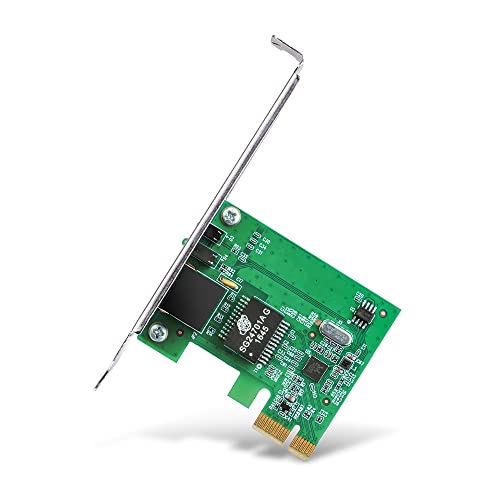
TP-Link’s TG-3468 is a widely used PCIe network card offering 10/100/1000 Mbps speeds with features like Wake-on-LAN and Auto-Negotiation. It’s well-suited for upgrading network performance in industrial PCs, warehouses, or control rooms that rely on stable Ethernet connectivity. Best for: general network expansion where robust driver support and Windows compatibility are important. Caution: this is a network card, not a serial device; plan a serial port solution separately if needed.
PCIe To USB 3.2 Gen 2 Expansion Card (FS-U4-Pro)

This PCIe x1 expansion card provides seven USB 3.2 Gen 2 ports (four Type-A, three Type-C) with a total bandwidth of up to 20 Gbps. It’s ideal for industrial or data-center workstations needing multiple high-speed USB connections without extra cables. It supports high-power USB devices via motherboard power delivery and includes built-in protections. Best for: adding multiple USB ports to a desktop without external power. Caution: bandwidth is shared among ports; plan critical peripherals accordingly.
Buying Guide
What to consider when choosing PCI Express cards for industrial use:
- PCIe slot type and bandwidth: Ensure the card fits your slot (x1, x4, x8, or x16) and that the hosted device needs the offered bandwidth.
- Port type and quantity: Decide between RS-232 serial (DB9) versus USB expansion or Ethernet needs. For industrial control, RS-232 remains common.
- Driver support and OS compatibility: Confirm drivers for Windows, Linux, and any legacy OS. Industrial environments often require long-term driver availability.
- Form factor and mounting: Low-profile brackets can be essential in compact enclosures or 1U servers.
- Reliability and isolation: In critical systems, consider cards with robust electrical isolation and known compatibility with industrial peripherals.
- Driver installation and maintenance: Be prepared for driver CD usage or source code access for Linux, ensuring security and update paths.
FAQ
- What is the main difference between PCIe serial cards and USB expansion cards?
– PCIe serial cards add RS-232 ports directly to the motherboard via PCIe slots, while USB expansion cards add USB ports that connect to the system through PCIe, expanding peripheral options. - Which cards are best for dual serial ports in an industrial PC?
– The PCIE-SE2 and ELIATER 2-Port PCIe cards are top choices for dual RS-232 ports in industrial environments. - Do these cards require driver software to function?
– Yes. Most require driver installation on Windows and Linux; some provide driver CDs or source code for Linux installations. - Is a network adapter card useful in a factory PC?
– Yes. A reliable NIC like Intel EXPI9301CTBLK or TP-Link TG-3468 supports stable Ethernet connectivity for control systems and data transfer. - Can I mix serial and USB expansion on the same computer?
– Yes. Many industrial PCs support both types; plan the PCIe slots and bandwidth to avoid resource conflicts among devices. - What should I consider for future-proofing?
– Look for cards with broad OS support, documented drivers, and compatibility with common industrial peripherals to minimize upgrade risk.
Add a Comment