Industrial fanless embedded PCs provide reliable computing in harsh conditions where traditional desktops fail. This guide highlights five robust models that optimize thermal performance, expandability, and connectivity for factory floors, laboratories, and field deployments. Each entry focuses on CPU power, memory, storage, I/O options, and future-proofing features like 4K support and multiple COM ports. Read on to compare options and find the right fit for your industrial needs.
| Product | CPU/Performance | Memory & Storage | I/O & Expansion | Display | Special Features |
|---|---|---|---|---|---|
| FANPEEC Industrial PC | Core i7-10610U | 32GB RAM, 1TB SSD | 6x RS232, 8x USB, 2x Ethernet, GPIO | 4K HD/EDP/Type-C | Auto Power On, TPM 2.0 |
| WEIDIAN Fanless PC | Core i7-10810U | 32GB RAM, 1TB SSD | 2x RS232/RS422/RS485, 2x RJ45, 6x USB, GPIO | 2xHD, 1xDP (triple display) | WiFi, BT, Win11 Pro |
| KINGDEL Fanless Industrial PC (i7) | Intel i7 Dual Core | 8GB RAM, 512GB SSD | 6x COM RS232, 4x USB 3.0, 2x NIC | HD Ports, 4K | Full metal case, silent operation |
| msecore Industrial PC | Core i7-8550U | 16GB RAM, 512GB SSD | 6x RS232, 2x 2.5G LAN, 4x USB3.0/2.0 | HDMI, VGA | Wake On LAN, dual NIC |
| Baieyu Industrial Fanless PC | Core i5-8260U | 16GB RAM, 512GB SSD | 2x HD, 2x RS232, 4x USB | 2xHD | Windows 11 Pro, Auto Power On |
FANPEEC Industrial Mini PC Review

The FANPEEC model combines a high-end Core i7-10610U with robust I/O, including 6 COM ports and 8 USB ports. Dual storage (M.2 NVMe with 2.5-inch drive support) and dual DDR4 memory channels enable heavy multitasking. Its industrial design includes dual Gigabit Ethernet and optional 4G/5G expansion, making it suitable for PLCs, data logging, and edge AI deployments. Power-on automation and TPM 2.0 add security and convenience for remote installations.
WEIDIAN Fanless PC With Triple Display

The WEIDIAN mini PC features a 10th Gen Core i7-10810U, delivering strong multi-core performance for processing-intensive tasks. It supports Windows 11 Pro and Linux, with triple display output via 2 HDMI/DP interfaces. Storage is flexible with M.2 NVMe and SATA options and RAM expandable to 64GB. Network connectivity includes dual LAN and onboard wireless, enabling reliable IoT and edge computing in harsh environments.
KINGDEL Fanless Industrial PC (i7) with 16GB RAM

This KINGDEL model packs a core i7-8th Gen, 16GB RAM, and a 512GB NVMe SSD into a compact metal case. It supports 4K output and dual monitor setup via HD and VGA ports, with multiple USB 3.0 ports and 2x COM RS232 for industrial control equipment. The rugged build emphasizes quiet operation and thermal efficiency for continuous operation in manufacturing lines or control rooms.
KINGDEL Fanless Industrial PC (8GB RAM, 512GB SSD)
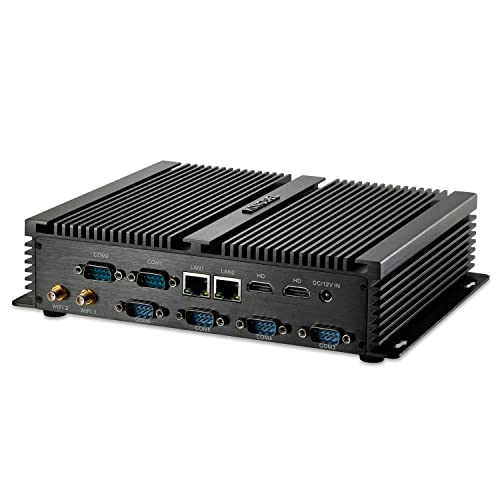
This second KINGDEL entry emphasizes a balanced configuration with 8GB RAM and a 512GB SSD. It uses a quiet, fanless design and a full metal enclosure to resist dust and vibration. While supporting 4K output, the device prioritizes stability and long-term reliability, making it suitable for edge computing, automation gateways, and compact industrial consoles.
Kinupute Fanless Mini PC With High-End Specs

The Kinupute model combines an i7-1165G7 up to 4.7GHz with 32GB DDR4 RAM and a 1TB NVMe SSD. It supports Windows 11 Pro, WiFi 6, and Bluetooth 5.1, offering robust processing, fast storage, and modern wireless connectivity. Dual display support via HDMI and VGA helps with multitasking across control panels, dashboards, and monitoring systems on factory floors or labs.
msecore Fanless Mini PC For Industry

The msecore unit uses a Core i7-8550U processor with 16GB RAM and 512GB SSD, plus six RS232 ports and dual 2.5G LAN. It features fanless cooling, a metal chassis, and multiple display outputs (HDMI and VGA). This model is designed for environments requiring reliable legacy serial interfaces and robust network capability for automation, kiosks, and warehouse terminals.
Baieyu Industrial Fanless Computer

The Baieyu model targets a balance of price and performance, featuring an 8th Gen Core i5-8260U, 16GB RAM, and 512GB SSD. It offers two HDMI ports, RS232, USB 3.0/2.0, and dual 2.5GbE LAN, making it suitable for digital signage, edge gateways, and lightweight automation tasks where fanless reliability is critical.
Buying Guide: Key Considerations For Selecting an Industrial Fanless Embedded PC
Choosing the right fanless embedded PC requires weighing several factors to meet environmental, operational, and budget requirements.
- CPU performance and thermal design: Higher-end CPUs deliver faster multitasking, data processing, and edge AI; ensure the cooling solution matches expected ambient temperatures and dust exposure.
- Memory and storage: Determine memory capacity (8–64GB) and storage (NVMe SSDs preferred) to support software, databases, and local analytics.
- Expansion and I/O: Count required serial ports (RS232/RS485/RS422), USBs, Ethernet, GPIO, and CAN if used in industrial control networks or PLCs. Check for PCI/PCIe or M.2 expansion if future upgrades are planned.
- Display options: Ensure support for the needed output formats (HDMI, VGA, DP) and the number of displays (single, dual, or triple) for monitoring dashboards and HMI interfaces.
- Operating system and software: Verify compatibility with Windows 11 Pro, Linux, or other distributions, plus any edge software like pfSense, SCADA, or MES tools.
- Reliability and ruggedness: Favor metal enclosures, dust resistance, and fanless cooling to minimize maintenance and extend lifespan in harsh environments.
- Networking and expansion: Look for dual LAN, wireless modules (WiFi 6/BT), and 4G/5G support for remote monitoring and IoT deployments.
- Security and manageability: TPM support, BIOS protection, remote management features, and wake-on-LAN capabilities help with secure, scalable deployments.
- Certification and warranty: Check industrial certifications (EMC, safety) and vendor warranties to reduce downtime in mission-critical applications.
Across these options, users should align the device’s processing power, I/O richness, and expansion capabilities with the specific automation or data-collection tasks at hand. For environments prioritizing silence, heat dissipation, and long-term maintenance, fanless designs with robust enclosures are typically preferred.
Add a Comment