Looking for reliable industrial electric radiant heaters that deliver fast, targeted warmth for large spaces or outdoor areas? This guide highlights five strong options, focusing on durability, heat output, and installation flexibility. Best for commercial environments, workshops, garages, and patios, these models balance power with practical features like weather resistance, ceiling or wall mounting, and quiet operation. The picks are suitable for both professional spaces and serious DIY setups, helping you choose a heater that meets area size, safety, and energy-use considerations.
Summary table of selected products:
| Product | Brand | Best For | |
|---|---|---|---|
| Bromic Tungsten Smart Heat 6000W Electric Patio Heater | Bromic Heating | Large outdoor areas, premium patios, commercial spaces | Dual quartz elements, durable stainless steel |
| DR. INFRARED HEATER DR-239 | DR. INFRARED HEATER | Indoor/outdoor spaces, wall or ceiling mounting | IP55 weatherproof, remote control |
| Shinic 2 Packs Electric Garage Heaters | shinic | Garages, workshops, large rooms | Ceiling mounted with halogen light |
| Marley 3000W 208V Horizontal/Downflow Unit Heater | Marley | Industrial spaces with ductwork, standalone or integrated | Built for larger spaces, safety features |
| SUNFIRE Radiant Heater SF80 | Sunfire | Outdoor work sites, barns, warehouses | Diesel/kerosene powered, long runtime |
Bromic Tungsten Smart Heat 6000W Electric Patio Heater

The Bromic 6000W dual-quartz infrared heater focuses heat directly on people and objects, covering about 160 sq ft. Best for premium outdoor patios or commercial spaces needing strong, fast warmth. The stainless steel construction offers durability for weather exposure. Choose this if you need robust outdoor performance with precise heat control. Caution: high power draw requires appropriate electrical supply and mounting clearance.
DR. INFRARED HEATER DR-239 3000W Indoor & Outdoor Heater

This 3000W infrared heater provides instant warmth with no warm-up, suitable for both indoor and outdoor spaces. It operates on 220V-240V and includes wall/ceiling mounting brackets plus a remote. Best for commercial or residential settings needing quick, efficient heat. Limitations include reliance on a compatible electrical supply and remote control functioning for full convenience.
Shinic 2 Packs Electric Garage Heaters

This ceiling-mounted radiant heater includes dual quartz tubes and a built-in halogen work light. It quickly warms front-area surfaces—ideal for garages, shops, and large rooms. Best for users who need extra task lighting alongside warmth. Choose this if you want integrated lighting; avoid if you require silent operation since halogen lighting adds some noise to the environment.
SUNFIRE Radiant Heater SF80

The SF80 is a portable 80,000 BTU diesel/kerosene radiant heater designed for large spaces with up to 1,900 sq ft coverage. It runs for about 10 hours on a full 6-gallon tank. Best for indoor or outdoor spaces where fuel availability and noise are manageable. It’s quieter than forced-air options but requires fuel storage and venting considerations.
Marley 3000W 208V Horizontal/Downflow Unit Heater
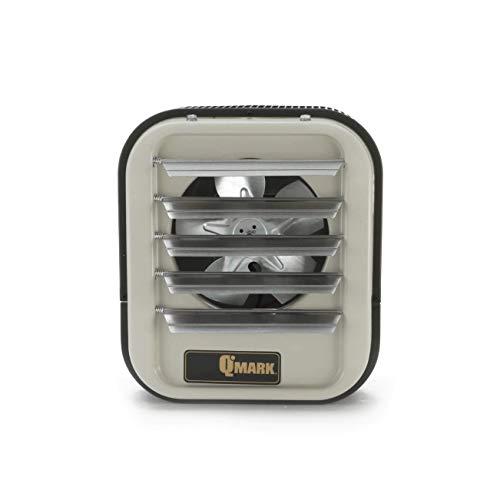
This 3000W unit heater distributes heat evenly across industrial spaces with a slim footprint. It can operate standalone or be integrated with ductwork. Best for spaces needing steady, high-capacity heat with potential ducting integration. Limitation includes a need for appropriate electrical and ductwork configuration.
Buying Guide
How large is the space you need to heat?
Heat output should align with square footage. For patios or large rooms, models in the 3000W–6000W range typically deliver sufficient warmth, while smaller zones may get by with 1500W units.
Do you prefer indoor, outdoor, or mixed installation?
Outdoor-ready heaters often feature weatherproof housings and IP ratings. Indoor or mixed-use units prioritize quiet operation and compact installation. Ceiling-mounted options save floor space in busy workshops.
What fuel or power source works best?
Electric infrared heaters run on standard electrical infrastructure and provide clean heat. Diesel/kerosene options (like Sunfire SF80) demand fuel access and venting, suitable for non-electrified spaces but noisier and bulkier.
Is remote control or smart integration important?
Remote controls and wall/ceiling mounting provide convenience and safer operation in industrial settings. Consider models with dimming or standby modes for energy management.
What safety features matter?
Overheat protection, stable mounting hardware, tip-over safety, and weatherproof enclosures help ensure long-term reliability in busy environments.
Installation considerations
Ceiling-mount units reclaim floor space but require sturdy mounting points. Wall-mounted models need appropriate clearances. Ensure electrical supply voltage matches heater requirements and consult a professional for complex installations.
Comparison snapshot
- Best for outdoor luxury warmth: Bromic Tungsten Smart Heat 6000W Electric Patio Heater.
- Best for instant heat with remote: DR. INFRARED HEATER DR-239.
- Best for garages with lighting: Shinic 2 Packs Electric Garage Heaters.
- Best for ducted or large industrial spaces: Marley 3000W Unit Heater.
- Best for fuel-powered large-area heat: SUNFIRE SF80.
Frequently asked questions
- What is IR radiant heat best for in industrial spaces? Infrared heat warms people and objects directly, reducing energy waste in drafty spaces.
- Can these heaters be used indoors safely? Many models are designed for indoor/outdoor use with appropriate clearances and ventilation; check IP ratings and installation guides.
- Do these require professional installation? Some models require electrical wiring or mounting hardware; consult a qualified technician for ceiling or ducted installs.
- Which heater is best for very large areas? Heaters with higher wattage (3000W–6000W) or fuel-fired options cover larger footprints more efficiently.
- Are maintenance or consumables needed? Most electric infrared heaters have minimal ongoing maintenance; fuel-based models need refueling and venting considerations.
- How does heat distribution differ between ceiling and wall mounting? Ceiling mounts save floor space and distribute heat downward; wall mounts offer flexible targeting but require more mounting clearance.
Add a Comment