Answering the needs of professionals and serious DIYers, this guide highlights five reliable industrial cut off saws that excel at metal cutting, provide solid safety features, and offer versatile angle cuts. Whether you’re upgrading a shop, building a fabrication bench, or performing maintenance on steel or aluminum, these tools balance power, accuracy, and practicality. The top picks are best for fabricators, metalworkers, and shop owners who require consistent performance, durable construction, and adjustable cutting angles.
Product Snapshot
| Product | Best For | Why It Stands Out |
|---|---|---|
| VEVOR Abrasive Chop Saw, 14in, 2300W | General metal cutting and precise mitering | Thicker vise, improved clamping, 0–45° adjustable angle, tool-less angle change |
| VEVOR Chop Saw, 14in, 2800W | Cold cut tasks with reduced sparks | Dry-cut capability with ceramic alloy blade joint, low-friction design |
| Makita LW1401 14″ Chop Saw | Heavy-duty intermittent cutting | 3,800 RPM motor, durable, spark guard and two-stage lock-off |
| RIDGID 14″ Abrasive Cut-Off Saw R41422 | Rugged outdoor or shop use | Reliable performance; compatible with replacement parts |
| Makita LW1400 14″ Cut-Off Saw | Tool-less wheel changes and debris control | Tool-less wheel change, large spark guard |
VEVOR Abrasive Chop Saw, 14in, 2300W

Features include a thicker vise for reduced wobble and improved clamping, an 80-tooth blade designed for high pressure with extended life, and a 0–45° adjustable fence for angled cuts. The tool-less angle adjustment eliminates the need for wrenches, speeding setup. This makes it an excellent choice for shops that prioritize cutting accuracy and efficient setup when working with metal like rebars, steel tubing, or aluminum stock. Best for workshop operators who want dependable clamping and steady cutting without frequent blade changes.
Best For: Fabrication shops and metalworkers who need consistent cutting performance and easy angle adjustments. Limitation: Some users may require external clamping aids for very small workpieces.
VEVOR Chop Saw, 14”/355mm, 2800W

This model emphasizes a dry-cut capability with a ceramic alloy blade joint to keep heat and sparks to a minimum. Its 0–45° angled cutting range and a 45° adjustable fence provide flexibility for bevels and miter cuts in steel, iron, and aluminum. The absence of frequent coolant or lubricants keeps maintenance simple, while the sturdy vise helps maintain alignment under load. Choose this if you routinely perform dry cuts and want a saw designed to minimize heat generation in the cut.
Best For: Metalworkers who value a cooler-cut process and smoother operation in dry-cut environments. Caution: Dry-cutting blades must be matched to material type and thickness for best results.
Makita LW1401 Cut-Off Saw, 14″

Powered by a robust 15-amp motor delivering 3,800 RPM, this Makita model emphasizes durability and smooth operation. It features a two-stage lock-off power button for operator safety and an adjustable spark guard to direct debris away from the work area. The design supports repeated heavy-use cycles and accurate cuts for steel, iron, and aluminum. Best for: Shops needing a reliable, high-RPM option with enhanced safety features. Limitation: Like many 14″ cut-offs, it has a fixed tilt range that may require an auxiliary jig for unusual angles.
RIDGID 14″ Abrasive Cut-Off Saw R41422

Although commentary notes refer to durable power and favorable use with various replacement parts, this model is positioned for professionals who value dependable performance in rugged environments. It emphasizes straightforward operation and robust construction. Best For: Outdoor jobs or high-demand shop settings where durability matters most. Limitation: Availability of replacement parts and support should be confirmed for the exact model version before purchase.
Cut-Off Blades Scalloped Edge (M2 Steel, 14″)

This blade line features a scalloped edge designed to reduce friction and improve cutting speed with less smoke and debris buildup, specifically for hoses cutting tasks on compatible machines. Constructed from M2 high-speed steel, it offers high durability and edge retention. Best For: Jobs requiring faster cuts on hydraulic hoses with compatible equipment. Limitation: Not universal; confirm compatibility with your cut-off saw before purchase.
APLMAN 6 Inch Cut Off Saw
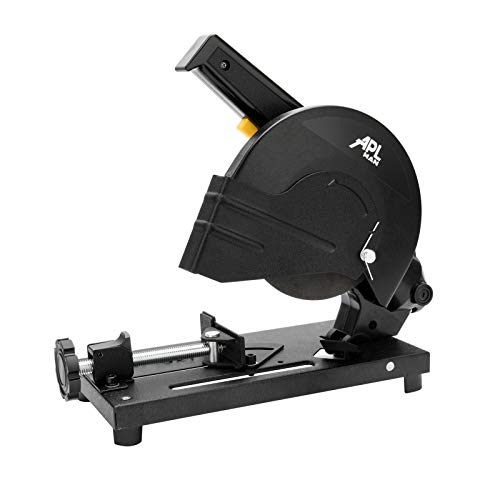
This compact option offers 1,800W and 3,900 RPM, with a heavy-duty steel base for stability and a spark deflector for safety. It supports 0–45° bevels, with adjustable fence positions to accommodate various material sizes. Best For: Small shops or portable setups needing a lightweight, highly adjustable cut-offSaw option. Limitation: Smaller capacity may limit certain larger metal stock operations.
Makita LW1400 14″ Cut-Off Saw

This model features a 15-amp motor delivering 3,800 RPM and a tool-less wheel-change system for quick blade and wheel replacements. The extra-large spark guard helps capture debris, reducing cleanup and improving visibility during operation. Best For: Shops that prioritize quick maintenance and safer debris management. Limitation: While tool-less changes are convenient, blade type selection should match the material being cut for optimal results.
Buying Guide
What should you consider when choosing an industrial cut off saw?
- Material you cut most often: Steel, iron, aluminum, or a mix will guide blade type and cut-off method (dry vs. wet, abrasive vs. steel).
- Power and RPM: Higher wattage and RPM improve speed and throughput but may increase vibration and the need for sturdy stands and mounts.
- Bevel and angle options: A 0–45° range with a tool-less adjustment is typically faster and safer for frequent angle cuts.
- Clamping and vise quality: A robust vise reduces wobble and improves cut accuracy, especially for long cuts or thicker stock.
- Safety features: Spark guards, wheel guards, and lock-off mechanisms help prevent injuries; ensure alignment with your shop safety standards.
- Maintenance and parts availability: Look for common spare parts and easy blade changes to minimize downtime.
FAQ
- What is the difference between an abrasive cut-off saw and a dry-cut saw? Answer: Abrasive saws use grinding discs to sever material, while dry-cut saws use specialized blades designed to cut without liquids, reducing sparks and heat.
- Why is a tool-less angle adjustment beneficial? Answer: It speeds setup and reduces the chance of misalignment when changing cutting angles.
- Which saw is best for high-volume steel cutting? Answer: A high-RPM motor with a robust vise and stable base is ideal; models with 3,800 RPM or higher and a strong clamp are suitable choices.
- Are there safety considerations for wet vs. dry cutting? Answer: Dry-cutting may produce more heat and sparks; ensure adequate ventilation, debris control, and protective gear.
- Can I use standard blades on all these saws? Answer: Blade compatibility depends on the blade type and arbor size. Always verify blade type, arbor diameter, and material suitability.
- What maintenance helps extend life? Answer: Regularly check blade condition, tighten vises, clean the base, and replace worn parts or brushes as needed.
Add a Comment