When selecting sprockets for ANSI #40 chains in industrial drives, the choice hinges on bore size, tooth count, material hardening, and corrosion resistance. The five products below are selected for reliability, compatibility with common #40 roller chains, and suitability for harsh environments. They are best for: maintenance teams needing durable replacements, equipment operators seeking rust-resistant options, and assembly engineers prioritizing secure mounting and long service life.
| Product | Bore | Teeth | Material/Hardening | Best For |
|---|---|---|---|---|
| RHKING #40 Roller Chain Sprocket B Type 5/8″ Bore 10 Teeth | 5/8″ | 10 | AISI 1045 steel; HRC 38-42; hardened teeth | Compact drives; where space is limited |
| RHKING #40 Roller Chain Sprocket B Type 1″ Bore 21 Tooth | 1″ | 21 | AISI 1045 steel; HRC 38-42; hardened teeth | General heavy-duty conveyors |
| Saelno #40 Roller Chain Sprocket Type B 1″ Bore 12 Tooth | 1″ | 12 | Rust resistance in outdoor environments | |
| CHR #40 Roller Chain Sprocket, 15 Tooth, 1″ Bore | 1″ | 15 | Standard replacement for ANSI #40, reliable power transmission | |
| #50 Roller Chain Sprocket 18 Tooth 3/4″ Bore | 3/4″ | 18 | For slightly larger bore applications with robust mounting |
RHKING #40 Roller Chain Sprocket B Type 5/8″ Bore 10 Tooth

The RHKING 10-tooth sprocket is designed for tight installations where the 5/8″ bore fits narrow shafts. The sprocket uses a hardened tooth surface and overall blackened finish to resist rust and corrosion, making it suitable for semi-outdoor or moderately harsh environments. Best for: small, high-torque drives where compact sprockets are required. Limitation: smaller tooth count can limit torque capacity and wear distribution in high-load situations.
RHKING #40 Roller Chain Sprocket B Type 1″ Bore 21 Tooth

With a 1″ bore and 21 teeth, this sprocket offers a robust balance between strength and shaft compatibility. Its AISI 1045 steel and heat-treated, hardened teeth deliver good wear resistance for continuous-duty conveyors and agricultural machinery. Best for: medium-to-high torque drives requiring reliable chain engagement. Limitation: larger bore may require specific shaft adapters or mounting hardware.
Saelno #40 Roller Chain Sprocket Type B 1 inch Bore 12 Tooth
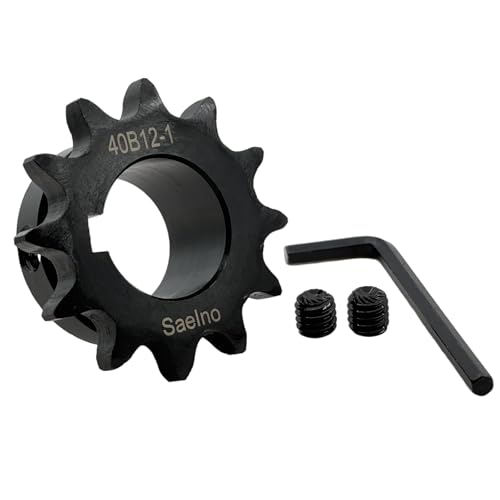
This Saelno sprocket uses ANSI 1045 carbon steel with hardened teeth and a blackened surface for corrosion resistance. The 1″ bore and 12 teeth deliver a balanced option for standard #40 chain drives in less extreme conditions. Best for: outdoor or dust-prone setups where rust prevention matters. Limitation: fewer teeth compared to larger sprockets may reduce torque capacity.
CHR #40 Roller Chain Sprocket, 15 Tooth, 1″ Finished Bore

The CHR Precision sprocket is a 15-tooth, 1″ bore, ANSI-compatible unit with a Type B hub. Constructed from carbon steel, it emphasizes durability and precise bore alignment for reliable engagement in high-load, continuous-use applications. Best for: replacing worn standard sprockets in industrial lines with standard ANSI #40 chains. Limitation: may require exact hub fitting for some equipment setups.
HJGuamou #50 Roller Chain Sprocket 18 Tooth 3/4″ Bore

Designed for heavier drives, this 18-tooth sprocket fits a 3/4″ bore with a robust black oxide finish that resists corrosion. It includes two set screws and a key for secure mounting, making it a practical choice for conveyor lines and agricultural equipment. Best for: medium-to-large bore drives that require strong mounting and rust resistance. Limitation: the 3/4″ bore may not fit smaller shafts without adapters.
HJGuamou #40 Roller Chain Sprocket 24 Tooth 5/8″ Bore

This 24-tooth, 5/8″ bore sprocket provides a higher tooth count with a precise 5/8″ hole and a hardened 1045 steel body. It includes three set screws for secure mounting, ideal for medium-to-heavy duty drives such as mini-conveyors or go-karts. Best for: high-torque, repetitive-use drives needing reliable engagement. Limitation: slightly larger bore reduces compatibility with smaller shafts unless adapters are used.
Buying Guide
What bore size should I choose?
Choose a bore that matches your shaft diameter. Common options like 1″ and 5/8″ are widely compatible, but verify the exact shaft dimension and any required adapters.
How many teeth do I need?
More teeth distribute load better and reduce wear per tooth, but require more space. For compact drives, 10–15 teeth may suffice; for high-torque systems, 21–24 teeth offer improved load distribution.
What about material and surface treatment?
ANSI/1045 carbon steel with heat-treated hardened teeth provides strong wear resistance. A black oxide or rust-resistant finish helps in outdoor or humid environments but verify compatibility with your environment and cleaning practices.
Who needs Type B hub sprockets?
Type B hubs with set-screw mounting are common for reliable shaft engagement. They’re preferred when precise alignment and secure mounting under heavy loads are required.
Are there rust-proof or corrosion-resistant options?
Yes. Sprockets with black oxide finishes and hardened teeth offer corrosion resistance suitable for outdoor, dusty, or industrial environments. Consider environments with moisture or chemical exposure when selecting a finish.
What should be included with mounting?
Look for sprockets that come with keys and set screws, ensuring a secure, non-slip fit. This minimizes shaft movement and tooth wear during operation.
FAQ
- What is ANSI #40 chain compatibility?
ANSI #40 chain is a standard size; use sprockets designed for ANSI #40 to ensure proper pitch and engagement.
- How do I prevent sprocket wear?
Choose hardened teeth and maintain proper lubrication, alignment, and tension to reduce wear and extend life.
- Can I mix brands?
Yes, provided the bore size, pitch, and chain compatibility match. Ensure hub design and mounting hardware are compatible.
- When should I replace a sprocket?
Replace if teeth show heavy wear, rounding, or chipping, or if alignment issues persist after adjustments.
- Is rust-proof coating necessary for indoor use?
Not strictly, but it adds durability in humid settings or where cleaning frequently involves water or moisture.
- What mounting hardware should accompany a new sprocket?
Typically keys and set screws are included; verify what is included in the package to ensure proper installation.
Add a Comment