Answer: This guide highlights top industrial band saw blades that deliver reliable metal cutting and durable performance across common saws. Best for metal fabrication pros, workshop professionals, and serious hobbyists needing long-lasting blades for ferrous metals, stainless steel, and general-purpose cutting. The featured products cover bi-metal, high-speed steel teeth, and various tooth configurations to suit different materials and thicknesses. Below, you’ll find practical comparisons, who each blade is best for, and quick buying tips.
| Product | Length | Width | Teeth | Best For |
|---|---|---|---|---|
| Imachinist S933414 M42 93″ Bi-Metal | 93″ | 3/4″ | 10-14 TPI | Soft ferrous metals; delicate profiles |
| 144″ Sawmill Blades 5-Pack (phabcf) | 144″ | 1-1/4″ | 10° All-Purpose | Sawmills and heavy-duty profiles; compatibility with multiple brands |
| Imachinist S9334014 M42 93″ Bi-Metal | 93″ | 3/4″ | 14 TPI | Thin-walled tubes and soft ferrous metal |
| Lenox Portable Band Saw Blades 44-7/8″ | 44-7/8″ | 1/2″ | 14 TPI | General-purpose portable cutting; durable edge |
| Imachinist S933414SS M42 Bi-Metal | 93″ | 3/4″ | 14 TPI | Stainless steel and soft ferrous metal |
Imachinist S933414 M42 93″ Bi-Metal Band Saw Blade

- Bi-metal type, M42 grade; 93″ long, 3/4″ wide, 0.035″ thick; 10-14 TPI
- Best for cutting soft ferrous metal; suitable for thin pipes and profiles
- Limit: Not ideal for hard stainless steel compared to stainless-specific blades
144″ Sawmill Blades 5-Pack (phabcf)
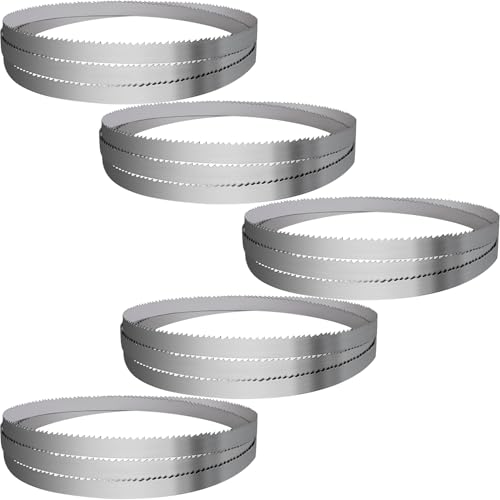
- 144″ length; 1-1/4″ width; 0.042″ thickness; 10° rake; 7/8″ pitch
- Best for compatibility with Wood-Mizer and similar sawmills; strong heat-treated alloy steel
- Limitation: 144″ blades require compatible saw assemblies; not for small machines
Imachinist S9334014 M42 93″ Bi-Metal
- Bi-metal, M42 grade; 93″ x 3/4″ x 0.035″; 14 TPI
- Best for cutting soft ferrous metal; optimized for thin-walled tubes and profiles
- Limitation: Not designed for heavy stainless steel cutting
Lenox Portable Band Saw Blades 44-7/8″
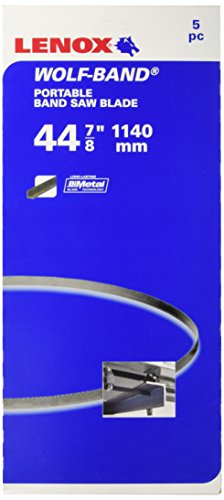
- High-speed steel teeth; durable, shatter-resistant; bi-metal construction
- Best for portable cutting with long blade life; 14 TPI offers solid general performance
- Limitation: Not optimized for very hard metals; limited lengths for fixed machines
Imachinist S933414SS M42 Bi-Metal 93″ Blade (Stainless)
- Bi-metal, M42 grade; 93″ long, 3/4″ wide, 0.035″ thick; 14 TPI
- Best for stainless steel cutting (304, 316L, etc.); invariable tooth profile
- Limitation: Teeth are configured for stainless; may be less efficient on non-ferrous metals
FOXBC 35-3/8 Inch 18 TPI Blades

- 18 TPI; 35-3/8″ length; 1/2″ width; 0.020″ thickness
- Best for portable bandsaws; compatible with Milwaukee 48-39-0526; premium bi-metal M42 steel
- Limitation: Not ideal for very thick or hard metals; smaller blade length limits heavy-duty use
Buying Guide
What to consider when choosing industrial band saw blades:
- Material and tooth configuration: Bi-metal blades with high-speed steel teeth excel at metal cutting and offer longer life. Tooth count (TP I) affects finish and speed for different materials.
- Blade length, width, and thickness: Match blade dimensions to your saw’s capacity and the material’s thickness. Thicker blades offer strength for vertical cuts; thinner blades cut faster but may flex.
- Application type: Stainless steel, carbon steel, aluminum, or nonferrous metals each benefit from different blade geometries. For stainless, look for invariable teeth profiles.
- Compatibility: Ensure the blade length and width fit your bandsaw model. Sawmill blades and portable blades have unique mounting standards.
- Durability features: Bi-metal construction, heat treatment (quenching/annealing), and weld quality impact wear resistance and edge retention.
Frequently Asked Questions
- What is the difference between bi-metal and carbon steel blades? Bi-metal blades combine a shock-resistant backing with a hard cutting edge, increasing lifespan on metal cuts.
- Which blade is best for stainless steel? Blades with invariable teeth profiles and M42 high-speed steel teeth are common choices for stainless steels.
- How do I know the blade length I need? Check your saw’s manual for the recommended blade length and verify the machine’s capacity for the blade width.
- Can I use a wood-cutting blade for metal? No. Wood blades have different tooth geometry and will wear quickly or fail when used on metal.
- Are 14 TPI blades better for metals or plastics? 14 TPI is typically suited for thin-walled tubes and soft ferrous metals, providing a balance of speed and finish.
- What confirms blade compatibility with sawmills? Look for 144″ length blades and check the sawmill’s brand compatibility list and mounting dimensions.
Add a Comment