When selecting industrial ball valves, the focus is on durability, compatibility, and safety. This guide highlights five solid choices from top manufacturers, suitable for various applications from chemical plants to water systems. The top picks emphasize corrosion resistance, full-port design, and secure operation. This overview helps buyers choose the right valve for their needs, whether for high-pressure hydraulic systems, sanitary processing, or standard inline shut-off duties. The quick-reference summary below lists key product names, brands, and best-use scenarios to compare at a glance.
| Product | Brand | Best For | Key Benefit |
|---|---|---|---|
| 2 Pack 1/2″ Ball Valves NPT Female Stainless Steel 304 | SKLSSVF | Harsh environments; chemical or marine | Corrosion resistance and locking safety |
| (Pack of 10) EFIELD 3/4″ Copper Press Ball Valve | EFIELD | Copper piping systems | Full-port, quick-connect press |
| Midline Valve 532VLV034 Double-O-Ring Ball Valve | Midline Valve | Brass piping with 3/4″ fittings | Forged brass with chrome-plated ball |
| High Pressure Hydraulic Ball Valve KHB 1/2″ NPT | L | Hydraulic systems | High PSI capability |
| Eastman 3/4 Inch IPS Heavy Duty Full Port Ball Valve | Eastman | Water systems and inline shut-off | Full-port for maximum flow |
Product Spotlight: Top Choices For Industrial Ball Valves
2 Pack 1/2″ Stainless Steel Ball Valves With Locking Handle
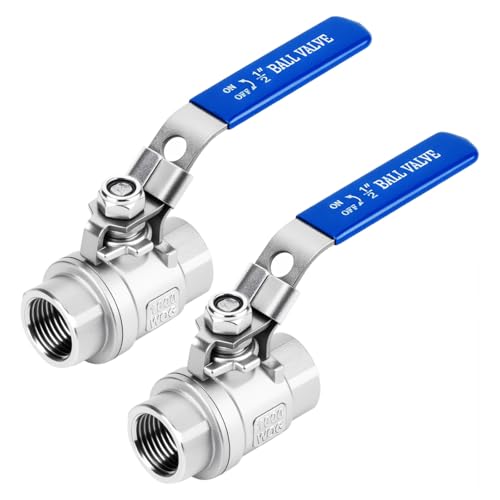
Best for corrosion-prone settings, this 304 stainless steel ball valve offers robust durability in chemical plants or marine environments. The full-port design reduces flow restriction, increasing throughput in industrial or irrigation systems. A locking device adds safety by preventing accidental lever movement in high-risk facilities. Best for facilities prioritizing long-term durability and safety, with a note to avoid environments requiring non-metallic components for compatibility reasons.
EFIELD Copper Press Ball Valve, 3/4″

Best for copper tubing networks, this 3/4″ copper press ball valve is designed for quick, reliable connections with EPDM O-rings. It’s well-suited for installers who need straightforward, tool-assisted assembly. Choose this if you’re prioritizing speed and copper-system compatibility, but be aware it’s optimized for press-fit copper lines rather than threaded or welded configurations.
Midline Valve 532VLV034 Brass Ball Valve, 3/4″

Best for brass piping networks, this 3/4″ valve pairs forged brass construction with chrome-plated brass ball for durability and corrosion resistance. It’s a solid fit for inline shut-off or flow-control in residential or light-commercial water systems that require dependable performance. A limitation is that it’s optimized for brass connections, so compatibility with other materials should be verified.
High Pressure Hydraulic Ball Valve KHB 1/2″ NPT

Best for hydraulic systems with high-pressure demands, this 1/2″ NPT ball valve uses carbon steel and chrome plating to withstand demanding environments, rated for up to 7250 PSI. It’s a strong choice for industrial hydraulics, but consider material compatibility with the entire system to avoid galvanic corrosion or inappropriate temperatures.
Eastman 3/4 Inch IPS Heavy Duty Full Port Ball Valve

Best for water systems requiring maximum flow, this Eastman valve features a full-port design with a 3/4″ IPS connection on both ends, facilitating inline shut-off with minimal pressure drop. The stamped steel handle with vinyl coating provides a comfortable grip. Choose this when flow efficiency and ease-of-use are priorities; note that it’s more suited for water service than highly corrosive chemical service unless adequately protected.
Buying Guide: What to Consider When Choosing Industrial Ball Valves
What material matches your environment?
Valves come in stainless steel, brass, copper, and carbon steel variants. Stainless steel (like the SKLSSVF example) is ideal for corrosive or marine settings, while brass valves perform well in many water and plumbing applications. Copper and copper-press variants suit copper piping networks, offering reliable assembly and good corrosion resistance.
Should you prioritize full-port design?
Full-port (or full-bore) valves minimize flow restriction, improving throughput for liquids and gases. This is especially important in irrigation, chemical processing, and high-volume water systems, where pressure drop directly affects performance.
What about connections and compatibility?
Check end connections (NPT, IPS, press) and matching sizes. Inline compatibility is essential for replacing a valve in an existing system. If you’re working with tri-clamp sanitary lines, look for valves designed for sanitary service, like those that are PTFE-lined or 304 stainless.
What safety features matter?
Locking handles prevent accidental actuation in busy facilities. This feature is valuable for high-risk environments, test labs, or systems where unauthorized operation must be avoided.
Pressure rating and temperature range
Choose a valve with a rating that suits your system’s maximum pressure and the operating temperature. Hydraulic or high-pressure systems require valves designed for elevated PSI, while sanitary or residential lines may require broader temperature tolerance.
Maintenance and installation considerations
Consider the ease of installation, maintenance, and replacement. Copper press valves offer quick installation, while threaded or NPT valves may require thread sealants or careful torque to prevent leaks. Sanitary valves often require special cleaning or PTFE lining standards for food-grade or pharmaceutical applications.
FAQ: Quick Answers For Buyers
- What is a full-port valve and why does it matter? A full-port valve has an unobstructed bore that matches the valve size, reducing flow resistance and pressure drop in the system.
- Which valve material lasts longest in harsh environments? Stainless steel (such as 304-grade) typically offers superior corrosion resistance in aggressive chemicals and marine applications.
- Are locking handles necessary? Locking handles improve safety by preventing unintended operation, especially in high-traffic or hazardous areas.
- Can I mix valve types in a system? Yes, but ensure compatibility of materials, end connections, and pressure ratings across all components to avoid leaks or corrosion.
- What should I check before buying a sanitary valve? Look for food-grade materials, PTFE lining if required, and compatibility with Tri-Clamp or sanitary fittings for clean-in-place processes.
- Do I need high PSI-rated valves for all applications? Not necessarily; hydraulic or high-pressure systems require valves with higher PSI ratings, while standard water or air lines may operate safely at lower ratings.
Add a Comment