Choosing the right hydraulic speed control valve is essential for smooth, safe operation of machines like log splitters, loaders, and tractors. This guide highlights five reliable options, covering a range of spool configurations, pressure ratings, and port sizes. The selections emphasize durability, ease of control, and compatibility with common hydraulic systems. Use the buying guide below to compare features and determine which valve best meets your application needs.
| Product | Brand | Key Feature |
|---|---|---|
| Chief G Series P40 Hydraulic Directional Control Valves | Chief | 3 Spool, 10 GPM, 3 Position Spring Center & 4 Position Float |
| Vevor 2 Spool Hydraulic Directional Control Valve | VEVOR | Double Acting, 11 GPM, 3600 PSI |
| findmall Hydraulic Control Valve 4 Spool | findmall | 4 Spool, 11 GPM, BSPP Interface |
| GYZJ Hydraulic Flow Control Valve 1 Spool | GYZJ | 11 GPM, 3600 PSI, Spring Return |
| Summit Hydraulics Hydraulic Adjustable Variable Flow Control Valve | Summit Hydraulics | 0-30 GPM, 3/4” NPT, Relief |
Chief G Series P40 Hydraulic Directional Control Valve

The Chief G Series P40 is a 3-spool, 4-way directional control valve designed for double-acting rams with a 10 GPM flow rate. It features a 3-position spring-centered valve and a 4-position float option, enabling precise opening and closing of actuators. Ports include SAE 10 for inlet/outlet and SAE 8 for work ports, with a pressure range extending to 3625 PSI. This compact valve supports versatile hydraulic circuits and provides stable flow control suitable for tasks such as log splitting, where controlled ram speed matters. The product emphasizes durability and straightforward operation, making it a practical choice for mid-sized hydraulic systems.
Vevor 2 Spool Hydraulic Directional Control Valve

The VEVOR two-spool valve is built for double-acting cylinders, offering a durable cast-iron construction with standard spring-return spools. With 11 GPM maximum flow and a 3600 PSI rating, it is suitable for tractors, loaders, and similar equipment. The valve’s dual spool design provides independent control of two hydraulic circuits, enhancing versatility in multi-actuator systems. The solid build and predictable return-to-neutral behavior help maintain consistent performance in demanding field conditions.
Findmall 4 Spool Hydraulic Control Valve
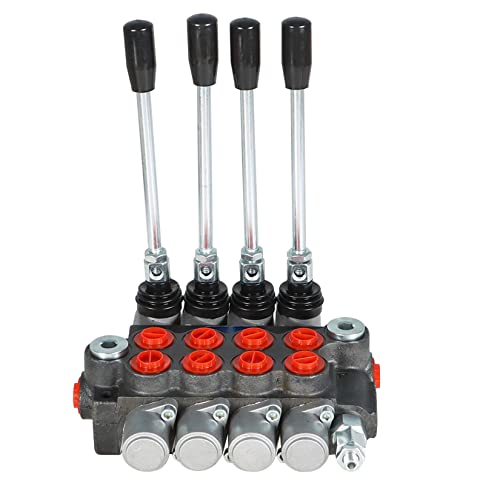
This 4-spool hydraulic valve features a 3600 PSI rating and an 11 GPM maximum flow, with a BSPP interface for straightforward plumbing. The four-spool design is typical for more complex hydraulic circuits, allowing double-action control and precise neutral positioning via spring return. The robust cast-iron construction and accuracy-focused manufacturing offer reliability under continuous cycling, making it appropriate for integrated systems in heavy machinery or agricultural equipment where multiple actuators operate in tandem.
GYZJ Hydraulic Flow Control Valve 1 Spool

The GYZJ one-spool valve provides a compact solution for small hydraulic systems, delivering up to 11 GPM with a 3600 PSI maximum pressure. It features a spring-return mechanism for easy return to the neutral position and is well-suited for controlling single-acting or double-acting cylinders in compact setups. The valve’s simple design supports quick installation and reliable throttle control, making it a practical choice for retrofits or light-duty hydraulic projects on portable equipment or small tractors.
Summit Hydraulics Hydraulic Adjustable Variable Flow Control Valve

The Summit Hydraulics model offers a pressure-compensating variable flow control with an integrated relief valve. It supports a wide adjustable flow range from 0 to 30 GPM and uses a 3/4” NPT port size, providing flexibility for larger hydraulic circuits. The internal relief valve helps prevent pressure spikes, improving system safety and longevity. This valve is suitable for applications requiring variable speed control across a broad flow spectrum, such as industrial machinery or heavy equipment where precise speed regulation is essential.
Buying Guide
- Flow capacity and pressure rating: Match the valve’s GPM and PSI ratings to your hydraulic circuit’s demands. Higher GPM improves speed control for larger actuators, while adequate PSI ensures reliable operation under peak loads.
- Port size and interface: Verify inlet/outlet and work port sizes (SAE, NPT, BSPP) to ensure compatibility with your hoses and fittings. Mismatched ports can require adapters that introduce leaks or friction.
- Spool configuration: Choose the number of spools (1-, 2-, 3-, or 4-spool) based on how many cylinders you need to control independently. More spools enable complex multi-actuator control but add complexity.
- Return mechanism: Spring-return spools default to neutral without electrical input, while some models use float or detent positions. Consider whether a spring return fits your safety and control needs.
- Relief and safety features: Flow control valves with built-in relief valves help protect actuators from overpressure. Assess whether your system needs additional protection against pressure spikes.
- Construction material: Cast iron and carbon steel offer durability in harsh environments but may add weight. Stainless options exist for corrosion resistance in specific settings.
- Installation and maintenance: Look for valves with straightforward installation, clear labeling, and ease of maintenance. Quick-disconnect fittings or standardized ports can reduce downtime.
- Application fit: Consider whether you need a valve for log splitters, loaders, tractors, or industrial machinery. Some valves are optimized for single-acting cylinders, others for double-acting configurations.
- Cost vs. value: Compare initial cost with expected lifespan and maintenance needs. More versatile multi-spool valves may offer better long-term value in complex systems.
Add a Comment