Finding the right hydraulic return line filter improves component life and system reliability. This guide highlights five high‑performing options suited for tractors, log splitters, and rugged hydraulic systems. Choose this list if you need reliable 10‑micron or 20‑GPM filtration with real‑time status indicators. The buyers most likely to benefit are fleet operators, workshop technicians, and equipment owners maintaining heavy hydraulic circuits.
| Product | Best For | Filtration | Flow & Port | Notes |
|---|---|---|---|---|
| DICMIC 10 Micron Hydraulic Oil Filter Assembly | General hydraulic systems with 3/4″ ports | 10 micron | 20 GPM, 3/4″ NPTF | Indicator port for monitoring; aluminum body, Buna‑N seals. |
| Atracypart Spin-On 10 Micron Filter Kit | Petroleum-based fluids in heavy equipment | 10 micron | 20 GPM, 3/4″ NPTF | High‑temp, robust design; 15 PSI bypass. |
| RARAYC Spin-On Hydraulic Filter with Indicator Ports | Industrial hydraulic systems needing visibility | 10 micron | 20 GPM, 3/4″ NPTF | Integrated indicator ports for status checks. |
| Buyers Products HFA22525 HFA Series 25 Micron | Systems requiring debris capture before re-entry | 25 micron | 50 GPM, 1-1/4″ NPT | High‑flow, 150 PSI rating; standard filter head. |
| Koreyoshi 723-0405/CP-752-10 Compatible Filter Base | Versatile, retrofit filtration for various machines | 10 micron | 20 GPM, 3/4″ NPT | Indicator ports; compatible with multiple models. |
DICMIC 10 Micron Hydraulic Oil Filter Assembly
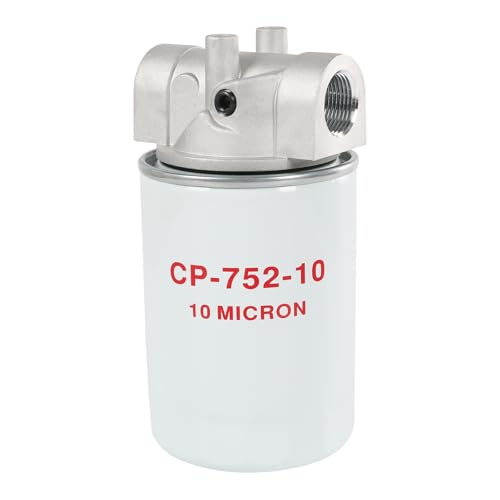
The DICMIC filter uses a 10‑micron element designed to remove fine contaminants from petroleum‑based fluids, including water emulsions. It is built with an aluminum die‑cast body and Buna‑N seals, making it durable in high‑temperature and corrosive environments. This unit is best for operators who want tight filtration and a compact, spin‑on design for easy replacement. A potential limitation is the 15 PSI bypass, which requires attention if the system frequently operates near bypass pressure.
Buyers Products HFA22525 HFA Series 25 Micron Return Line Filter

This high‑efficiency filter captures particles as small as 25 microns and returns clean oil to the reservoir, supporting system reliability and reducing downtime. It is designed for heavy‑duty applications with a durable 50 GPM head and a 150 PSI rating. Best for trucks, trailers, and other mobile hydraulic systems. Choose this if you need a tougher filtration with higher flow capability, but note that 25 microns is coarser filtration than 10 microns.
Spin-On Hydraulic Oil Filter Assembly 10 Micron

This 10‑micron spin‑on filter targets petroleum‑based fluids at 20 GPM and 200 PSI, with a 3/4″ NPTF port for easy integration. It features an indicator port to monitor filter status. Best for users who want a straightforward, professional‑grade filter that is compatible with many common hydraulic configurations. A limitation to consider is compatibility with non‑petroleum fluids; check fluid type before use.
Buyers Products HFA22515 25 Micron Return Line Filter

Designed for 50 GPM return flow, this 25‑micron cellulose media filter protects hydraulic components by preventing debris re‑entry. External mounting and a 15 PSI bypass help maintain steady flow under load. It is best when chasing robust filtration for larger systems, but it uses a coarser micron rating than 10‑micron options, which may be less effective at catching very fine contaminants.
RARAYC Spin-On Hydraulic Oil Filter with Indicator Ports

RARAYC provides a 10‑micron filtration solution with indicator ports for real‑time status checks. It supports up to 20 GPM and 200 PSI, making it suitable for demanding agricultural and industrial hydraulic systems. The built‑in indicator ports help minimize unexpected downtime, but ensure port compatibility with your existing plumbing and seal types to avoid leaks.
Koreyoshi 723-0405/CP-752-10 Compatible Filter Base

This filter base is a versatile option that pairs with 3/4″ NPT ports and 10‑micron filtration. It is compatible with multiple model families and includes indicator ports for monitoring. Best for workshops needing retrofit capability across several machines, but verify exact compatibility with your machine’s model list before purchasing.
Buying Guide
- Micron rating: Decide between 10 micron for tighter filtration or 25 micron for higher flow with coarser filtration. Smaller microns provide cleaner oil but may require more frequent filter changes in dirty systems.
- Flow capacity: Match the unit to your system’s GPM. Most listed options target 20 GPM, with some supporting up to 50 GPM. Higher flow helps prevent pressure buildup but can overwhelm smaller reservoirs.
- Bypass valve: A lower bypass pressure means more filtration under normal operation, but ensure your system’s pressure and bypass settings align with the filter’s rating to avoid bypassing dirty oil.
- Port size and mounting: Ensure 3/4″ NPT or 1-1/4″ NPT ports and external vs. internal mounting fit your hardware. Indicating ports are helpful for maintenance reminders.
- Fluid compatibility: Most options are designed for petroleum-based hydraulic fluids. Verify resin seals (Buna-N or equivalent) and compatibility with any water glycols or emulsions in use.
- Maintenance visibility: Indicator ports provide a quick status check. If this feature is important, prioritize models that include indicators or visible flow‑through seals.
- Ease of replacement: Spin‑on designs typically simplify service, while base assemblies may require additional sourcing for compatible cartridges or elements.
- Reliability and environment: Aluminum bodies and robust seals help resist corrosion and high temperatures. Consider the operating environment (outdoors, dust, moisture) when selecting a unit.
FAQs
- What does a bypass valve do in hydraulic filters?
It allows oil to bypass the filter element if the filter becomes clogged or flow is restricted, protecting the system from a sudden loss of lubrication.
- Is a 10‑micron filter always better than a 25‑micron filter?
Not always. A 10‑micron filter provides finer filtration, reducing wear from small contaminants but may restrict flow sooner. A 25‑micron filter allows higher flow and is effective for general debris control in cleaner systems.
- Why are indicator ports important?
Indicator ports give real-time status on filter condition, helping maintenance teams replace elements before filtration efficiency drops or a failure occurs.
- Can I mix filter brands with existing hardware?
Mixing brands is possible if port sizes, thread standards (NPTF), and mounting methods match your equipment. Always verify compatibility to avoid leaks.
- What fluids can these filters handle?
Most listed filters target petroleum-based hydraulic fluids. Some are rated for water emulsions or glycols; confirm fluid compatibility with the chosen model.
- How do I choose between a spin‑on and a base/filter head design?
Spin‑on elements are easy to replace and compact. Filter heads or bases are advantageous for retrofit applications across multiple machines and can support larger flow if designed for it.
Add a Comment