When selecting hydraulic press arbor plates, the top goal is reliable, high-precision support that can withstand heavy loads without cracking or deforming. This article highlights five strong options suited for 20-ton to 32-ton presses, with clear guidance on who benefits most from each plate. Use this guide to compare materials, notch configurations, and frame designs to find the best match for your workshop needs.
| Product | Material | Notches | Size | Best For |
|---|---|---|---|---|
| Kerty 2 Pack Hydraulic Press Plates | Industrial Steel | 5 Notches | 7″ x 7″ x 1″ | |
| 2 Pack Arbor Press Plate, AR400F | AR400F Steel | 4 Notches | 1″ x 5″ x 5″ | |
| OneChoi Arbor Press Plate | AR400F | 4 Notches | 1″ x 5″ x 5″ | |
| Arbor Press Plate, 4-Notch H-Frame | Steel | 4 Notches | 1″ x 7″ x 7″ | |
| HZSIFU Arbor Press Plate | High-Quality Steel | 4 Notches | 1″ x 5″ x 5″ |
Kerty 2 Pack Hydraulic Press Plates

Includes two 7″ x 7″ x 1″ plates, designed to replace fragile cast arbor plates on 20-ton and 32-ton systems. The five-slot H-shaped design supports high-precision processing. Suitable for shops upgrading to more robust, reliable plates instead of traditional cast options.
Best for: hobbyists and small workshops upgrading Harbor Freight style presses to stronger, longer-lasting plates. Caution: ensure your press frame accommodates a 1″ thick plate and 7″ square footprint.
2 Pack Arbor Press Plate, AR400F
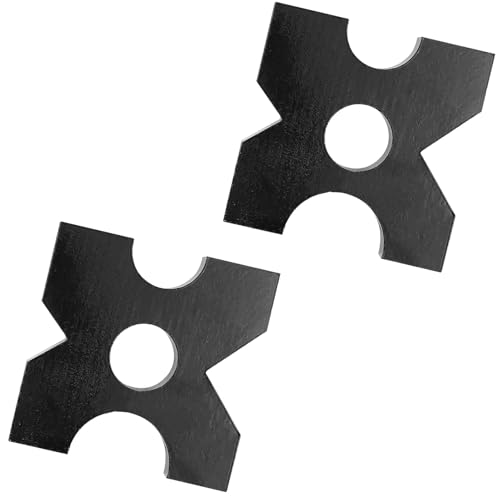
Built from AR400F steel, these plates emphasize corrosion and wear resistance for demanding environments. With a yield strength well over 140,000 psi and a 4-slot H-frame, they distribute pressure evenly to minimize deformation during heavy presses.
Best for: users needing durable, high-strength plates that handle extreme pressure. Caution: ensure compatibility with your 20-ton or 32-ton setup and confirm slot alignment with your existing bolts.
OneChoi Arbor Press Plate

Constructed from AR400F steel with yield strengths above 140,000 psi, it offers a robust replacement option for unsafe cast plates. The 1″ x 5″ x 5″ size and 4-notch H-frame promote precise, even pressure across the workpiece.
Best for: shops seeking a high-strength, reliable replacement that minimizes risk of fracture. Caution: confirm that your press head and bed clearance can accommodate the plate thickness and footprint.
HZSIFU Arbor Press Plate

High-quality steel plate designed to withstand up to 20 tons, with a 4-notch H-frame for precise machining and even load distribution. It aims to absorb shocks during rapid pressing, protecting both the workpiece and hydraulic components.
Best for: users who want reliable shock absorption and consistent results. Caution: verify that 20-ton capacity aligns with your equipment and that the finish is suitable for your finishing processes.
2 Pack Hydraulic Press Plate H Frame (Hezaosth)

Two 1″ x 7″ x 7″ plates in a 5-notch H-frame design offer robust support for 20-ton and 32-ton applications. They emphasize AR400F steel construction with high hardness and wear resistance.
Best for: workshops needing a heavier footprint with a balanced H-frame layout. Caution: check overall dimension compatibility with your press bed and clearance for the 7″ squares.
Buying Guide: Key Considerations For Choosing Arbor Plates
What material should you choose? AR400F steel plates deliver high yield strength, wear resistance, and durability, making them a common choice for heavy-duty arbor plates. They outperform generic A36 steel in long-term use under high loads. Consider AR400F when you expect repeated, intense pressing operations.
How important is the notch configuration? Notches in the H-frame help position fixtures precisely and reduce movement during pressing. A 4-notch or 5-notch design distributes force more evenly and lowers the risk of workpiece misalignment. Pick a design that matches your typical tooling and fixtures.
What thickness is appropriate? Most plates here are 1 inch thick, providing solid support for 20–32 ton presses. Thicker plates can offer more rigidity but require more clearance on the press bed. Ensure your machine can accommodate the plate thickness without interference.
What about size and footprint? Larger plates (7″ x 7″) offer broader contact areas for irregular shapes but must fit within your press frame. Smaller plates save space but may limit the range of compatible workpieces. Match footprint to your common parts and fixtures.
What is the best choice for replacement? If you’re upgrading fragile cast plates, look for a plate labeled as a direct replacement with a proven H-frame design. A thicker, stronger plate reduces the risk of fracture and wear over time.
FAQ
- Why replace cast arbor plates with these steel plates? Cast plates are prone to fracture under heavy use; steel AR400F plates offer higher yield strength and durability, reducing downtime.
- Which plate setup is best for 20-ton presses? Most 1″ thick, 4-notch or 5-notch H-frame plates labeled for 20-ton capacity are suitable; verify your specific press head clearance.
- Are AR400F plates compatible with all 20–32 ton presses? They are designed for heavy-duty presses within that range, but always check mounting holes, bed clearance, and frame compatibility.
- What should I verify before purchasing? Plate thickness, notch count, overall footprint, material (AR400F), and whether the plate is a direct replacement for your current arbor plates.
- Can these plates improve accuracy? Yes, even pressure distribution via H-frame designs reduces deformation and improves machining accuracy on each press cycle.
- Is a higher yield strength always better? Higher yield strength improves load handling, but ensure the rest of the system (frame, bolts, ram) can support the increased rigidity and weight.
Add a Comment