Looking for a hydraulic plate compactor that fits a compact excavator or skid steer? This guide highlights top-performing attachments for narrow spaces, trenching, and small-to-medium projects. Ideal buyers include landscaping pros, utility contractors, and homeowners tackling patios or driveways. The top picks here balance power, durability, and compatibility to help you choose the right tool for your machine and job. The table below offers a quick snapshot of the five recommended products.
| Product | Best For | Machine Type |
|---|---|---|
| Hydraulic Plate Compactor – 1 Ton Mini Excavator Attachment (DGXZJGHD) | Small-scale landscaping and trench backfill in tight spaces | 1-ton mini excavator |
| JMA CAT303PLACOMP Plate Compactor | 3–4.5 ton mini excavators; demanding trenching jobs | 3–4.5 ton mini excavator |
| SuperHandy Plate Compactor with 7HP Gas Engine | Patios, sidewalks, driveways; standalone ground prep | Gas engine platform (standalone) |
| GIYI 71″ / 1810mm Hydraulic Skid Steer Plate Compactor | Road work, foundation backfill, large-area leveling | Skid steer loader |
| EZG Reversible Vibratory Plate Compactor (ERPC200) | General contracting and site prep with transport ease | Plantary forward/reverse with hydraulic control |
Hydraulic Plate Compactor – 1 Ton Mini Excavator Attachment (DGXZJGHD)
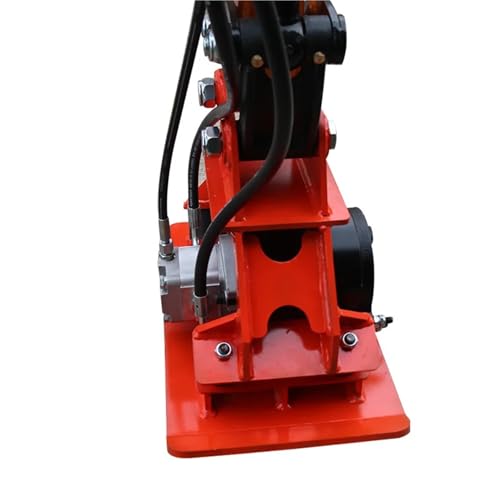
Features include hydraulic-driven operation that delivers consistent compaction force, optimized for soil, gravel, and small aggregates in narrow work zones. Designed specifically for 1-ton mini excavators, this attachment converts digging equipment into a mobile compaction tool for on-site versatility. Its compact plate structure adapts to tight spaces, supporting landscaping, small construction, and utility line projects.
Who it’s best for: contractors and DIYers working in confined spaces with a 1-ton excavator. Why selected: compact design, direct hydraulic drive, and suitability for small-scale compaction tasks. Caution: performance depends on consistent hydraulic supply and machine compatibility.
JMA CAT303PLACOMP Plate Compactor

Features heavy-duty AR400 steel construction for durability under repeated impact and abrasive soils. It offers an 11,023 lb impulse force and 7,233–9,403 ft⋅lb tamping force for rapid soil stabilization, minimizing passes on trenches and foundations. The 40mm pin attachment system is designed for a precise, secure mount to compatible 3–4.5 ton mini excavators, including the Cat 303 series.
Who it’s best for: professional operators needing high impulse and quick results on larger mini excavators. Why selected: superior durability and strong compaction performance for demanding work. Caution: suited for heavier machines; verify pin compatibility with your model.
SuperHandy Plate Compactor with 7HP Gas Engine
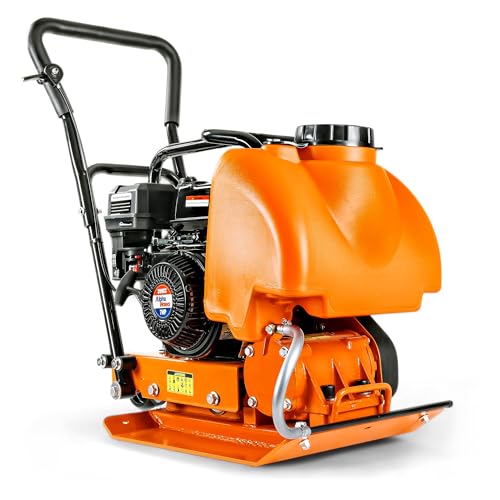
This standalone unit features a 7HP 4-stroke OHV gas engine delivering 5kW with a maximum 3600 RPM, producing high-impact compaction. The 20″ x 15″ steel plate and powder-coated frame are built for rugged environments, with a 12-inch maximum compaction depth suitable for patios, sidewalks, driveways, and landscaping projects.
Who it’s best for: builders needing a portable, standalone compactor without a separate hydraulic rig. Why selected: strong engine, substantial plate area, and deep compaction. Caution: fuel and maintenance considerations apply for gas-powered equipment.
GIYI 71″/1810mm Hydraulic Skid Steer Plate Compactor

Designed for skid steer loaders, this attachment delivers high-frequency vibrations and strong impact force for efficient compaction of soil, gravel, and asphalt. It supports a versatile range of applications from road construction to foundation backfilling and site leveling. Availability in U.S. warehouses offers improved logistics and delivery speed.
Who it’s best for: contractors using skid steers needing a large-capacity plate for extensive site prep. Why selected: compatibility with common skid steer brands, robust performance, and broad application scope. Caution: heavier attachment requires suitable lift capacity and stability on inclines.
CORMAC C135R Hydraulic Reversible Plate Compactor

Featuring a hydraulic forward/reverse lever, the C135R provides enhanced maneuverability around obstacles. A high-position handle improves control, while shock mounts help minimize engine vibration transmitted to the operator, contributing to more comfortable operation during longer sessions.
Who it’s best for: operators needing reversible operation and better handling on uneven sites. Why selected: balance of control, vibration reduction, and practical design. Caution: ensure compatibility with your machine’s hydraulic system and mounting points.
CORMAC C170R Hydraulic Reversible Plate Compactor

This model includes a hydraulic forward/reverse lever and a high-position handle for improved maneuverability around jobsite obstacles. Shock mounts help reduce engine vibration transmitted to the operator, contributing to a smoother operation on challenging sites.
Who it’s best for: users needing reversible operation with enhanced operator comfort. Why selected: reliable control features and vibration management. Caution: verify engine and hydraulic compatibility with your equipment setup.
EZG Reversible Vibratory Plate Compactor (ERPC200)

The ERPC200 features a reversible control handle with forward-reverse and lateral control, plus a locking feature for storage and transport. It offers centrifugal force from 6,745 lbs to nearly 9,000 lbs, with wraparound steel engine protection that doubles as a lifting point for easy handling.
Who it’s best for: site crews needing flexible directional control and secure storage. Why selected: strong centrifugal force range and practical transport features. Caution: higher force may require careful operation on deeply loose soils to prevent over-compaction.
Buying Guide — Key Purchase Considerations
What power source should you choose? Attachments range from hydraulic-driven units on compact excavators to standalone gas-engine machines. Consider your primary machine type and whether a hydraulic connection is readily available or a standalone option is preferable for mobility.
What size plate and impact force matter? Larger plates cover more ground but require greater machine stability and traction. Higher impulse and tamping force speed up task completion but may increase operator effort on fragile soils.
Is compatibility a concern? Verify quick-attach systems (pin sizes, mounting pattern) and ensure the attachment suits your machine’s weight, hydraulic flow, and lift capacity. For skid steers, confirm loader compatibility and clearance around obstacles.
What about durability and maintenance? Look for reinforced steel plates, corrosion-resistant frames, and accessible service points. Consider the environment you work in—dust, moisture, and abrasive soils shorten service intervals.
How will you transport and store the attachment? Reversible or lockable handles, compact storage dimensions, and protective guards help with transport and on-site maneuverability. Consider whether you need a carrying case or built-in lifting points.
Frequently Asked Questions
- What is the typical depth of soil compaction with these attachments? Depth varies by plate size and material; many attachments compact to around 6–12 inches in a single pass on common soils.
- Can these plates be used for asphalt? Some plates are suitable for light asphalt work; confirm plate stiffness and vibration frequency with the manufacturer before use on asphalt surfaces.
- Do I need a specific hydraulic flow rate for hydraulic-driven plates? Yes, hydraulic flow and pressure requirements differ by model. Check your machine’s hydraulic specs and the attachment’s requirements.
- Are reversible plates easier to use on slopes? Reversible plates provide better maneuverability around obstacles and on uneven terrain, improving control on slopes.
- Is a standalone gas-powered plate better than a hydraulic one? Standalone gas-powered units offer portability without hydraulic hookups, useful when mobility is essential or hydraulics are limited on site.
- How do I prevent over-compaction? Use the lowest effective frequency and impulse, work in layers, and monitor soil density with a gauge or field judgment to avoid over-compacting.
Add a Comment