For engineers and technicians seeking reliable position feedback on hydraulic cylinders, these sensors provide accurate, rugged solutions for industrial automation. This guide highlights five solid choices, detailing who they’re best for, what they do well, and potential limitations. Use the quick comparison table to pick the right sensor type for your application, whether you’re retrofitting aging systems or designing a new hydraulic setup.
| Product | Best For |
|---|---|
| Baomain Air Cylinder Magnetic Sensor Switch | Compact, DC-powered sensing for simple hydraulic apps requiring a visual LED indicator |
| IFM IFG3002-BPKG/US-100-DPS-I95009 Position Sensor | Heavy-duty, pressure-resistant feedback for high-stress hydraulic cylinders |
| Baxnore Hall Effect Sensor Switch 5PCS | Multiple sensors for modular, through-metal or through-magnet detection in automation lines |
| Hicello SMC DA73 Air Cylinder Reed Switch | Compact reed-based sensing with LED status for pneumatics/hydraulics in tight spaces |
| Shurzmotic Inductive Proximity Sensor Switch 5Pcs | High-sensitivity, robust inductive sensing for precise piston position |
Baomain Air Cylinder Magnetic Sensor Switch CS1-U

The Baomain CS1-U is a compact magnetic sensor switch designed for DC operation (DC 10-30V) with a low current draw of 100 mA. It includes a mounting bracket and features a small 26 x 12 x 10 mm switch body, plus an LED indicator for status visibility. This sensor is best for basic hydraulic or pneumatic cylinder setups where a simple, compact, inline feedback device is needed. Data notes indicate a 10 W contact rating and straightforward mechanical form factor, making it suitable for quick retrofits in limited spaces. Use this when you need a budget-friendly, plug-and-play position switch with clear status indication.
Best for: small to mid-size hydraulic actuators needing straightforward, visible feedback and minimal installation effort. Choose this if you require a compact, DC-powered sensor with a built-in LED and bracket for quick mounting. Caution: the device’s electrical range is DC 10-30V; ensure your system voltage matches to avoid misreadings.
IFM IFG3002-BPKG/US-100-DPS-I95009 Position Sensor

The IFM IFG3002-BPKG/US-100-DPS-I95009 is a pressure-resistant position sensor designed for feedback on hydraulic cylinders. It emphasizes durable sensing in demanding environments, with a metal sensing face intended for heavy-duty applications. Its rugged construction makes it suitable for high-pressure hydraulic systems where reliable position feedback is critical for control loops. The sensor is described as versatile in its positioning and sensing approach, and it’s well suited for installations where a robust, metal-faced device is preferred over glass or plastic enclosures.
Best for: heavy-duty hydraulic systems that demand high resistance to pressure and harsh conditions. Choose this if you need a metal sensing surface and a sensor built to endure challenging environments. Caution: ensure compatibility with your existing control electronics and mounting geometry, as detailed specs are not provided here.
Baxnore Hall Effect Sensor Switch 5PCS
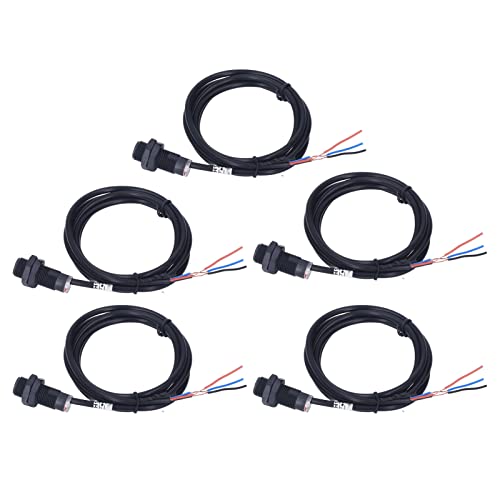
This Baxnore package provides five Hall effect sensors that leverage magnetic detection for position sensing. The listing highlights their versatility for pneumatic and hydraulic cylinder piston position measurement, as well as potential use as a limit switch. A notable advantage is compatibility with metal surroundings and through-metal sensing, addressing environments with metal interference that may hinder other sensor types. The Hall technology offers fast response and reliable switching with minimal contact wear, making it suitable for repeated position checks in automation lines.
Best for: modular systems requiring several sensors across a line or multiple cylinders, especially when sensing through metal is beneficial. Choose this if you want a multi-sensor solution with robust magnetic detection. Caution: confirm the magnetic field strength required for reliable operation and verify that the magnets used on your piston align with these sensors.
AMRAP HYDRAULICS Stroke Control Kit (Not a sensor, but related)

The AMRAP HYDRAULICS Stroke Control Kit offers adjustable stroke lengths and mounting compatibility for hydraulic cylinders. While not a sensor itself, it complements position sensing by enabling precise stroke characterization and control, which can improve the accuracy of feedback when paired with a sensor. This kit may be advantageous in systems where standard cylinder strokes must be tuned to match a sensor’s reading window. It is best for workshop or retrofit environments where stroke customization is essential.
Best for: projects needing precise stroke customization to improve sensor readouts. Choose this when you require flexible clamping and matching to ensure your cylinder’s movement aligns with control logic. Caution: not a direct sensor replacement; integrate with a suitable position sensor for feedback loops.
Shurzmotic Inductive Proximity Sensor Switch 5Pcs

The Shurzmotic sensor set comprises five inductive proximity sensors with 5-30 VDC operation. These sensors are designed for high sensitivity and rapid response, suitable for pneumatic and hydraulic cylinder piston position detection. The data highlights a robust construction that can withstand common industrial temperatures, broadening their applicability in demanding environments. They are a practical choice for installations where compact, non-contact sensing is preferred and metal presence may be a factor in the sensing environment.
Best for: applications requiring high-sensitivity, non-contact sensing in metal-rich environments. Choose this if you want a compact multi-pack for simultaneous monitoring of several cylinders or positions. Caution: inductive sensors may require metal targets or reflective surfaces in the sensing range; verify your cylinder geometry and target presence.
Buying Guide: Key Considerations for Hydraulic Cylinder Position Sensing
- Sensor type: Magnetic reed, Hall effect, and inductive proximity each offer different benefits. Hall sensors can detect through metal, while inductive sensors excel in non-contact metal detection. Reed switches are simple and compact but may be less robust in harsh environments.
- Operating voltage and current: Match to your control system’s electrical spec. Inconsistent voltage can cause erratic readings or sensor failure.
- Environmental ruggedness: Consider pressure, temperature, vibration, and exposure to contaminants. Heavy-duty metal-faced sensors typically withstand harsher environments.
- Sensor mounting and form factor: Ensure that the sensor’s size and mounting provisions fit your cylinder’s dimensions and available mounting brackets.
- Target type and placement: Some sensors require magnets or specific targets. Confirm compatibility with the cylinder’s rod or piston features.
- Response time and reliability: Fast switching is important for real-time control loops. Inductive sensors often deliver high-speed response.
- Wiring and electrical noise: Shielded cables or robust housings help reduce interference in industrial settings.
- Maintenance and replacement: Consider multi-pack options if you operate multiple cylinders or need redundancy.
Frequently Asked Questions
- What is the main difference between Hall effect and inductive proximity sensors for cylinder position?
Answer: Hall effect sensors detect magnetic fields and can sense through metal, while inductive sensors detect metal objects without contact and are often more robust in metallic environments. - Can reed switches be used for hydraulic cylinder feedback?
Answer: Yes, reed switches are compact and simple, but they may be less durable in harsh environments compared to solid-state sensors. - Do I need a separate enclosure for these sensors in harsh environments?
Answer: In many industrial setups, yes. Choose sensors rated for the expected temperature, moisture, and dust exposure and consider IP ratings. - Is it necessary to pair a stroke control kit with a position sensor?
Answer: Not always, but for retrofit projects where cylinder stroke varies from standard, a stroke control kit can help align mechanical travel with sensor readings for accurate control. - What is the advantage of a multi-pack sensor solution?
Answer: It allows simultaneous monitoring of multiple cylinders, simplifies installation, and provides redundancy across a line or system. - How do I determine the best sensor for a hydraulic application?
Answer: Consider environment, mounting space, required sensing range, whether sensing through metal is needed, and how the sensor integrates with your control system.
Add a Comment